While gnats are tiny, they can be a major nuisance if you don’t follow proper measures to keep them away from your home. Tired of seeing them flying around your kitchen, hovering over your outdoor trash bin, or taking over your houseplants? Experts say that implementing simple household habits like not leaving ripened fruit on the kitchen counter or cleaning your kitchen drain regularly can help keep gnats at bay.
We tapped the pros at the National Pest Management Association (NPMA) as well as Dan DiClerico, the Good Housekeeping Institute's home improvement and outdoor director, for their top pointers on how to get rid of gnats inside and outside of your home. You’ll discover solutions that have earned the Good Housekeeping Seal as well as expert-approved homemade fly traps made from apple cider vinegar.

What is a Gnat?
Often found in swarms, gnats are tiny, winged insects that tend to hover in place, especially in damp areas—think the kitchen drain or freshly watered houseplants. There are three types of gnats you should know:
- Fungus gnats are black with long legs. They typically congregate around overwatered houseplants or gardens.
- Fruit flies are brown with red eyes and usually more round in shape. They're drawn to overripe fruit and vegetables.
- Drain flies are fuzzy with moth-like wings. They are attracted to moist environments around drains, sewers, gutters, and outdoor puddles.
How to Get Rid of Gnats in Your Home
Whether it's fruit flies buzzing around your produce or fungus gnats hovering over your houseplants, gnats are unlikely to go away on their own. Luckily, there are simple ways to get rid of gnats quickly:
1. Use a high-tech fly trap.
Plug-in traps, like the Zevo Flying Insect Trap, can be extremely effective. The Zevo attracts flying insects with a UV light, then traps and collects them on a disposable sticky backing that you never have to touch when replacing. Most modern traps are safe for indoor use, so you can plug one in adjacent to your gnat problem.
2. Make a vinegar trap.
This is an effective home remedy—and you likely have everything you need on hand. Our Cleaning Lab experts found the best three methods for killing gnats with vinegar:

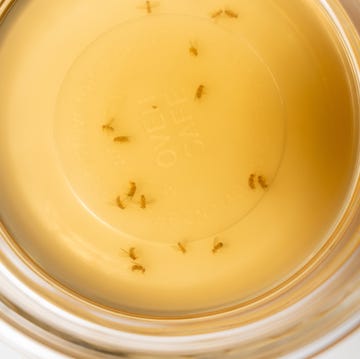
- Make a trap with apple cider vinegar and plastic wrap: Pour a little apple cider vinegar into a glass or just remove the cap from the bottle. Cover the opening with plastic wrap and secure it with a rubber band. Then, poke a few small holes in the plastic. The fruit flies will enter but will not be able to make their way out.
- Make a trap with a paper cone, vinegar, and old fruit: Place a little vinegar and a chunk of very ripe fruit in a jar. Then, roll printer paper into a cone and stick it into the jar, placing the narrow opening down. The smell of rotting produce will help entice the fruit flies into the mixture, but the paper cone will make it difficult for them to escape.
- Leave out a bowl of vinegar and dish soap: Add three drops of dish soap to a bowl of vinegar, and leave it uncovered in the problem areas. The soap cuts the surface tension of the vinegar, so the flies that are enticed by the vinegar will sink and drown.
3. Pour boiling water down the drain.
Drains are a gnat's safe haven. Even without baking soda, vinegar, and drain cleaner, you can pour boiling hot water into the sink to kill their eggs. This will also help get rid of any excess food and bacteria build-up.
4. Try a spray solution.
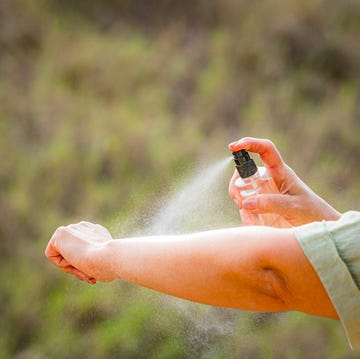
Invest in an insecticidal spray that's safe for indoor use. The Zevo Fly, Gnat & Fruit Fly Flying Insect Spray, a Good Housekeeping Seal holder, uses rosemary and cornmint oil, neither of which needs to be registered with the EPA, to kill gnats on contact. Though safe around people and pets, don't allow the spray to come into contact with eyes or skin, and the flammable liquid should never be used near electrical wiring.

5. Put out a beer or wine trap.
Along with vinegar, fruit flies like the smell of fruity beer and wine. Leave out an almost-empty open bottle of stale beer or old wine—the skinny neck will keep the flies trapped.
6. Rely on sticky traps.
From hanging ribbons and cards to sticky stands specifically designed for potted plants, sticky traps are an easy way to catch a cluster of gnats. Gnats are attracted to bright colors, like yellow. You'll just have to keep an eye on it and replace the trap once it's full.

7. Buy a natural trap.
If you need something that's safe around food, humans, and pets, try Aunt Fannie's FlyPunch. The mixture includes sodium lauryl sulfate (a surfactant used in soaps) and malic acid (found in fruit). Just open the top, set it on your counter, and watch the cycle of life unfold.
8. Make a candle trap.
Position a tall candle into a candlestick, before placing it in a small pan filled with water. Put your pan on the counter, add a bit of dish soap to the water, and light the candle before turning the lights off. Since the gnats are attracted to the flame, they'll either hit the flame itself or fall into the water and drown. While the candle is lit, we recommend staying in the room to observe the flame until it's time for it to be blown out.
How to Eliminate Gnats Outside Your Home
Many of the above methods—especially vinegar and sticky traps—can deter gnats from buzzing around your garden and other outdoor spaces. But there's more you can do outside to avoid an infestation:
1. Address moisture issues.
Gnats breed in stagnant water—think bird baths, water in flowerpots, and puddles. Fix drainage problems in the backyard, including clearing drains and gutters, and install water features far away from the house.
2. Upgrade outdoor lights.
Your outdoor string lights and pathway lights may look great—but you may be drawing gnats into your entertaining areas. Gnats are attracted to bright white light. Instead, install yellow or amber-colored LED lights that are less appealing to pests.

3. Clear trash and debris.
From decaying leaves and excessive mulch to rotting food, gnats are likely to congregate—and breed—in backyard debris.
How to Prevent Gnats
1. Minimize moisture.
Gnats thrive in moist, humid environments, so a dehumidifier in dank areas of your home can help deter them. "Running a dehumidifier, especially during sultry summer weather, will keep the relative humidity level in your home below 55%, the point at which gnats start to thrive," says Dan DiClerico, the Good Housekeeping Institute's Home Improvement and Outdoor Lab director.
2. Never let garbage build up.
Whether in the trash can or in the form of rotting fruit on the counter, allowing trash to sit in your home will attract gnats. Clean counters and take out the garbage daily.
3. Don't overwater houseplants.
"Fungus gnat infestations are often caused by sources of damp soil, such as houseplants, or decaying or damaged plant roots," says Dr. Jim Fredericks, a board-certified entomologist and senior vice president of public affairs at the National Pest Management Association (NPMA). To prevent fungus gnats, regularly repot your houseplants in new soil and ease up on overwatering them.
4. Keep drains clean.
Drain flies prefer bacteria, sewage, and gunk. This means you'll usually find them in kitchen and bathroom drains, garbage disposals, and seldom-used toilets. To prevent drain flies, clear and clean plumbing lines frequently, especially during humid summer weather.
5. Store fruit properly.
To prevent fruit flies in your space, rinse and dry produce as soon as you get home from the store, then keep them inside bins or in the fridge as much as possible. Fruits that ripen quickly—apples, grapes, melons, pears, peaches, and plums—can be kept in a low-humidity crisper drawer; produce that is prone to wilting, including leafy greens and broccoli, belong in the high-humidity crisper drawer. While bananas are best left on the countertop, you can transfer them to the fridge once ripe, or peel and store them in the freezer.
Alyssa Gautieri (she/her) leads Good Housekeeping’s gift guide strategy. She writes and edits commerce content, where she analyzes lifestyle trends, shopping data, and works closely with the Good Housekeeping Institute to recommend top-tested products. Previously, she was the associate lifestyle editor for GH and wrote for publications including ELLE Decor, BobVila.com, and Unique Homes Magazine. When she’s not tracking down buzzy products, you can find her walking her dog, Skye, around Jersey City.
Monique Valeris is the home design director for Good Housekeeping, where she oversees the brand's home decorating coverage across print and digital. Prior to joining GH in 2020, she was the digital editor at Elle Decor. In her current role, she explores everything from design trends and home tours to lifestyle product recommendations, including writing her monthly column, "What's in My Cart."