 Reviewed by

There’s a lot to like about homemade cleaning sprays. Compared with store-bought cleaners, DIY cleaning sprays are generally less expensive and can be more eco-friendly. Plus. they’re just as effective (and in some cases, even more effective) than the sprays you can buy at the store. We put four DIY cleaning sprays to the test to see how each one performs.
The good news is you probably already have everything you need to make these cleaning sprays. Most of them are made with water and simple household ingredients like dish soap, lemon, or vinegar. You can add essential oils for scent, but it’s not strictly necessary.
Below, we share the recipes for our favorite homemade cleaning sprays. Plus, we offer tips on how to use them (hint: be extra careful cleaning natural stone!) and info about the supplies that can make things easier. If you're looking for other ways to be sustainable and save money, consider repurposing your old t-shirts into cleaning rags. And if you're looking for other clever cleaning tricks, read up on our favorite lazy shower cleaning tip and the cleaning hacks most people don't know.
Important safety tip: Always label any bottles of DIY cleaners with all the ingredients inside. It's important to know what the mixture contains in case a child or animal gets into it.
1. All-Purpose Cleaner With Dish Soap
What you'll need:

- ¼ teaspoon dish soap
- One cup water
- Optional: 4-6 drops of essential oil
This effective cleaning spray can be used to remove greasy fingerprints off painted walls, as well as spots and smudges on stainless steel appliances, countertops and the inside of your fridge. When used with a microfiber cloth, this cleaner can clear dust from baseboards, window sills and more — but avoid using dish soap on wood surfaces.
Combine water and liquid dish soap into a spray bottle, along with a 4-6 drops of your favorite essential oil, and shake up the solution. If you skip the essential oil, this cleaner can tackle stains on carpets. Spritz the solution onto a microfiber cloth and dab the stain. Once the stain is removed, fill another spray bottle with clean water and spray the area to rinse the soap. Blot well.
2. Scented All-Purpose Cleaner
What you'll need:
- One part white vinegar
- One part water
- Lemon rind of one lemon
- 2-3 rosemary sprigs
Combine equal parts white vinegar and water, the rind of one lemon and at least two rosemary sprigs into a spray bottle, shake. For best results, allow the mixture to infuse for a week before using. (For a different scent, you can also try orange rinds, cloves or cinnamon sticks). Use the homemade all-purpose cleaner to remove hard water stains, clean trash cans, wipe away wall smudges and much more. Besides a fresh scent, the lemon rind can help boost cleaning power.

Caution: Do not use acidic cleaners on granite, as they will etch the stone and proceed cautiously on stainless steel. Some manufacturers recommend against using vinegar on their appliance surfaces.
3. DIY Glass Cleaner
What you'll need:
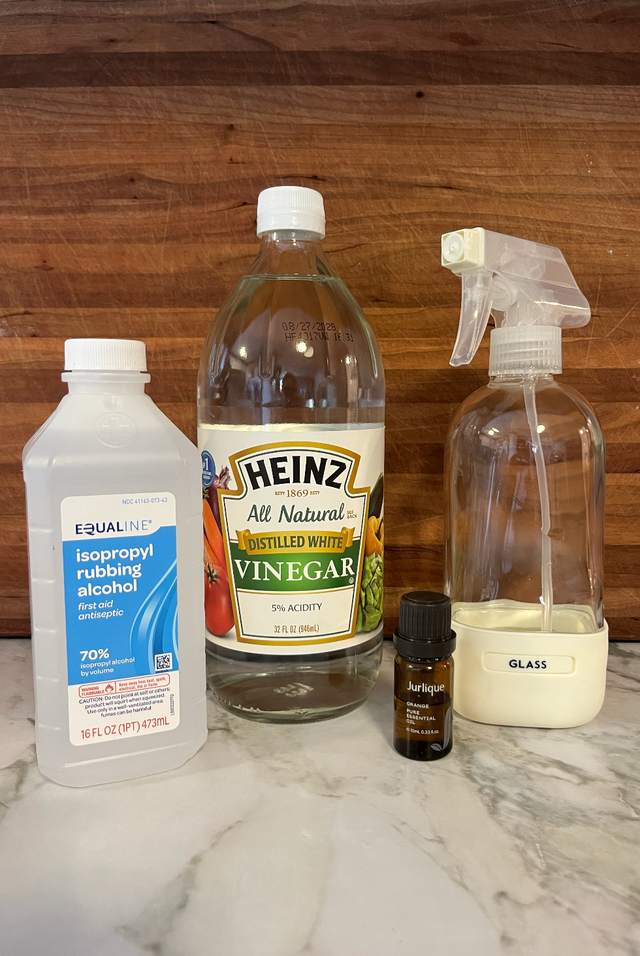
- 2 cups water
- 1/2 cup white vinegar or apple cider vinegar
- 1/4 cup rubbing alcohol 70% concentration
- Optional: 1 to 5 drops of orange essential oil
This homemade cleaner will leave your windows and mirrors sparkling. Not only does the vinegar do a great job cleaning dust, pollen and dirt, the rubbing alcohol helps it evaporate quickly to minimize spots and streaks.
Combine 2 cups water, 1/2 cup white vinegar or apple cider vinegar and 1/4 cup rubbing alcohol into a reusable spray bottle. (If your bottle is small, you can half these measurements. Hint: 2 tablespoons is equal to 1/8 cup). Add a few drops of your favorite essential oil (we suggest a citrus scent), then shake.
Hint: Avoid cleaning windows on a hot, sunny day or in direct sunlight, because the solution will dry too quickly and leave lots of streaks. For cleaning mirrors, spray the solution on a soft cloth before wiping.
4. Natural Stone Cleaner
What you'll need:

- ¼ cup rubbing alcohol
- ¾ cup water
- 1 teaspoon dish soap
- Optional: Up to 10 drops of essential oil
Kitchen countertops, bathroom tiles, marble flooring and other stone surfaces require frequent cleaning — but cleaners with harsh chemicals or acidic ingredients, like lemon and vinegar, can break down natural stone. To create this natural stone cleaner, combine ¼ cup rubbing alcohol, ¾ cup water, a teaspoon of dish soap and a few drops of essential oil and shake. Spray and wipe stone surfaces with a microfiber cloth.
Are homemade cleaners effective?
Homemade cleaners can be just as effective as store-bought cleaners. The effectiveness may vary based on the cleaning task. Depending on how dirty the surface is, scrubbing a bit more or doing a second application might be necessary. If you find that your homemade cleaner is not doing a good job cleaning, it may be time to switch to a commercial cleaner.
Keep in mind: Not every homemade cleaner is suitable for every surface (there are things you should never clean with all-purpose cleaner). It's always best to try any cleaner — homemade or not — on a hidden spot to see if it's safe for the surface, especially if you are using it for the first time. And for safety, make sure to label any bottle or container of homemade cleaner properly, including the ingredients it contains.
What supplies do you need?
You might want to invest in a few glass bottles to store your homemade cleaning sprays. They're easy to clean and refill. If you don't have one already, a plastic funnel will help you easily fill the spray bottles.
Alyssa Gautieri (she/her) leads Good Housekeeping’s gift guide strategy. She writes and edits commerce content, where she analyzes lifestyle trends, shopping data, and works closely with the Good Housekeeping Institute to recommend top-tested products. Previously, she was the associate lifestyle editor for GH and wrote for publications including ELLE Decor, BobVila.com, and Unique Homes Magazine. When she’s not tracking down buzzy products, you can find her walking her dog, Skye, around Jersey City.
Carolyn Forté brings more than 40 years of experience as a consumer products expert to her role as executive director of the Good Housekeeping Institute's Home Care and Cleaning Lab. Using deep analytical testing and writing expertise in appliances, cleaning, textiles and organizational products, she produces cleaning and home care advice for GH, has authored numerous books and bookazines for the brand and partners with the American Cleaning Institute to co-produce the Discover Cleaning Summits. She holds a bachelor's degree in family and consumer sciences from Queens College, City University of New York.


