Did you know that Good Housekeeping magazine has been around since 1885? It launched on May 2, 1885, in Holyoke, Massachusetts, stating its mission as "to produce and perpetuate perfection—or as near unto perfection as may be attained in the household."
Today, the magazine; its legendary consumer product testing facility, the Good Housekeeping Institute; and its consumer emblem, the Good Housekeeping Seal, are American institutions. Purchased in the U.S. by the Hearst corporation in 1911, Good Housekeeping now has an audience of more than 50 million across its print and digital magazine, its website, and its social media presence.
The Good Housekeeping Institute's Legacy of Advocacy

1902
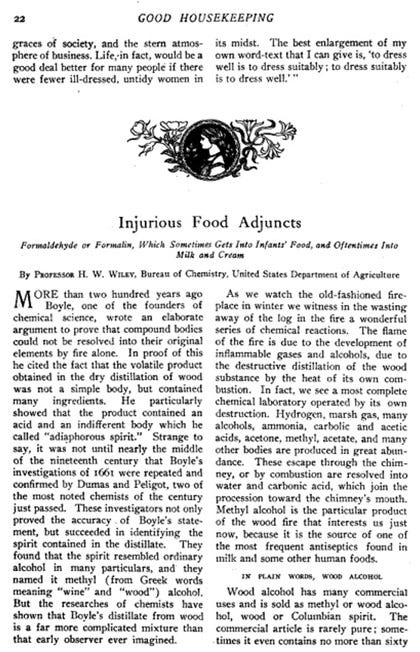
GH warns readers about "Injurious Food Adjuncts" such as formaldehyde, which was used then as a preservative in milk, cream, and even baby food (but banned six years later).

1908
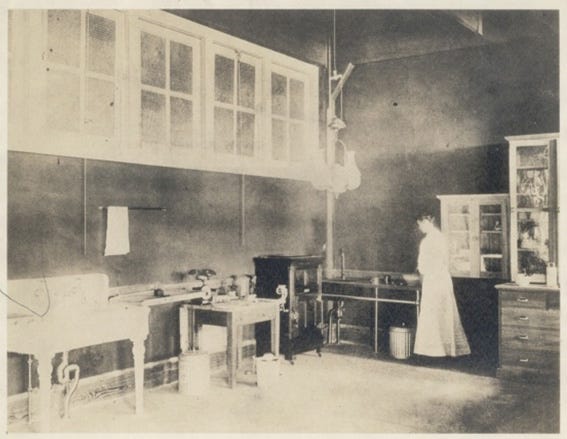
Good Housekeeping staffers request that sinks in their newly built facility be placed at a higher level so they won't have to stoop. In several articles over the next two decades, we extol the virtues of the practice; it becomes standard, soothing aching backs everywhere.

1917
GH shows readers what 100-calorie portions of various foods look like, a novel approach at the time. (Calorie counts don't appear on food packaging until 1941, and aren't standardized until 1990.)

1952
When European studies confirm that smoking causes cancer, GH bans cigarette advertising in the magazine — 12 years before the U.S. Surgeon General's pivotal report on the health hazards of tobacco, and 18 years before the Surgeon General's warning appears on cigarette packs. In 1978, GH's early antismoking efforts are commended by the American Cancer Society.

2002
Delighted dieters devour Pirate's Booty, a popular puffed-corn-and-rice snack. But GHI tests reveal that it actually has 22.5% more calories and 240% more fat than claimed. The buccaneer is busted; Robert's American Gourmet changes the recipe — and the label.

2009
GHI alerts consumers that despite claims, bamboo fabrics are rarely eco-friendly. In early 2010, 78 retailers are warned by the FTC to stop labeling products "bamboo" as a way to insinuate greenness.
Throughout its history, Good Housekeeping has been the go-to magazine for American readers, providing them with news, trends, real-life and fiction stories, advice, recipes, and product recommendations. Famous writers who have contributed to the magazine include Somerset Maugham, Edna St. Vincent Millay, and Betty Friedan, whose seminal 1960 article "Women are People, Too" was a precursor to her groundbreaking 1963 book, The Feminine Mystique.
At the 1933 Chicago World’s Fair, the brand showcased an affordable, fireproof prefabricated house—the Good Housekeeping Stran-Steel House—that blended modern technology and furnishings. Countless celebrities, political leaders, and famous chefs, along with advice experts such as Heloise and Peggy Post, have been featured in the magazine.
THE GOOD HOUSEKEEPING INSTITUTE
What sets Good Housekeeping apart from all other lifestyle magazines is the expertise of the Good Housekeeping Institute: It forms the basis of the brand’s recommendations for beauty, home organizing, cleaning, nutrition, cooking, home appliance, personal tech, and other products. And the thousands of recipes that have been printed in the magazine, posted online, and shared in numerous Good Housekeeping cookbooks are all triple-tested in the Good Housekeeping Test Kitchen.
The Good Housekeeping Institute was founded in 1900 and was at first called the Good Housekeeping Experiment Station. When electricity became common in American homes, consumers could acquire many new labor-saving home appliances, but few people understood their operation and maintenance. With the goal being to study "the problems facing the homemaker and to develop up-to-date firsthand information on solving them," the staff at the GH Experiment Station tested products and housekeeping methods and published articles about its discoveries and observations. It also reprinted advice from readers who wrote in. One reader offered a cure for calluses (she used olive oil and cotton), another gave advice on how to launder lace drapes, and yet another supplied tips on the best way to clean a meat chopper.
Concerned about adulteration and misbranding, home economists on the GH staff tested foods for purity and published, starting in 1905, a "Roll of Honor for Pure Food Products" each month. The Roll of Honor became the “Tested and Approved List,” which allowed brands to show consumers that their products met the GH Institute's standards of excellence. The Tested and Approved list led to the creation of the Good Housekeeping Seal in 1909. Over time, the list became a more rigorous program of testing product claims and performance, which is the backbone of the Good Housekeeping Seal. The Good Housekeeping Seal became so well known as to become part of the American lexicon: You’ve likely heard the phrase “Good Housekeeping Seal of Approval” used by politicians, manufacturers, and celebrities (including in widely seen TV shows and movies) as shorthand for a standard of excellence and trustworthiness.
Today, the Good Housekeeping Institute is located in the Hearst Tower in New York City and staffed by chemists, registered dietitians, engineers, fiber scientists, environmental scientists, culinary professionals, and product analysts who evaluate thousands of consumer products each year, from microwaves and mascaras to vacuums and towels. The GH Institute is currently made up of seven labs: Beauty & Personal Care; Textiles, Apparel & Paper; Kitchen & Cooking; Home Care & Cleaning; Home Improvement & Outdoor; Nutrition & Fitness; and Tech & Engineering. Their reviews are highlighted in Good Housekeeping’s print magazine and on digital magazine, website, and social media outlets as well as often being syndicated by other media outlets. When products are tested for the Good Housekeeping Seal— which is backed by Good Housekeeping's two-year limited warranty, promising a replacement or refund up to $2,000 if a Seal product becomes defective within two years of purchase (certain exclusions apply)—supporting materials and claims for the product are also evaluated.
Building on this work, the Good Housekeeping Institute oversees a range of annual award programs that highlight standout products across categories like beauty, parenting, kitchen, bedding, travel, and more. Each program involves a rigorous evaluation process, with submissions assessed by GH Institute experts in their labs as well as by consumer testers in real-world settings. Winners are selected based on factors such as performance, innovation, ease of use, and value and are featured across Good Housekeeping’s print magazine and on its digital and social platforms, helping consumers discover top-performing products backed by expert evaluation.
From its beginning, Good Housekeeping has been a champion of consumer interests. Here are some of the highlights of Good Housekeeping's advocacy for American families.
1800s
1885: Good Housekeeping Published Its First Issue
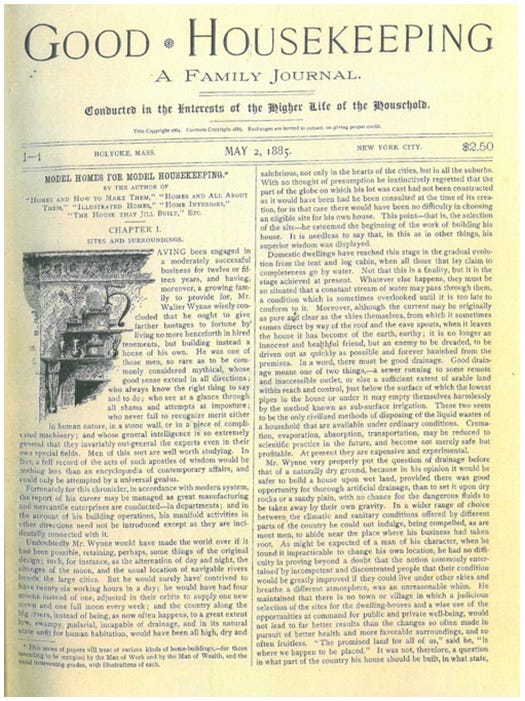
The first issue of Good Housekeeping was published in May 1885. The magazine's full title was Good Housekeeping: Conducted in the Interests of the Higher Life of the Household.
1885-1900: Good Housekeeping Regularly Published Articles About Food Safety and Food Adulteration
Examples include milk dealers adding water and dangerous preservatives to their product (September 1887); candy being contaminated with pulverized asbestos and other hazardous ingredients (February 18, 1888); and adulterated chocolate (1886), spices, and coffee. Toward the end of the century, Good Housekeeping moved from reporting to taking a more active role in calling for government action.
1900s
1900: The Good Housekeeping Institute Opened
At the time it was called the Good Housekeeping Experiment Station. It aimed to advocate for consumers before government agencies such as the FDA, the FTC, and the EPA existed.

1901 to 1906: Good Housekeeping Launched a Campaign for National Pure Food Laws
Called "A Campaign for Pure Foods: How Every Individual, Family, and Organization May Promote This Great War," it urged readers to write in for a packet of information about how to participate in the campaign. In 1902 the magazine published a piece by Harvey Wiley, M.D., chief chemist for the U.S. Department of Agriculture, titled "Injurious Food Adjuncts," that addressed the problem of formaldehyde in milk, cream, and infant formula. In 1906, Congress passed the Pure Food and Drug Act, which was endorsed and supported by Good Housekeeping.
Who was Dr. Harvey Wiley? It's a sweet story: Honey turned Harvey Wiley, M.D., the Institute's longtime Director of Food, Sanitation, and Health, into a passionate consumer advocate. Born in 1844, Wiley fought in the Civil War, went to medical school, then taught chemistry. In 1878, fiddling with a polariscope, a device for measuring stress in glass, Wiley examined various transparent foods and was shocked to learn that what companies were passing off as pure honey was mainly glucose. Thus began his lifelong campaign against mislabeled and dangerous products. He spent 29 years as the chief of the U.S. Department of Agriculture's Bureau of Chemistry, where he fought for the passage of the 1906 Pure Food and Drugs Act. At GH from 1912 to 1930, he alerted readers to food frauds such as the treatment of spoiled vegetables with chemicals to "revive" them. In 1911, Wiley sued Coca-Cola for failing to label the soda as containing habit-forming caffeine. He lost the headline-making case, but it paved the way for future truth-in-labeling laws.
1908: Good Housekeeping Helped Establish the Standard Counter Height
Good Housekeeping staffers persuaded a builder and an architect to install the Experiment Station sinks at a comfortable 36 inches, which set the standard height for all kitchen sinks and counters. Before this sinks had been built low to the ground, requiring users to bend over.
1909: The Good Housekeeping Seal Launched
At the time it was a list of 21 consumer products that performed as promised. Any product that withstood the investigation of the GH Institute staff was eligible to be included in the newly developed Tested and Approved List, published in the magazine.

1910s
1910: The Good Housekeeping Institute Received Its New Name
The Experiment Station, a facility on the street level of the Good Housekeeping building in Springfield, Massachusetts, was renamed the Good Housekeeping Institute. It included a model kitchen, a domestic science laboratory, and test stations.
1911: The Hearst Family Purchased Good Housekeeping
Hearst Magazines still publishes Good Housekeeping today. The magazine has both a print version and a digital version, and the brand has goodhousekeeping.com as well as a social media presence.
1912: A Pivotal Moment for Good Housekeeping
Thomas Edison predicted in a Good Housekeeping interview called “The Woman of the Future” that electric household appliances would have a liberating impact on American women.
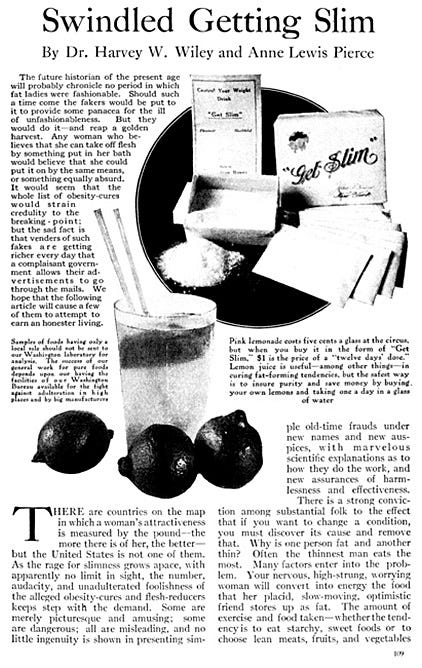
Dr. Harvey Wiley, “the Father of the Pure Food and Drug Act,’ left his position at the Department of Agriculture (now the FDA) in Washington, DC, to become the Good Housekeeping Institute’s director of the Bureau of Foods, Sanitation, and Health. His articles in Good Housekeeping about deceptive food labeling and food safety problems as well as his answers to reader questions often displayed wisdom and insights that were way ahead of their time.
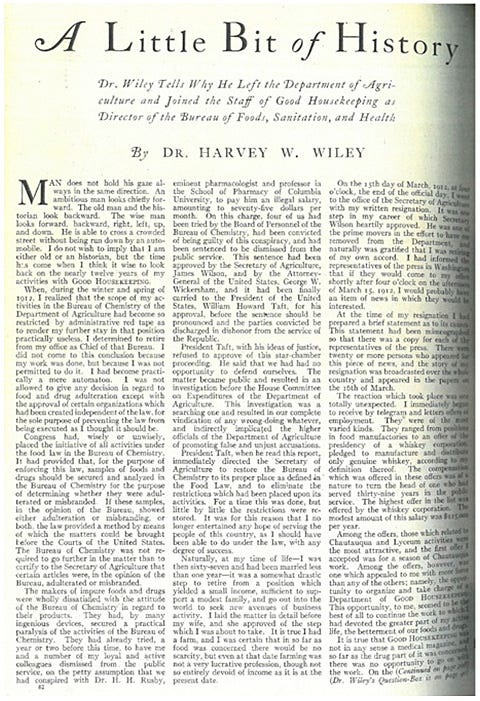
1913: Good Housekeeping Debunks White Bread Myths
At a time when white rice and white bread were touted as "pure," Dr. Wiley urged Good Housekeeping readers to recognize the nutritional benefits of whole grains.
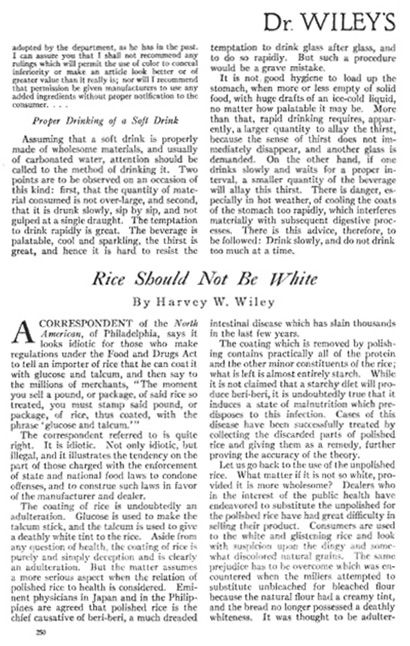

1914: Good Housekeeping Warned Readers About Fad Diets
In an article entitled “Swindled Getting Slim," GH shared, “Don’t believe anyone who tells you that you can reduce your weight with no injury to your health without dieting, exercise, and right living…."

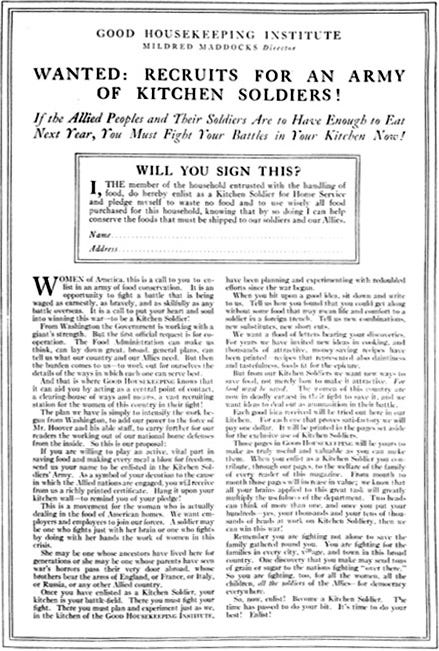
1917: Good Housekeeping Encouraged Readers to be “Kitchen Soldiers” and Conserve Food
An editorial depicting domestic work as part of the U.S. military effort solicited women as “Kitchen Soldiers," asking readers to sign a pledge to conserve food. “Once you have enlisted as a Kitchen Soldier, your kitchen is your battlefield. There you must fight your fight….When you hit upon a good idea, sit down and write to us. Tell us how you found that you could get along without some food that may mean life and comfort to a soldier in a foreign trench. Tell us new combinations, new substitutes, new shortcuts. We want a flood of letters bearing your discoveries.“
1920s
1921: Good Housekeeping Advocated for a New Maternity Bill
Dr. Wiley urged Congress to pass the Maternity Bill of 1921, which allocated federal funds for improved infant care; this bill eventually led to lowered infant mortality rates.
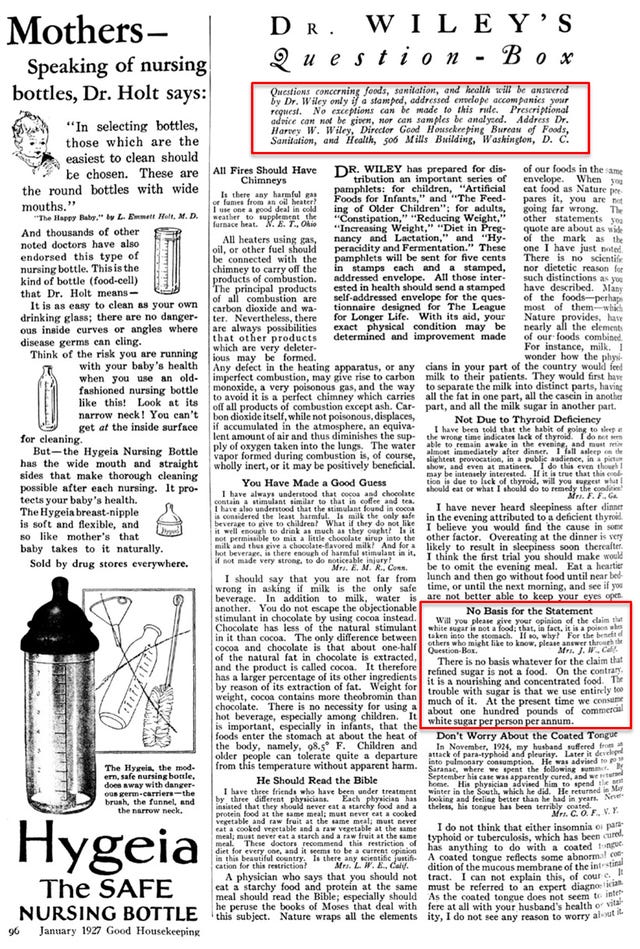
1927: Good Housekeeping Advised Against Eating Too Much Sugar
Dr. Wiley warned about the dangers of consumption of too much sugar : “The trouble with sugar is we use entirely too much of it. At present time we consume about 100 pounds of commercial white sugar per person per annum.”
1928: Good Housekeeping Established Its Headquarters and Shared Early Warnings About Tobacco
An Art Deco–inspired building designed by Joseph Urban opened as the headquarters for the Hearst Corporation in 1928, and the Good Housekeeping Institute moved in. Starting in 2003, the building was renovated over three years to become the faceted-glass Hearst Tower that stands today.
Dr. Wiley alerted readers about the dangers of tobacco: “Cancer of the lips, tongue, and throat is much more prevalent among men than among women. I consider this due to the use of tobacco, particularly smoking.”

1930s
1930s: Good Housekeeping Began Catering to Working Women
Women entered factories to work and spent less time at home. Good Housekeeping food editor Dorothy Marsh began her “60-Minute Menu” series, which helped women cook nutritious meals after long days at work.
1932: Good Housekeeping Educated About Sugar and Tooth Decay
Way before the role of sugar in tooth decay was firmly established, Good Housekeeping warned readers, “[A]n excess of sweets encourages the development of the organisms in the mouth which attack tooth enamel and thus initiate the first stages of decay.”
1940s
1941: The Good Housekeeping Seal Was Renamed—and Its Warranty Was Introduced
The Good Housekeeping Seal of Approval was changed to the Good Housekeeping Seal. Products approved for the GH Seal were backed by the two-year limited warranty, meaning Good Housekeeping—not the manufactuer—would replace or refund the product if it proved defective within two years of purchase. The warranty was introduced as a way for Good Housekeeping to stand behind the approvals with its own guarantee. Despite the official change, the term “Good Housekeeping Seal of Approval” remained in use colloquially—and still does today.

1943: Good Housekeeping Opened a Baby Center
Designed to meet the needs of parents of Baby Boomers, the center advised seeking help: “We hope you can nurse your baby; but even if you do, you should have a few bottles and nipples for giving him boiled water, orange juice, and possibly a rest or relief feeding.”
1950s
1952: Good Housekeeping Banned Cigarette Ads
Good Housekeeping stopped accepting cigarette advertisements due to the harmful effects of smoking on health. This was 12 years before the U.S. Surgeon General issued a report on the health hazards and 13 years before health warning labels on cigarettes were required.
1960s
1969: Good Housekeeping Advocated Toy Safety
Good Housekeeping endorsed the Child Protection and Toy Safety Act, which called for more strenuous screening of toys, and went further by rejecting ads for toys with sharp edges or small parts that posed choking hazards.

1970s
1972: The Good Housekeeping Institute Helped Establish Clothing Care Labeling
The Good Housekeeping Institute helped develop clothing care industry standards, which led to the Clothing Care Labeling Law mandating care instructions on garments.
1980s
1983: Good Housekeeping Began Featuring Microwave Content
As microwaves became common in American homes, the magazine launched a monthly section devoted to reporting on microwave innovations and microwave recipes.
1990s
1994: Good Housekeeping Hired Its First Female Editor in Chief
Ellen Levine became the first female editor in chief of Good Housekeeping. She led the brand until 2006 and went on to hold executive roles within Hearst.
1998: Good Housekeeping Testing Led to Crib Sheet Safety Standards
In response to a reader who alerted Good Housekeeping that their child had been strangled by an ill-fitting crib sheet, the Good Housekeeping Institute tested crib sheets and found that most were too small or made with poor-quality elastic, causing the sheets to come off the corners of a mattress, increasing the risk of infant strangulation and suffocation. The GH Institute set a new crib sheet standard, which was evaluated by the American Society of Testing and Materials.

2000s
2000: Good Housekeeping Testing Led to a Bicycle Helmet Recall
The GH Institute found that certain children's bicycle helmets failed to meet the federal Consumer Product Safety Commission (CPSC) safety standards. As a result, the CPSC recalled more than 240,000 helmets, the largest bicycle helmet recall in history.
Also in 2000, the Good Housekeeping Institute assessed consumers as they used standard fire extinguishers and found that most people were doing so improperly. The Good Housekeeping Institute provided advice on how to use fire extinguishers correctly.
2002: The GH Textiles Lab Discovered Sheets Labeled with Inflated Thread Counts
The Good Housekeeping Institute Textiles Lab investigated high-thread-count sheets sold at low prices, finding that some brands used multi-ply yarn to exaggerate their thread count. The lab repeated the test in 2006, and as a result the textiles industry rewrote its standards for thread counts, which were endorsed by the Federal Trade Commission.
2003: Good Housekeeping Was Temporarily Relocated While the Hearst Tower Was Under Construction
GH moved from the then six-story Hearst building, built in 1928, to a few temporary spaces for three years while the new Hearst Tower was built.
2004: Good Housekeeping Began Examining Portion Sizes on Packaged-Food Labels
The Good Housekeeping Institute’s Nutrition Department identified packaged foods with labels misrepresenting a typical serving. For instance, for a particular donut a “serving” was said to be one-third of the donut; a particular cookie had a “serving” listed as half the cookie. This was 12 years before the FDA’s 2016 updates to the Nutrition Facts label, which required brands to indicate the portion size as the amount people customarily consumed.
2005: The Good Housekeeping Institute Helped Create Skateboard and Scooter Safety Standards
The Good Housekeeping Institute warned that some children’s skateboards and power scooters went dangerously fast and had inadequate brakes; it then helped draft new safety standards.
2006: The Hearst Tower Opened
The Good Housekeeping Institute moved into the LEED-certified Hearst Tower in New York City, the city’s first “green” office building and the first skyscraper built in Manhattan after 9/11.
As part of this new space—designed in part by lab staff—the Cleaning Lab had an automated vacuum cleaner tester built to more accurately measure how well vacuum cleaners cleaned embedded dirt from carpets. The Good Housekeeping Institute also installed a climate chamber that would allow the team to control the temperature and humidity in the room, enabling them to see how products performed in hot, cold, humid, or dry environments. Examples of products tested in this chamber include anti-frizz hair products, refrigerators, paint, and cold weather accessories.

2007: The GH Beauty Lab Revealed That a Drugstore Moisturizer Outperformed Luxury Ones
The Beauty Lab ran a clinical study on moisturizers and found that a $25 cream kept skin more hydrated for a longer period than some more expensive creams (even a $350 one) did.
2008: The Good Housekeeping Toy Awards Were Launched
The first annual GH Toy Awards were published in the December 2008 issue. All toys were examined by Good Housekeeping Institute engineers to ensure that they conformed to industry safety standards—and were vetted by kid-testers to ensure that they were fun!
Also that year, GH engineers tested pool alarms, and three failed. Readers were encouraged to send letters to their representatives in Washington, DC, to support the Virginia Graeme Baker Pool and Spa Safety Act, which went into effect on December 19, 2008.
The Home Safety Council presented Good Housekeeping with a Beacon Award for accurate and educational reporting and for helping Americans understand what they could do to be safer in and around the house.
Beyond that, Good Housekeeping published a special report called “Roller Coaster Roulette” that detailed the lack of safety oversight of amusement park rides and asked readers to write their state representatives to cosponsor the National Amusement Park Ride Safety Act.

The first annual Best Toy Awards are published in the December issue. All toys are vetted by kid-testers and examined by Good Housekeeping Institute engineers to ensure they conform to industry safety standards.
2009: The GH Textiles Lab First Reported on Mislabeled “Bamboo” Fabrics, Covered Thermal Containers That Did Not Keep Food Safe, and Found the Best Way to Sanitize Dish Sponges
The GH Institute Textiles Lab alerted consumers that because of chemical processes, fabrics labeled as “bamboo” were actually rayon. Months later, 78 retailers were warned by the FTC to stop labeling products as “bamboo” as a way to suggest that they were environmentally friendly.
In the Kitchen Appliances Lab, 19 thermal containers were tested by the experts and only one was found to keep food safe at hot or cold temperatures.
The Cleaning Lab worked with an outside microbiology lab to test six methods for sanitizing and killing common kitchen bacteria strains in kitchen cellulose and scrub sponges to determine the most effective means. The safest way—soaking in a bleach solution—was the reported by TV outlets at the time and is still cited today; it has appeared in places such as Tasting Table and Time Magazine.
2010s
2010: Good Housekeeping Investigated Child Safety Concerns for a Range of Products
Good Housekeeping Institute testing found that earrings and necklaces marketed to children at leading retailers included heavy metals. All the items contained lead at levels well above the government’s limit for children’s products, and many also contained cadmium.
The Good Housekeeping Institute recruited families with children under 3 to visit local fast food restaurants across the country and request special toys for younger children with their kids’ meals. Nearly all of the 15 locations provided toys that were appropriate only for older children due to having small parts that posed choking risks.
While evaluating full-size strollers, the Good Housekeeping Institute discovered that more than a quarter of those tested include hood construction that posed a potential hazard to young children. GH urged the industry to address a loophole in the safety standard regarding hood hinges. In 2013, U.S. Consumer Product Safety Commission (CPSC) approved a proposal to create a federal safety standard for strollers.
GH Institute testing also revealed that the 3-D glasses given out at movie theaters harbored bacteria, with one pair having potentially lethal bacteria. The GH Institute recommended bringing alcohol wipes to movie theaters to wipe down such glasses so as to reduce bacteria levels by more than 95%.
Also in 2010, the brand launched the first Good Housekeeping Beauty Awards, highlighting the best-performing skincare, haircare, makeup, and beauty tools and more.
2011: Good Housekeeping Investigations Homed In on Safety
Four salon keratin hair treatments were tested for formaldehyde, and the toxic chemical was found in all four at levels exceeding the Cosmetic Ingredient Review's recommended threshold. Later that year, the FDA issued a warning letter to the distributor of one tested brand for falsely labeling the product as formaldehyde-free. The Occupational Safety and Health Administration (OSHA) issued a hazard alert later that year regarding keratin treatments and the risk they posed to salon workers.
Children’s rain jackets were tested and found to exceed the Consumer Product Safety Improvement Act's limit on lead and phthalates for products intended for use by those under 3. The GH Institute urged the CPSC to apply the phthalate criteria to all products for children 12 and under and recommended that readers avoid vinyl and PVC rain coats.
Good Housekeeping launched an annual review of cars to make recommendations based on road and highway performance, gas efficiency, and family-friendly features.
Good Housekeeping launches an annual review of cars, taking into consideration road and highway performance, gas efficiency and numerous family-friendly features.
Top-brand mugs are found to contain lead and arsenic, although neither leached out during tests. Some registered surface temperatures of over 140°F, hot enough to burn skin and above the voluntary standard. GH urges the Consumer Product Safety Commission (CPSC) to mandate that ceramicware pass temperature tests before it can be labeled "microwave-safe."
2012: Good Housekeeping Investigations Revealed Wellness Inaccuracies
The Good Housekeeping Institute tested the accuracy of free blood pressure monitors in drugstores and found that nearly half of their readings were off by more than five points compared with those obtained by a nurse practitioner. None of the four machines used over the course of testing offered accurate guidelines.
Portion deception was discovered at popular national restaurants, including a "Pizza for One" listed on a restaurant's website as containing the equivalent of four servings. Good Housekeeping urged readers to check restaurant websites for serving sizes and nutritional information before ordering.
2013: GH Testing Helped Readers Save on Fashion Tights
The Textiles Lab tested opaque tights and found that a high-end brand sold at department stores for $45 had the same overall score as an affordable brand sold at drugstores for $6.
2014: GH Began Reviewing Mattresses-in-a-Box
The Good Housekeeping Institute Textiles Lab attended the launch event for Casper, a retailer that changed the way consumers shopped for mattresses by starting the trend of shopping online instead of in stores. In the years that followed, the lab set up a mattress evaluation program that combined expert review with at-home testing.
Also in 2014, the Textiles Lab tested fitness apparel that claimed to increase calorie burn during exercise by increasing body heat. Testers wore monitors during comparative treadmill runs, and not only did GH experts find no significant increase in calorie burn but also testers agreed the clothes were uncomfortable to wear and hindered their performance.
2015: The GH Beauty Lab Launched Its First Facial Sunscreen Test
The Lab evaluated more than 160 products with 1,535 women. In that test, and across multiple studies over the years, GH chemists found that mineral sunscreens consistently underperformed compared with chemical sunscreens.
2016: GH Testing Evolved With New Trends
The GH Beauty Lab conducted its largest study ever, of facial oils, screening 199 products and enrolling more than 1,200 consumer testers. The market suggested that the products were a breakthrough for hydration, but testing revealed that many provided only minimal hydration.
Also that year, the GH Textiles Lab ran its first ever test on silk pillowcases, which had just begun to hit U.S. retailers. The lab also tested leggings as the athleisure trend took off, finding ones that were opaque, moisture-wicking, and durable.
The Textiles Lab also covered weighted blankets, previously used as a therapeutic tool, as they became more mainstream as a means to help adults relax. While recommending things to look for when purchasing and how to use the blankets, the Lab experts highlighted that they were unregulated for children and should not be used without by kids without consultation with a pediatrician due to suffocation risks.
Good Housekeeping launched its Family Car Awards, partnering with Car and Driver magazine to review performance testing notes from auto experts and assess lifestyle factors that mattered to families such as car seat compatibility, storage, comfort, and more.
2017: Good Housekeeping Hosted the Raise the Green Bar Summit
In partnership with MadeSafe, Good Housekeeping experts hosted the first of several Raise the Green Bar Summits to help brands share and improve their sustainability efforts.
2018: GH Created New Shopping Opportunities
Good Housekeeping launched a pop-up store inside the Mall of America where shoppers could buy products tested and approved by the GH Institute.
Also, the GH Beauty Lab conducted its longest ever clinical study, on anti-aging neck creams—24 weeks from start to finish! The study provided the opportunity for testers to include precise before-and-after photography displaying visible improvements from some products.
The Textiles Lab tested yoga mats and found that many brands made misleading environmental claims that violated the FTC Green Guides. For example, the claim “biodegradable” was made when landfill conditions wouldn’t allow the materials to biodegrade easily. Additionally, some brands stated that their rubber mats were recyclable, but there was no way for consumers to recycle them through curbside pickup or community recycling facilities.
2019: GH Launched the Cleaning Awards
Good Housekeeping launched its first Cleaning Awards to recognize innovative, top-performing cleaning products and appliances.
The GH Textiles Lab procured lab equipment that would mimic sweat to measure moisture management. It was first used to evaluate pajamas that made cooling claims, and GH experts found that some fabrics did not manage moisture well enough to be considered “cooling” fabrics.
Good Housekeeping also hosted its first celebrity-filled parenting summit, called We Are Family, at the Hearst Tower in New York City during Baby Safety Month.
2020: Good Housekeeping Was a Trusted Source of Information During the COVID Pandemic
Good Housekeeping provided readers with immediate, trusted content from the early days of the pandemic, including telling them how to disinfect, sanitize, and clean surfaces and how to make their own face masks during the nationwide mask shortage. A GH Institute expert sat on the ASTM International committee dedicated to establishing fabric face-covering standards to be used as personal protective equipment (PPE), and GH partnered with the American Cleaning Institute for the first Discover Cleaning Summit to discuss effective cleaning methods, ingredient transparency, and evolving consumer cleaning concerns. The magazine’s editors also shared reporting that helped readers adjust their lifestyles during this period, including on exercising and working from home.
Also this year, Good Housekeeping launched its first annual Bedding Awards and Parenting Awards programs, giving brands more opportunities to be tested and showcased by the GH Institute experts.
2021: GH Launched Its Membership Platform, Home Improvement & Outdoor Lab, Kitchen Awards, and an Investigation of Greenwashing
GH+, Good Housekeeping’s membership platform, was introduced. Through this subscription service, readers could access exclusive content such as decluttering and fitness guides; save recipes in a personalized cookbook; and become eligible for product-testing opportunities.
Good Housekeeping’s Home Improvement & Outdoor Lab was created to test and recommend home renovation products such as tools and windows as well as surfaces (flooring, decking, and countertops), fixtures (toilets, faucets, and showerheads), and home comfort equipment (air purifiers, dehumidifiers, and portable ACs).
The GH Institute Textiles Lab tested bedding and apparel that claimed to be made with plant fibers like bamboo, eucalyptus, and beechwood and revealed that all the fabrics were actually rayon and contained no trace of those plants. The lab cautioned consumers not to pay more based on marketing that made products sound more luxurious and environmentally friendly than they were.
That same year, GH launched the Kitchen Awards. The Kitchen Lab started by recognizing top cooking gear and kitchen appliances, and the awards program grew to encompass all types of kitchen-related products including coffee, tea, and pantry staples as well as kitchen fixtures such as sinks and built-ins such as countertops.
2022: Good Housekeeping Announced Its First Travel Award Winners and Added Equipment to the Home Improvement Lab
The Travel Awards program was introduced to help families plan their best ever vacations. Product analysts, travel experts, and even consumer testers evaluated travel gear, services, and destinations—including luggage, travel accessories, booking platforms, transportation, hotels, resorts, cities, cruises, attractions, and more—to find options that would meet the needs of a wide range of travelers based on their budgets and preferences. Good Housekeeping’s approach to testing destinations and experiences relied on the same attention to detail and objective analysis as its testing strategy for products.
The GH Institute Home Improvement & Outdoor Lab added an impact tester to its testing capabilities. This piece of equipment allows experts to test the durability of surfaces such as flooring and countertops by simulating the impact of dropping a weight from a specific height.
2023: Good Housekeeping Joined TikTok
Good Housekeeping launched a TikTok account and increased its social media presence across platforms, going on to dispel misinformation (such as a dangerous trend involving Borax) and settle long-term debates, giving information on the best way to clean windows and unexpected items to wash in the washing machine. Videos from the Cleaning Lab went viral, with 4 million views.
2024 Lexie Sachs Became the New Executive Director of the Good Housekeeping Institute, and the Seal Celebrated 115 Years
Lexie Sachs first joined the GH Institute in 2013 after having previously working in the fashion and home product industries. With a degree in Fiber Science from Cornell University, she served as the director of the Textiles Lab before assuming leadership of the Good Housekeeping Institute.
Good Housekeeping celebrated the 115th anniversary of the Good Housekeeping Seal by opening the GH Institute to influencers. This allowed content creators to tour the GH Institute Labs and let lab experts showcase their testing to new audiences.
That same year, the Good Housekeeping Institute acquired a DigiEye, a machine to measure color changes. This helped experts assess things like stain removal and color loss in dyed fabric and hair samples. The Institute also updated its QUV Tester, which would expose materials and surfaces to alternating cycles of UV light and control moisture to simulate months or years of light and humidity damage.
2025: Elspeth Velten Became Good Housekeeping’s New Editor in Chief
Elspeth Velten joined the iconic brand, bringing a fresh vision for reaching the GH audience and a continued commitment to the legacy of service of the Good Housekeeping Institute.
Also, Good Housekeeping served as the media sponsor of the Family Travel Association’s annual survey. Through this partnership, it surveyed thousands of Good Housekeeping readers on their travel intentions, preferences, experiences, and more. The results were used to help inform travel industry professionals as well as GH’s audience.
The GH Institute acquired a handheld HDXRF, a device that could screen toys and other objects to determine whether they met the minimum requirements as far as their content of lead and other heavy metals.
Good Housekeeping’s History of Recognition from ASME
Good Housekeeping has been recognized by the American Society of Magazine Editors (ASME), as either a finalist or a winner, numerous times. The nominations and awards were sometimes for overall excellence and at other times for reported pieces and packages.
2025: Finalist in the Lifestyle Journalism category
Three articles from The Accessibility Issue:
- “Tony Award Winner Ali Stroker on How She Lives Boldly”
- “Your Guide to an Accessible Home” by Olivia Lipski and Elizabeth Berry
- “What to Do When Your Kid Stares at Someone Different” by Jaclyn Greenberg
2023: Finalist for General Excellence (Service and Lifestyle)
2012: Finalist in the Personal Service category
“Fractured” by Susan Ince, which shared one family’s experience with traumatic injury, long-term disability, and the realities of caregiving
2011: Finalist in the Personal Service category
“The (Surprising) Truth About Salt” by Rachael Moeller Gorman, which examined the data behind sodium intake limits
2008: Finalist in the Personal Service category
“Passport to Cheaper Health Care?” by Jennifer Wolff, which explored the trend behind—and the risks of—Americans traveling abroad for health care procedures
2005: Finalist for General Excellence (Over 2,000,000 Circulation)
1999: Winner in the Personal Service category
Three stories detailed experiences with colorectal cancer and advocated colonoscopies and other preventive measures.
- “Katie’s Crusade” by Joanna Powell
- “The Stories of Three Families Left Behind” by Sondra Forsyth
- “The Preventable Cancer” by Lisa Collier Cool
1993: Personal Service Winner
“The Better Way,” which investigated different approaches to treating depression in women
1989: Personal Service Winner
“Child Care '88,” which offered parents guidance on finding safe, affordable child care