
If your hair seems to soak up moisture one minute and feel dry again the next, you may be dealing with high porosity hair. We tapped dermatologists, stylists, and other hair pros to explain how to care for high porosity hair.
Understanding your hair’s porosity is key to finding the products and styles that work for you. According to experts, high porosity hair is often prone to frizz, breakage, and damage, so it’s important to maintain it with hydrating and moisturizing hair products. Regular trims, gentle styling, and specialized hair treatments can also help high porosity hair stay healthy and soft.
According to experts, high porosity hair may be genetic, or it can be caused by factors like sun exposure, bleach, and heat damage. If you do have high porosity hair, you may want to be thoughtful about the color treatments and styling tools you use on a regular basis.
Ahead, hair pros explain how to discover your hair’s porosity using a simple test and how to care for high porosity hair so it stays healthy. For more insights on understanding your hair, read what experts say about how hair changes with age and how to distinguish between frizz and breakage.
So what is high porosity hair?
“Hair porosity refers to how well the hair is able to absorb or hold on to moisture,” explains Marisa Garshick, M.D., a board-certified dermatologist and assistant clinical professor of dermatology at Cornell-New York Presbyterian Medical Center. “It often is a function of the cuticle, the outermost layer of the hair, to determine how much moisture passes in and out of the hair, which can determine how porous your hair is. Different types of hair processing, such as heat, coloring, or chemical processing, may impact hair porosity.”
What are the characteristics of high porosity hair?
If you have highly porous hair, you can expect lots of frizz, especially during humid weather, dullness and tangles. Your hair will also likely be prone to breakage and damage, and may look and feel dry.
How can you tell if you have high porosity hair?
Hair porosity falls into three categories: Low, medium and high.
- “Low [porosity means it’s] difficult for moisture to penetrate and also difficult for moisture to escape,” says Brandie Devillier, hair color sales and education partner at Neill Corporation and Aveda Color Professional. If it takes a long time to blow dry, that’s a key indicator of low porosity. Low porosity hair can also be resistant to coloring, like gray hair.
- “Medium porosity can accept moisture and release moisture easily,” Devilllier says. The hair cuticles are not tightly woven together and, in general, absorb products and moisture well, making it easier to care for.
- High porosity means the cuticle layer of the hair is open and could have breakage. This type will dry quickly, but it’s prone to frizz and feels very dry. High porosity hair often "looks dry and brittle; it is weak and breaks easily,” Devillier says.
How to determine your hair porosity
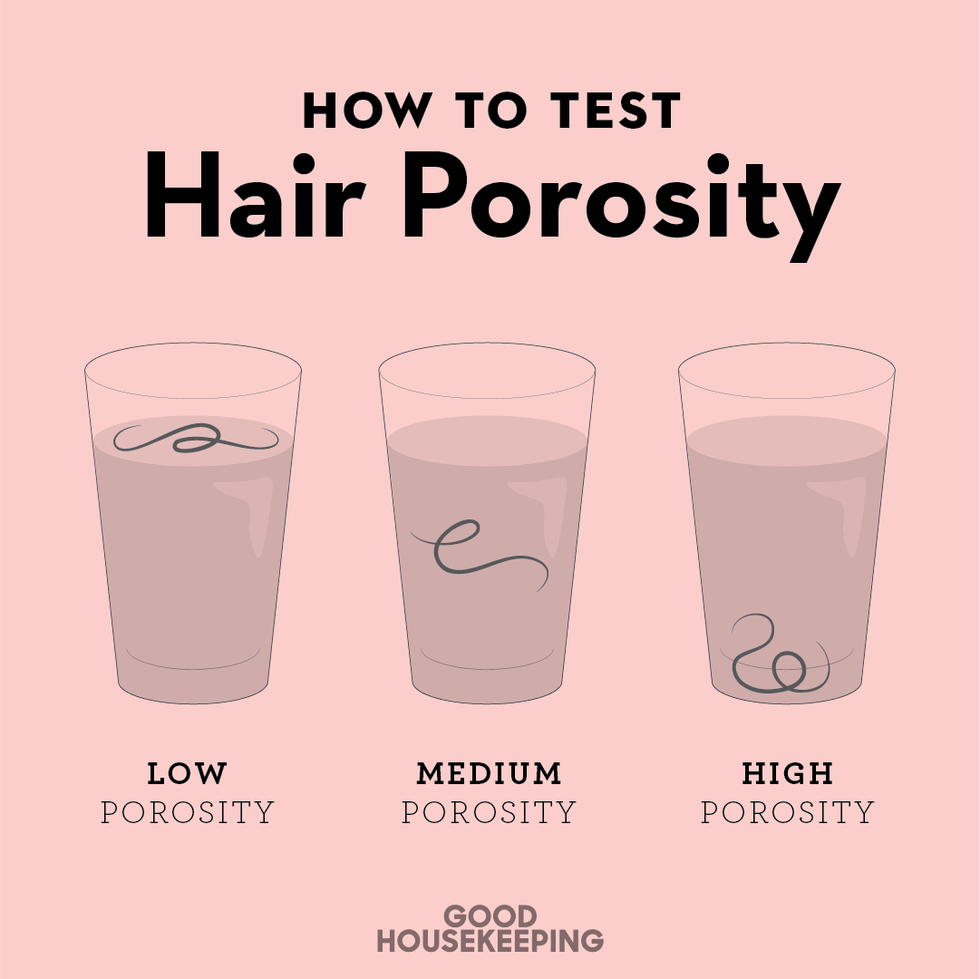
Figuring out which type of hair porosity you have can make styling and keeping your hair healthy a lot easier. “There is an easy, old-school trick to test your hair porosity at home,” says John Kahen, M.D., chief hair surgeon and founder of Beverly Hills Hair Restoration. “Brush through clean hair, and gather the strands that shed naturally. Drop the hair strands in a glass of water, and if they float, the hair is low porosity. If the hair sinks slowly after floating, it is medium porosity, and if the hair sinks instantly, it is high porosity.”
What causes high porosity hair?
Though hair porosity is largely determined by genes, it's unknown exactly how that works, according to Trefor Evans, Ph.D., retired Institute Fellow at TRI Princeton. "It's a very complicated question," he says. "How your hair grows is down to your body's physiology and there are so many things that control the body's physiology."

There are other factors at play, too. UV exposure from the sun, not using a heat protectant before styling, color and bleach can lead to high porosity hair. “Most of the porosity is genetic, but it can also be altered based on what you have done to your strands — things like chemical treatments to your hair or heat damage can take a role,” says Dove Partner & Celebrity Hair Stylist Lacy Redway.
How to care for high porosity hair
1. Opt for moisture-rich products
High porosity hair tends to be thirsty, so look for words like “hydrating” and “moisturizing" on the labels of your products. “Choosing the correct products based on your hair porosity is important,” Redway says. “Moisturize daily to help prevent your strands from breaking and causing further damage.”
2. Get regular trims
“Because hair is drier and more damaged, it is more prone to breakage and split ends,” Dr. Kahen says. “Regular trims help to stimulate new hair growth and keep the hair looking healthy and bouncy at the ends.” Aim for half-inch trims every four to six weeks.
3. Don’t shampoo too often
How often you wash your hair depends on your hair type, since you don’t want to strip your hair of its natural oils while finding solutions to help repair it, Redway says. On average, she recommends once to twice per week.
4. Read ingredient lists
“It is best to avoid sulfates when possible as these can be drying,” Dr. Garshick says, so opt for a sulfate-free shampoo at the very least. Additionally, be sure to steer clear of products that are clarifying or high alcohol content sprays, since these also zap moisture.
5. Suds up with the right shampoo
“There are two shampoos I recommend for high porosity hair: A damage repair shampoo and an added moisture shampoo,” Devilllier says. “Rotate these out weekly until your hair is happy again.”
6. Never skip conditioner
High porosity hair needs all the moisture it can get, so be sure to always follow your shampoo with a conditioner. “You want conditioners that are deeply hydrating if you have high hair porosity,” Dr. Kahen says. “Especially leave-in conditioners can be effective because they can provide an additional barrier and layer of protection to help the hair retain moisture.”
He recommends plant-based oils like coconut and sea buckthorn oil, which are hydrating to the hair, as well as moisturizing ingredients like shea butter and manuka honey.
7. Use a detangler
Hair that is high in porosity typically tangles easier, so it’s important to detangle hair to prevent further breakage when brushing out knots, advises Dr. Kahen. A hair detangler will help moisturize those tangles so they are easily released and you have no breakage.
“Remember to comb from the bottom of the hair up to the scalp,” Devilllier says. “This will help with tension and ease of detangling.”
8. Skip tight styles
Sorry to be the bearer of bad news, but that high ponytail may not be worth it. “For hairstyles, try to avoid ones that cause further damage or breakage like tighter hairstyles that can pull at the hair,” Dr. Kahen says. That means no tight elastics. It’s also best avoid excessive heat styling and go easy when brushing your hair. Use a wide tooth detangling comb or a gentle brush to prevent breakage.
9. Try a treatment
“Remember that all hair is already dead, so it’s important to nourish it as much as possible, especially if you’re doing damaging treatments that can lead to high hair porosity,” Dr. Kahen says. “Hair masks are a good solution for treating the hair and helping with its strength; leave-in conditioners and hair masks can help to seal gaps in the hair cuticles and protect the hair; and lastly, oils are all great options to seal in the hydration and help the hair retain it.”
For an even bigger boost, you can ask your stylist for a repair treatment add-on when you visit the salon.
10. Fight frizz
High porosity hair is prone to frizz because it’s more damaged and cannot retain moisture as well. “Because of this, it is more difficult for hair to hold onto its natural smoothing oils that help to hydrate hair and prevent frizziness, as well as hold onto products that are added to the hair to help with hydration and frizziness,” Dr. Kahen says.
To find the best anti-frizz products for your hair, read what GH Beauty Lab pros recommend.
11. Sleep on silk or satin
“In between washes, continue to moisturize your strands and avoid surfaces like cotton pillowcases that may dry it out further or cause friction to lift the cuticle and have breakage — try using satin pillowcases,” Redway says.


