

When it came time to put together a list of the best toys of the year — our 16th time around — we had a few goals in mind: First, to ensure that we considered every aspect of the play experience, from taking the toy out of the box — is it easy? is the package sustainable? — through how well it would hold up after heavy use. We searched for toys that were safe to use, easy enough to assemble and constructed well. We also looked for toys that went beyond, offering some kind of developmental benefit, like the chance to work on those fine-motor coordination skills or develop those all-important social-emotional skills. But, most of all, we wanted the toys to be fun — something you can’t test for in the Lab.
It’s a lot to ask for, but we enlisted experts big and small for the task. The pros at the Good Housekeeping Institute Parenting Lab covered the adult stuff: checking safety documentation, checking the engineering of the toys, keeping track of toy trends, and so on. (Check out “How We Tested” for more information on our methodology.) But then kid testers across the country, from toddlers to teens, did the all-important fieldwork, telling us which ones they'd go back to again and again.
So that’s what our Best Toy Awards delivers: Toys that are safe, designed well, developmentally appropriate, and constructed with quality and — most of all — fun to use. Whether they’re video-game pros who love the tech toys, artsy kids who can't wait to let their creativity run wild, kids with wild imaginations, or some combo of all of the above, there’s sure to be an expert-approved, kid-love toy for everyone on your list.
Meet the Judges

How We Tested

The experts at the Good Housekeeping Institute reviewed every product submitted for the program, reviewing industry-standard testing documentation as well as getting hands-on with all aspects of the toy, including the unboxing, assembling, and play experiences. In addition, experts perform supplemental in-lab and at-home testing.
First, we look to see how simple or difficult it is to get the toy out of the packaging, along with the sustainability of the packing materials and the waste it creates, if applicable. When assembling the toy, we also look at how easy or complex the task is, the materials required to get it working and the general time investment families need to go from box to play. Once assembled, we look to see the quality of the toy’s construction. Based on our expertise, does it appear to be a toy that will be durable and hold up well over time? We look at that in addition to our compliance verification for ASTM testing standards.
Beyond the nitty-gritty, we look for toys that foster skills that benefit a child’s development. Does it help them improve fine or gross motor skills? Will it help encourage social interaction, or foster imaginative play? Does it help with academic support and growth for STEM, literacy, social studies, and beyond? Is there a social-emotional component to the toy?
Once all that is considered, finally, the ultimate test comes into play — how well does the toy perform with the true experts, our kid testers? Every submission is sent out to kid toy testers. This year, submissions went to more than 200 kids of all ages across the entire country, who helped us determine the “fun factor” and which toys were the very best products for us to recommend to countless households.
Under 3 | Ages 3+ to 5+ | Ages 6+


This brand’s toys are hand-knitted in Peru from 100% cotton and are lovely as well as cuddly. When you buy one plush toy, 10 school meals are donated to children in need. The bear’s pocket is big enough for a child to poke a finger into.
Lab Results: Kids fell for it fast. “She loves ‘Mr. Charlie Bear’ and sleeps with him every night,” said the mom of a 3-year-old. She gave Charlie perfect marks for being a well-constructed and perfectly sized first teddy bear. Ages birth+

Popular plush brand Gund has a new line of baby-appropriate animals and dolls made from 100% recycled material (fabric, stuffing and packaging), including this duck as well as a bunny, a puppy, a lamb and more.
Lab Results: These 13-inch friends were a hit with the little people. “The soft texture and size was perfect for hugging and for taking it along with us,” one parent of a 1-year-old said. It’s also a cute newborn gift! Ages birth+

The first thing your baby is going to try is nibbling the straw, which is fine — it’s a teether! As they swivel the straw around, they’ll see five talking fruits, each of which says its name and color as the toy turns a shade to match. The cup acts as a bead shaker too.
Lab Results: The vast number of groovy songs this toy plays got toddlers bopping up and down in the cutest way, and our parenting pros liked that this bargain buy was easy for young ones to hold and explore on their own. Ages 6 months+

Boost your little one’s hand-eye coordination and gross motor skills with a set of these classic easy-to-grip Sensory Balls. Though the best-selling toys are now 25 years old, this new four-piece set comes in modern colors that will look like little art pieces in your living room.
Lab Results: Lab experts find these to be among the most durable, long-lasting toy choices. Your baby will learn to roll the balls now, then master throwing and catching them later. Ages 6 months+

DJ Toddler on the 1’s and 2’s!With interactive features like a turntable, level buttons and a piano, this DJ setup lets kids explore music, sounds, lights and songs.
Lab Results: All the testers loved the record-and-playback feature most, and parents noted that older siblings wound up playing with this one too. Detachable legs allow sitting and standing so little DJs can practice their balance and motor coordination. Ages 6 to 36 months

Now your mini-me can enjoy their own play-desk setup complete with keyboard buttons to press, a rotary file that rolls and makes sounds, a mouse-shaped computer mouse that slides and a mirrored laptop screen.
Lab Results: “My child loved all the elements of this toy,” one parent raved. “When she grew tired of the cocoa/juice mug, she’d move on to looking at herself in the mirror.” Ages 12 months+

Kids can experiment with cause and effect with this percussion set, which shows different ways objects can create different sounds. It comes with five instruments and includes bells, shakers, maracas and a drum.
Lab Results: “My daughter really enjoyed each one and how they were similar but all had unique features,” one parent said. “I honestly had a great time playing with these myself! And I felt that it taught her a lot from a sensory and developmental perspective, seeing how the beads moved back and forth and made sounds.” Ages 12 months+

This set comes with 45 building blocks, but the fun doesn’t end with construction: Many of the pieces have a a musical component, including some that squeak, shake and snap. One piece has a xylophone keyboard, and kids can tap out different songs if they follow along with the color-coded music sheet.
Lab Results: This set was a feast for the senses: In addition to making sounds, there are also textures to feel, as on a mouse block with different patterns on each of its ears and a sheep with guiro-like ridges. Ages 12 months+

Kids can stack these pieces to make smiling fruits and vegetables; the included weather-themed pieces give them a hint as to how plants are grown.
Lab Results: "[My son] can put them together and take them apart all on his own,” one parent tester raved. “He was able to build some of the more complicated pieces like the snail completely on his own from the first time he played with them.” Ages 18 months+

The Good Housekeeping Institute experts have long been a fan of every toy in Learning Resources’ Spike line, and this one is no exception: Spike’s shell has seven different holes so kids can practice their shape recognition. But unlike those of many shape sorters, this one’s pieces are soft and flexible, and they can be popped as on a fidget toy.
Lab Results: Kids loved to pop the shapes, and parents noted that the flexible shapes gave kids more of a challenge than they were used to. Ages 18 months+

Help your child’s nurturing play go further with this doll-size play yard, high chair and jogging stroller. Each looks modern and features realistic touches such as safety straps.
Lab Results: Toddler testers who were deep into imitation went gaga for this set. Parents were touched: “It was such a special moment, as a mother, to play with this beautiful bundle together,” said one. “It’s a fantastic gift for a toddler who plays with dolls or toy animals.” Ages 2+

Your toddler can “bake” by inventing recipes, looking at the pictures on recipe cards or following any of the talking toy’s 40 suggestions. Making the paddle rotate slowly so plastic food pieces spin can be especially fun.
Lab Results: Kids were delighted to play in the real kitchen while parents cooked. “My son loved pulling apart the pretend butter and eggs and adding stuff to the bowl,” one parent said. It introduces numbers and counting too. Ages 2 to 5

This baby can crawl! And that’s not all she does: She’ll also make dozens of baby sounds, kick her legs and giggle if a kid pretends to tickle her. If you put water in her, she will cry watery tears that stop when your child gives her the pacifier.
Lab Results: Many kids know the Cry Babies from videos and testers were excited to have a “real” one. Parents said they could have done without the crying sounds but that their kids, predictably, were into the nurturing play. Ages 18 months+

Kids direct a dump truck around this dig site, where it can ride down the spiral, fill up underneath the crane, zoom over the drawbridge and more. Seven touch points set off dozens of phrases meant to build vocabulary, such as “I carry the heaviest loads!”
Lab Results: Little fans of construction sites can go deep with their imagination games using this set. “The spiral tower was fun. He would send vehicles or the boulder down over and over again,” a parent said. Ages 18 months to 5 years

This backyard playset has just the right amount of features to keep kids outside and playing: There’s a climbing wall and a ladder to climb, a slide to ride down and a playhouse and steering wheel for imaginative play.
Lab Results: “It’s a perfect size to move around the yard as needed while still being well constructed,” one parent said. Adults also mentioned that it was durable and easy to clean. Ages 2+

Like a cheery, furry dance instructor, Elmo encourages kids to flap their arms, slide from side to side, get down and stand back up. He’s bilingual and can lead games in English or Spanish.
Lab Results: Fans of Elmo will naturally love this dancing version. Grown-ups can increase the laughs and good times by joining in. Switching the mode was popular with our toddler testers; one parent said, “He loved that it spoke two languages.” Ages 2+

This 6-volt ride-on car will go by itself — not fast, just up to 1.5 mph. It fits only one kid at a time, but that means it’s easy to move around and store.
Lab Results: “My 3-year-old learned new skills: how to steer, go in a straight line, turn left or turn right,” one parent said. A cup holder inside and a “spare tire” for storage on the back were huge hits with tot testers. Ages 2 to 5


Fans of plush will be thrilled to add BumBumz to their collections. They come in shapes inspired by everything from favorite takeout dishes to yummy breakfast items to "retro" symbols like lava lamps and peace signs.
Lab Results: All the testers were pleased by how ultrasoft these were. Ages 3+

This winged backpack has everything a kid needs to “become“ Skye, including wrist cuffs they can decorate with stick-on patches, a map, a reversible mask and a toy mission tracker.
Lab Results: “She loved putting on the mask and backpack and pretending to fly,” a parent said. Ages 3+

At 7 inches tall, this Bowser is imposing, but he gets even more impressive when his mouth glows red and blows smoke (well, cool mist).
Lab Results: Parents were impressed by how easy it was to take off the shell to add water, and kids loved how this Bowser looked like the one in the movie. Ages 3+

Kids can snap the (many) pieces onto this pineapple, then match the expression they’ve made with one on a poster showing different emotions.
Lab Results: “We’re working on using our words to describe how we’re feeling, and this is perfect,” one parent said. Ages 3+

While we love toys that let kids listen to stories, Sunny does more. She moves, has an expressive face, tells jokes and even elaborates on manners in a way that catches kids’ attention.
Lab Results: Testers loved that this was an alarm clock and night-light that encouraged kids to get into morning and nighttime routines. Ages 3+

Gia is a 14-inch doll, and her horse friend, Gypsy, has fun matching pastel accessories — love those cowboy boots and hat! — but mostly this set is about hair! Gia’s locks and Gypsy’s mane can be brushed, braided and styled.
Lab Results: Our parenting pros liked that Gia could share outfits with any other 14-inch doll. "This is perfect for my daughter who loves dolls and horses," one parent said. "It really made her feel like a big girl because of its size, and she continues to play with it." Ages 3+

Your child can squeeze, stack, string or sequence these 24 geometric beads. It’s fine-motor sensory play at its best, and you can let your child lead or encourage them to try copying the patterns on the included cards (like early coding).
Lab Results: Testers as young as 4 could reproduce the suggested patterns. "My daughter loved the bright colors and material and textures of the blocks," one parent said. "She really enjoyed putting them on her fingers to squeeze and rub them together." Ages 3+

This 60-piece set includes nine colors of toy ice cream, pretend cones, cookies, toppings and more (including play cash) for preschoolers to use in role-playing owning a shop.
Lab Results: This did well both for solo play and for siblings or playdate groups to use together. “My kids loved pretending to scoop and eat, and they loved the money drawer,” one parent said. Older kids liked the prompts about what to serve and how much to “charge,” which got kids thinking. Ages 3+

Designed in partnership with The National Down Syndrome Society, doll #208 rocks meaningful symbols: a necklace with three arrows to represent a third 21st chromosome, butterflies as a symbol of Down syndrome and blue and yellow flowers to represent the colors of Down syndrome awareness.
Lab Results: Testers liked brushing her hair and putting on and taking off her “boots,” which are actually ankle foot orthoses (AFOs). “I love that it promotes inclusivity and is a good conversation starter,” one parent said. Ages 3+

This popular brand of high-quality magnetic building blocks has a new train set with 50 pieces that include train-car bases with rubber wheels. Kids can use them to make locomotives, trucks, airplanes and construction vehicles — or whatever strikes their fancy. It also works with all other Connetix sets.
Lab Results: Multiple testers gave this near-perfect scores. “I loved that kids can make several vehicles so that both my kids could have one and build,” a parent said. “Plus, we can store the pieces in the box it came in.” Ages 3+

If your kid knows the Disney Jr. show this is based on, they‘ll be especially excited to team up Bo the firefighter with Flash the ladder truck for pretend adventures. The truck moves and talks just like in the cartoon and can even tilt a tire to give a “fist bump.”
Lab Results: “This moves in a way that is unusual for a vehicle toy — it seems pretty technologically advanced,” a parent said. The truck recognizes when Bo is nearby and talks to him, and lights and other sounds keep kids engaged. Ages 3+

This is a boon for both Transformers fans and kids who love to take their toys apart: It comes with a battery-powered toy drill they can use to disassemble the mighty Optimus Prime, then reassemble him. Better yet, the same pieces can make two Optimus builds, one in robot form and one in semi-truck form.
Lab Results: This was a hit among kids who enjoyed construction toys and using tools — our kid testers just loved that drill! (And who could blame them?) Ages 3+

Your kids‘ 18-inch dolls can get ready to garden with this wow-worthy potting shed. In addition to 43 pieces, including boots for the doll and little plants, there’s a porch light to turn on and off and bird and cricket sounds to activate. And stickers too! Ingenious storage spaces like shelves and drawers ensure that there’s a place for everything when playtime is over.
Lab Results: A doll can fit inside this, making it a sort of dollhouse. “All the little accessories kept my daughter playing pretend for a long time,” a parent told us. Ages 3+

Kids are well versed in using Magna-Tiles to build upward, but this is all about racing downward! This set comes with 40 magnetic pieces kids can use to build ramps, cars and figures and send them zooming down parallel tracks. There’s even a checkered finish line!
Lab Results: Testers reported that this set added some excitement to the traditional Magna-Tile play. “This toy is fun for the whole family, and we loved the added competition,” one parent said. “It came with everything you needed to be able to make what was on the box, and we were able to use our other Magna-Tiles to add to the fun.” Ages 3+

Help kids set sail into a world of imaginative play with this multilevel cruise ship. Everywhere you look on this boat there are places for Peppa to play, including a ball pit, a jungle room and a kid-powered elevator that lowers Peppa into her own dinghy. It comes with three characters, and when playtime is over, everything fits inside.
Lab Results: Parents reported that kids really engaged with this playset and were especially into setting up all the furniture and then rearranging the pieces. Ages 3+

Kids can take the roof off this camper van to access the dinette, bunk beds and bathroom within. When there’s no more fun to be had inside the van, kids can set up the fire pit and chairs outside for a campfire cookout. Then, when the vacation is over, everything fits back inside the smooth-rolling camper.
Lab Results: This high-quality playset comes with a ton of fun touches, like a panel in the side of the van that flips down to become a grill. And the doggie is adorbs! Ages 3+

If kids in your house know that the word you say after “One, two, three, four, five” is “Numberblocks!” (sorry, six), this might be the plush for them. Not only is this plush Five soft and snuggly but it reinforces the concept of “five” through a dozen different songs and high-fives.
Lab Results: “It sings, lights up, talks and is cuddly,” one parent raved. “This toy accompanies us on car rides and to appointments, and is a popular daily toy.” Ages 3+

Bring preschool learning home with these 35 turtles in various colors and sizes and with various shell patterns. They‘re perfect for STEM practice: Sit with your kid and group them, sort them and count them however you want, or use the included cards for guidance.
Lab Results: One parent said, “These are great because they make kids think.” Another noted, “My daughter loved the tactile feeling of the turtle shells and the bright colors.” Ages 3+


MerCat and Gabby are ready for adventures on this playset, which comes with lots of play features including a color-changing swimming pool, a disco room with lights, a smoothie bar and a photo booth. The diving board from the swimming pool can also connect the playset to the rest of Gabby’s Purrfect Dollhouse.
Lab Results: Little testers were wowed by how big this toy was and how many accessories were packed into it. Giving this at the holidays will definitely earn you some squeals of joy! Ages 3+

PAW Patrol fans can recreate favorite scenes from The Mighty Movie with this two-foot-long HQ. It unfolds to reveal a meteor with light and sounds, a control room for pups and two ramps that launch vehicles into action. It comes with one Chase figure and vehicle, but other mighty vehicles are sold separately.
Lab Results: There are many play features in this set, including rooms that open up in the sides of the HQ that are a good place to store other pup figures lying around your house. Ages 3+

Fans of the Bluey cartoon flip for this four-level home-and-garden store that comes with Bluey dressed for work, Bingo and Tradie along with a shopping cart they can fill and a vehicle they can ride in.
Lab Results: “This is based on a popular episode, and it’s kept my 5-year-old engaged more than any other playset,” a parent told us. “It has a lot of different areas and buttons that make the characters speak. She recites those lines word for word! Also, it came mostly assembled.” Ages 3+

This sweet five-room setup comes with more than 100 pieces of furniture and accessories and two families — kids can move the frogs in and have the ducks visit or vice versa, or blend the critters together. The playset closes up when not in use, and it also has functional lights.
Lab Results: The little pieces entranced our testers. There’s enough for many play scenarios: The animals can ride in the car, have a cookout, garden, go to bed and more. “My daughter loves all the accessories!” one parent raved. “She loves the car and all the little beds and toys.” Ages 3+

For Bluey fans: Kids can play along to the show's theme — just try not to get it stuck in your head! — or nine other melodies on this instrument that looks like one from the show. In addition they can make their own music, changing up the melodies to sound like 10 different instruments and adding plenty of sound effects.
Lab Results: “My 4-year-old was so excited to see a cartoon toy in real life,” one parent said. “And the sounds were surprisingly crisp for a kids’ toy.” Ages 3+

This singing, twirling 15-inch plush can charm an aspiring dancer. It’s inspired by Minnie’s Bow-Toons, cartoons about the mouse opening up a bow boutique. It also lights up and has poseable arms so kids can get her look just right before she performs.
Lab Results: “My 4-year-old loves dance and Disney, and this has a couple of songs that keep her attention and get her moving,” a parent told us. Ages 3+

Wow a vehicle lover with this big set: That’s a 21-inch-long tow truck with a crane as well as a car! Horns honk, hoods pop and of course both vehicles roll.
Lab Results: Testers loved the noises and enjoyed picking up the car with the crane, which took some practice. At a time when there are so many “mini” things, it’s fun for kids to have something this meaty. Ages 3+

Yes, this is the coolest outdoor rope swing, but if it's too wintry where you live right now you can set the capsule on the playroom floor for indoor play.
Lab Results: This takes a bit of assembly but is worth it; testers loved pretending to be astronauts. It can fit two kids at a time, and there are openings on two sides so astronauts can hop in and out as they please. Ages 3+
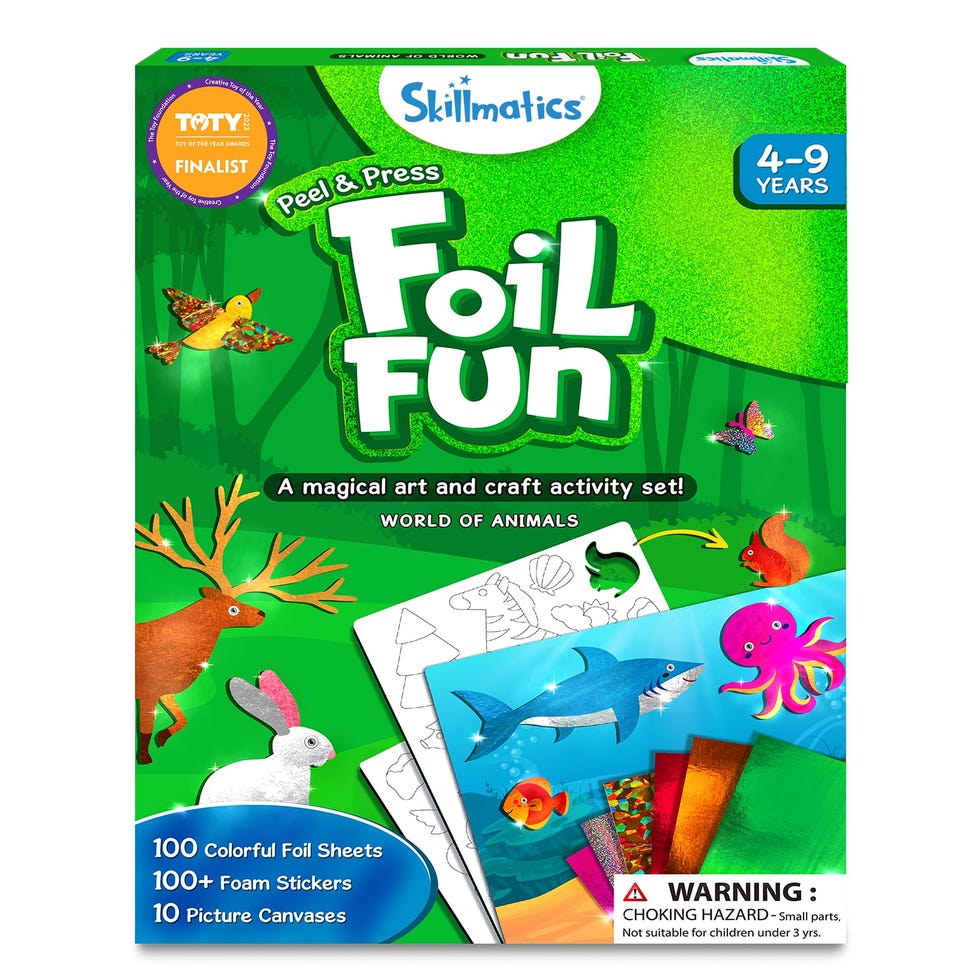
Kids peel backing off a sheet of sticker paper, rub foil on the sticker and voilà — a new work of art is born. They can then stick their new creation on one of 10 included canvases.
Lab Results: Kids loved finding fresh ways to mix the foil to create different effects on the stickers, though parents warned that the backing could be messy. Ages 4+

These magical fairies pack a lot of style into three inches, representing fashions from all over the world with features like Bantu knots, head wraps and Afro puffs.
Lab Results: Testers loved the fairies’ small size and cute outfits and the fact that they could be clipped to a backpack. “Both of my girls had to clip them on their bags,” one parent said. Ages 4+

Grave Digger, the superstar monster truck, tackles tough terrain thanks to robust tank treads. Kids steer the vehicle via remote control and can send it over grass, dirt, or snow — it can even motor through water.
Lab Results: Kids need to charge it via USB to get 20 minutes (or less) of go time. Even considering that, testers gave it perfect scores across the board. “We loved using it inside and outside,” said one. Another told us, “People were jealous of its ability to go over rocks and through water.” Ages 4+

This year Lovevery expanded its line of beloved play kits to age 4, with four boxes (one delivered every three months) that focus on vital pre-K skills including empathy, flexible thinking, early math, using scissors and mastering letters and sounds.
Lab Results: Adults appreciated that these new kits, like the ones for younger kids, come with information that explains key milestones to caregivers. Ages 4+

Players can use magnetic pieces to dress up their banana-shaped characters as outlandishly as they like. Then the other players award certificates to them, anything from “Most Creative” to “Most Likely to Be a Scientist.”
Lab Results: Our tester families loved making their silliest bananas. “We’ve played it every day for a week now,” one parent said. “My son even started making up his own rules. We love that anyone can be a winner.” For 2 to 4 players, ages 4+

This Rainbow High doll comes as essentially a blank slate — two white outfits, white hair — and your child adds up to six shades to her curls, clothes and shoes. Rinse and repeat!
Lab Results: “My child always wants to color her toys, so this was perfect. It’s meant to be drawn on!” a tester said. Parents (and kids!) loved that the doll could be cleaned off and colored in again and again. Ages 4+

Dinosaur fans can pick one of four raptors in this fast-paced game, which challenges players to push down on the dino tails to get the creatures to eat as many marbles as possible.
Lab Results: Kids loved “feeding” their characters. Plus, games like this that help develop motor skills and hand-eye coordination can be useful in the future. “They can boost other skills such as handwriting and sports,” says psychologist Emily Edlynn, Ph.D. For 2 to 4 players, ages 4+

Little Miraculous fans will call this car simply the best, since the doors and roof open for access to the inside and there is space for kwamis on the dash or in the trunk. The cool ladybug-spotted car seats two figures, but you have to buy Ladybug and Cat Noir separately.
Lab Results: “She likes how it looks exactly like the show,” one parent raved. Kids also found it easy to open the doors and the roof. Ages 4+

One hundred happy characters work like stackers when kids build them into a pyramid shape or dominoes when kids line them up and knock them down. They can also be used in activities to practice skills like sorting — challenge kids to sort the figures by pose! — or color-matching.
Lab Results: These multisensory toys were a hit in homes, but a teacher also tried them out and said they’d now be a staple in her class. “Kids explore the textures, sort these by color and shape and really engage with them,” she said. Ages 4+

Mixing and matching outfits is easy with these 10-inch fashion dolls’ looks. Clothes and accessories are peel-off stickers, and each doll comes with seven complete outfits that can be swapped around to make more than 850 looks.
Lab Results: Kids loved that in addition to the stick-on fashions, these dolls had extra-long rooted hair that they could brush and style with tiny accessories like barrettes and hairbands. Ages 4+

Kinetic Sand may not be new, but here it’s a sandcastle medium kids can use anywhere. This comes with two and a half pounds of the less-mess “sand” and nine castle molds as well as tools and a tray.
Lab Results: “My child hasn’t stopped asking to play with it,” one parent said.“ At one point four neighbor kids joined in." Ages 3+

Kids can mix sweet-smelling ingredients, form them into a molded dough, pop it in the included oven, listen to the timer tick and then — ta-da! — out pops a fully baked plush friend. The animal (a puppy, a bunny or a cat) is scented like a sweet fresh from the oven and even feels warm to the touch.
Lab Results: There was a big wow factor when kids opened the oven and saw their new toy. ”I was really surprised when I saw how big a dog it was that supposedly came from some little dough,” one 7-year-old tester said. Ages 5+

What goes up must come down, and while Stomp Rockets have always had the “up” part down pat, the company has now found a way to make the ”down” part just as much fun. This set comes with a net kids can use to try to catch the rocket on its descent, as well as four rockets.
Lab Results: Parents reported that the fact that their kids could switch between being the stomper and the catcher meant that they stuck with this toy for a long time. “Perfect toy for hand-eye coordination and fun among friends,” one said. Ages 5+

Your child builds this doghouse (that’s why you see a hammer), fills the water bowl and comes up with a puppy name for the sign before hanging it outside. When they open the door — magic! — an interactive dog is there! (Spoiler: It drops from the roof. You can put it back in and do it all endlessly.)
Lab Results: Surprise toys are still a huge hit with today’s kids, and this one feels like more of a magic act than most since the house looks empty when kids first put it together. Ages 5+

Set up the pirate’s lair and then populate it with characters: This set comes with six torsos, legs and heads along with a host of different accessories that can be mixed and matched to make more than 1,000 combinations.
Lab Results: Testers noted that it took a little while to get the hang of how to swap out the pieces — they don’t just pop on and off — but they loved creating different characters and reveling in all the little details that make Playmobil so popular. (The treasure chest is full of teeny coins!) Ages 5 to 10

Once your child masters a beginner scooter, this one is a step up, made for kindergarten kids and beyond. They can go faster and farther on it with fewer kicks. The handlebar adjusts, and it comes in black, pink, blue (pictured), purple and green.
Lab Results: “This was solid and sturdy, and my daughter was able to race her older brother,” the parents of a 7-year-old told us. Ages 5+


This is played like a typical four-in-a-row game, but with a couple of tech twists: It can be played head-to-head or by a single player against a robot competitor, and pieces can also be stacked vertically for a 3D challenge.
Lab Results: Testers loved the ability to play solo — but they said the computer was hard to beat, so watch out! For 1 to 2 players, ages 6+

Kids can use these thin, magnetized pieces inspired by origami to make a flat picture or a 3D design. There’s nothing like Clixo for letting kids mold shapes and invent things and giving them a storyline. This set comes with 72 pieces in 10 shapes, including eight spinning wheels.
Lab Results: “When my son stopped worrying about the examples, he got excited about his own creations,” one parent said. “I like that this has an element of architectural spatial thinking.” Ages 6+

In this cooperative game, players put together five-card sequences to move their pups around the board to various dig sites, hoping to uncover four bones to win. The way the card sequences work teaches kids early coding skills.
Lab Results: Testers called this one complex and said it offered the right amount of challenge. “I’ve done some coding and can definitely see the parallels,” one parent said. For 2 to 4 players, ages 6+

This perfect take-along toy occupies kids anywhere with brain-teaser puzzle games and building challenges. (Adults like it too!) Kids can start with easy games and progress through more than a thousand combinations, asking the toy for hints if needed.
Lab Results: “My 7-year-old immediately said it reminded him of Tetris,” a parent said. “He loved that it lit up and had so many puzzle options. Ages 6+

Millennials may remember the Furby of the 1990s. Now it’s back and refreshed with brighter colors, more interactive responses and even some cool dance moves (and new feet).
Lab Results: “I had an old Furby back in the day,” one parent said. “This one looks cuter and the colors are nicer, and the fact that the feet make it rock back and forth makes it look more alive.” Ages 6+

This Lite Brite ditches the pegs in favor of lights that change colors with a tap — genius! In addition to making fun designs, there are various games artists can play, or they can experiment with different animations.
Lab Results: One tester family reported that they had to run out and get a second one — everyone wanted to use it at the same time. Families also liked that there were different templates you could follow if you were waiting for creative inspiration to strike. Ages 6+

Kids can learn more than a dozen ways to wow an audience from this 25-piece kit, including card tricks, how to make objects “disappear” and how to make things appear.
Lab Results: This hooks kids in. “My daughter enjoyed the variety of tricks she could pull off,” a parent told us. Pay attention to the age grading; kids under 6 might be frustrated. Ages 6+

Kids are amazed to see their creations turn into app-enabled video games. They draw out levels using colored markers to stand in for goals (like coins), obstacles and hazards. Then they scan the design into a tablet and actually play. Guides walk them through the elements of a great game.
Lab Results: Kids adored seeing their artwork come to life, though it was frustrating to troubleshoot parts that didn’t work. Older kids might be a better fit for this one. “But when it worked, they were very excited!” one parent said. Ages 6+

The mix-and-match fun kids have with Fashion Plates can be applied to makeup and hairstyles with this set. It comes with eight backgrounds and eight faces kids can combine for 64 total looks. Then they can customize, coloring in makeup and hair, and add finishing touches with stickers and stencils.
Lab Results: Kids got super creative, with one even doing some absurd upside-down faces, and kids and parents both appreciated the paper in a variety of skin tones. Ages 6+

Fans of the classic Tamagotchi will delight in knowing kids can still feed and care for this digital pet. But Tamagotchi Uni does more, including connecting with others in the “Tamaverse,” where they can try on different fashions and play games.
Lab Results: “I remember these from when I was a kid, and I can’t believe how much they’ve evolved,” one parent tester noted. “My daughter can even have Tamagotchi playdates with her friend’s Tamagotchi.” Ages 6+

This car has a camera, so you can race it around a real track at home and also experience the action from the point of view of the car via an iOS app, PlayStation 4 or PlayStation 5.
Lab Results: Kids enjoyed customizing the look of the car in the app. “My son loved the ability to see the camera’s POV on the screen of his iPad, especially when it went under the table, by our dog or past his little sister,” a parent said. Ages 6+

Dog-E arrives as a white blank slate, and your kid discovers its unique combination of colors, its bark and even its personality through playtime. One Dog-E can even have multiple profiles, so siblings can share and still each have a unique experience.
Lab Results: “It’s exciting as you reveal your dog’s specific surprise features,“ a tester told us. The dog then delivers messages through its tail lights to let you know when it is hungry or wants to play. Ages 6+

Kids can whip up new accessories in a snap with this gadget, which holds elastic in place and lets designers pop on beads in different colors. When it’s not in use, the beads and elastics can be stored inside.
Lab Results: Kids loved making new bracelets — for themselves, their friends and their families too! Ages 7+

All Kanoodle game are a verified TikTok sensation, and this one —the largest Kanoodle game yet — starts players off with the beginning of a 3D shape; they have to see if they can fit the remaining pieces in to form a pyramid.
Lab Results: “My daughter liked the trial-and-error process, manipulating the pieces to see how they fit together and then developing a knack for the logic,” a parent said. Ages 7+

Fireside Games Castle Panic 2nd Edition
Up to six players are charged with defending their tower in the center of the game board from invading monsters, and they must use their logic and strategy skills to win or lose as a team.
Lab Results: “No matter where a child is with their strategy skills, these games offer great practice in critical thinking, planning ahead, patience and problem-solving,” says psychologist Emily Edlynn, Ph.D. For 1 to 6 players, ages 8+

Kavi’s backstory is that she’s a 12-year-old dancer with an elephant good-luck charm, a pet doggy and an Indian heritage.
Lab Results: Our pros always appreciate the quality of these dolls and of the books that come with them. “My daughter loved her outfit and journal. She enjoyed reading about Kavi’s traditional Indian dance moves,” a parents said. “I enjoyed that Kavi represented a girl in present times.” Ages 8+

This gives players all they need to know to learn mahjong and then some, including rules for both the American and Chinese versions of the game along with more advanced rules for an additional challenge.
Lab Results: "As a parent, I loved that he was so into learning this popular game from another culture,” one tester said. “I think this version is great for beginners and for family game night!” For 4 players ages 8+

Like all creator sets, LEGO fans can use these pieces for multiple builds. This set can become a quaint family home, a multistory canal house, or an A-frame cottage. Each has options, so builders can keep remaking.
Lab Results: This is a set for LEGO fanatics who love the construction process. Even tiny toys and accessories inside have to be built. Ages 8+

Players need to think on their feet in this game because once the baton is passed to them, they have to give an answer quickly. The baton is a timer that resetsautomatically when it gets passed on.
Lab Results: Families loved playing this together even when there was a huge spread in the players’ ages. Some reported playing with both elementary schoolers and young adults, and everyone had fun. For 2 or more players, ages 8+

Fitting with the “miniaturize everything” trend, this kit gives kids the tools, tips and techniques needed to make and decorate 10 pieces of mini pottery. It uses air-dry clay — no kiln — but a real potter’s wheel, and projects progress from beginner (using templates) to expert (freestyle).
Lab Results: Getting to use an actual pottery wheel was a big hit with kids, who loved seeing how tools shaped the clay in different ways. Ages 8+

The gameplay is the same, but now this 3D puzzle-slash-fidget toy, the Rubik’s Cube, is made from recycled plastic.
Lab Results: The packaging and the toy are made with sustainability in mind. “It’s smooth and quick to turn,” said one parent, echoing others who agreed that this version didn’t require any breaking in. Ages 8+

Kids can hold this colorful device in one hand and remix music — including adding sound effects, layering tracks and making loops — using different hand motions.
Lab Results: “My child absolutely loves this,“ one parent said. “He’s spent hours playing with it. I love how this toy really lets kids express their creativity.” Ages 8+

Project 24 different HD images of the northern sky onto the ceiling of their room and turn a child into a space fan forever. The images rotate manually and shut off automatically too.
Lab Results: Parents reported that kids actually learned the names of stars and planets from this set. “A great learning tool through wonder and fun!” a parent said. Ages 8+

Part fidget toy, part puzzle game, it’s hard to leave this one on the table without giving it a spin. It’s made of 14 concentric rings that can be spun, twisted and flipped. Find the right configuration and complete a stunning picture.
Lab Results: Several families reported using multiple Spin Flips and doing head-to-head battles to see who could solve their puzzle first. Others said they liked this for car rides. A few adults admitted to using this to unwind after the kids went to bed! Ages 8+

This supersize 25th anniversary version of the game Cranium features 800 new questions that are incorporated into 18 different activities. Questions will have players sculpting with clay, humming, creating their best sound effects and drawing with their eyes closed.
Lab Results: Testers said some of the cultural references were hard for younger teens to get, but even if they didn’t understand them all, they still had a blast trying out the challenges. For 4 or more players, ages 12+

Two prop motors power this lightweight foam plane that flies really high and very fast for a kids’ RC plane. Liftoff is easy and landings are soft; the toy beeps to let kids know where it is if it has flown out of range.
Lab Results: Our testers could send this jet flying quickly and easily. Practicing stunts and perfecting the controls took more time but stayed fun. The body is sturdy and hit many trees and bushes with no dents or dings. Ages 12+


