
You can plant a surprising number of things in your garden in the fall. Tulips, beets, and my personal favorite, garlic, can all be planted in autumn. These garlic planting tips will help you get the most out of next year’s summer garden.
Luckily, garlic is not only delicious, but very easy to grow. You can plant it in October, or even later in the year if your local climate allows for it. It doesn’t take much to make this plant happy. Well-draining soil and a sunny spot is all you really need. (That said, fertilizer and regular weeding is also recommended if you’re looking to help your garlic plants thrive). Come 2027, you’ll be pulling up tons of garlic. There are tons of ways to use it, but my favorites are a garlic confit or a pasta sauce with plenty of garlic. You can also use it in curries, soups, dips, and plenty of other recipes. If you end up with more garlic than you know what to do with, you can freeze it or dehydrate it to use it later.
Ahead, learn more about how to plant and harvest garlic. For more ideas to help you plan for next year’s garden, read up on the first things I always plant in spring.
Types of Garlic
First thing to know is, there are two main types of garlic:
- Softneck, which has a flexible stem that can be braided for longer storage. This type is the best for southern growers.
- Hardneck, which has a stiff stem, or scape, which can also be eaten. This type grows well in cold climates. The scape is harvested in the late spring, which encourages the plant to put its energy into developing a larger bulb.
There are many different varieties, but a few favorites include:
Softneck:
- Inchelium Red grows in both warm and cold climates and is the best variety for braiding; it’s mild-flavored.
- Italian Early grows best in cold and western climates and also can be braided; it’s considered the garlic that stores the longest.
Hardneck:
- Chesnock Red is cold-hardy and is prized for its large cloves, which have a smooth texture when roasted.
- Music grows well in cold climates and has jumbo cloves with a robust flavor.
When to Plant Garlic
Garlic can be planted anytime from mid-fall until the ground freezes. That ranges from mid-October to December.

How to Plant Garlic
Choose a spot in full sun, which is considered 6 or more hours of direct sunlight. Garlic doesn’t like wet feet, so make sure to plant in an area of your garden which is well-draining. The location also should be somewhere that won’t be disturbed because garlic takes about 8 months to mature before you can harvest it.
Dig a hole about 4 to 6 inches deep, going shallower for warm climates, deeper for cold climates. When you’re ready to plant, break apart the whole bulb, separating each clove. Leave the papery sheath intact on each individual clove (but don’t worry if some of it comes off). Place the clove pointy end up in the hole, cover with soil, and tamp down gently. Allow about 6 inches between cloves. Water well.
Don’t worry if the bulbs sprout after planting; it won’t affect your harvest. Now wait for spring!
In the spring, fertilize with a balanced fertilizer when you first see green shoots. You also should water occasionally if it’s extremely dry. Make sure to keep the garlic bed weeded so it’s not competing with weeds for nutrients and moisture.

Can I Plant Grocery-Store Garlic?
Most grocery store garlic has been treated to inhibit sprouting. You can try planting it, but I think it’s usually a waste of time and garden space. Instead, order “seed stock” from reputable growers such as Johnny’s’ Selected Seeds or Keene Garlic. These vendors also will ship when garlic is ready to be planted in your region, which makes it easier on you because you don’t have to store it.
When to Harvest Garlic
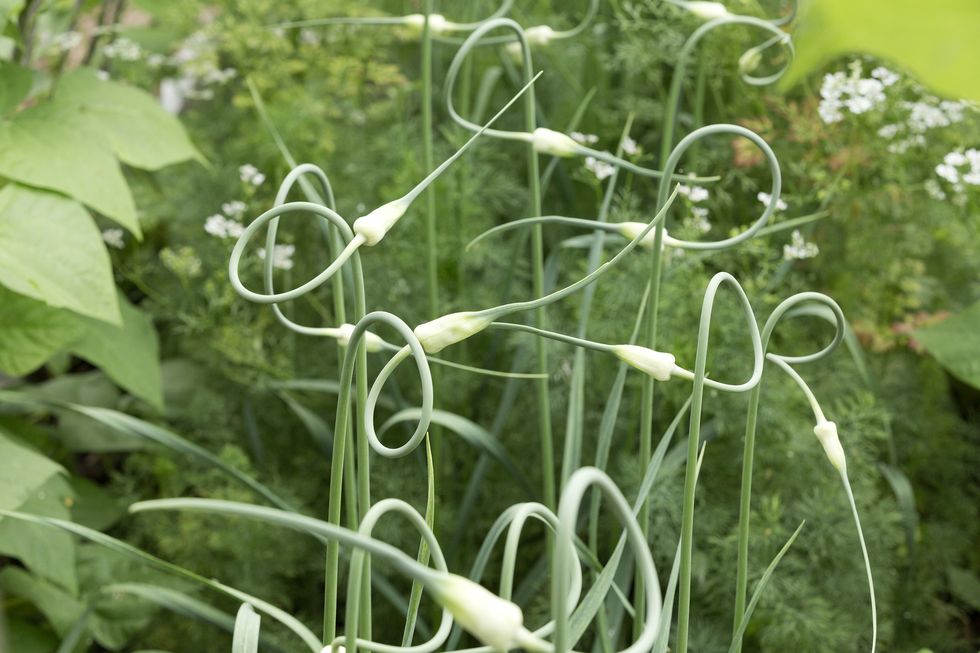
Garlic is ready to harvest in late spring to early summer, depending on where you live and the type you planted. With hardneck varieties, you’ll see the stems or scapes emerge from the top of the plant a few weeks before harvest time. Cut them off as they begin to curl under; don’t neglect this step because removing the scape allows the plant to push its energy into creating a larger bulb. You can dice and sauté the scapes, which have a mild garlic flavor, for any dish that calls for garlic or scallions.

For both hardneck and softneck varieties, it’s time to harvest when about half the foliage has turned yellowish and toppled over. Use a spade or garden fork to lift around and up under the bulb; shake off the dirt and let the bulbs cure out of direct sunlight for a couple of weeks, which helps improve storage life. When dry, cut the leaves off at the neck area, leaving a few inches of stem intact. Or you can weave the stems of softneck garlic into a braid.
How to Store Garlic
Garlic should be stored in a cool, dark place –preferably in a jar or container that allows air circulation, so the heads don’t rot. Braided garlic can be hung in a cool, dark location. Both methods will allow garlic to last for about 4 to 6 months, depending on the type and storage conditions. However, use any bulbs you damaged accidentally when lifting them from your garden first because they will spoil faster.
Arricca Elin SanSone is a writer, editor, and content creator who specializes in lifestyle and gardening. With a background in health reporting, she applies these same research skills when writing about the science of growing things. She trials new plants in her expansive garden, and her houseplant collection consists of 60+ varieties. Arricca has written thousands of articles for publications such as Country Living, House Beautiful, Good Housekeeping, Prevention, VERANDA, Southern Living, and more. She’s happiest when digging in the dirt, baking, or spending time with the people and dogs she loves.


