The Most Popular Slang the Year You Were Born
Remember when everyone would tell each other to take a “chill pill?”

Slang often changes with the times. A word that seems current one year can feel dated the next and you suddenly feel uncool compared to your friends and peers for using a word in conversation that’s no longer in fashion. “As if,” you say. But you might be surprised by how old some slang words are and how it’s become embedded in our everyday lives.
With the help of the Oxford English Dictionary and a few other archival resources, we've rounded up the slang words that have defined each year from the mid-1920s to today. Yes, some are cringe in retrospect, like “Fo Shizzle,” and "Studmuffin," but others are simply timeless.
1926: Gold-Dig

The money-flush times of the Roaring Twenties gave rise to this term for a woman who is interested in a man, but only for his money. It came from the appropriately titled "Mantrap" by Sinclair Lewis.
1927: It Girl

Hollywood couldn't get enough of Clara Bow — so much that she was branded the "It Girl."
1928: Baloney

It's hooey, it's baloney. This word can be traced back to an article in The Saturday Evening Post, which referred to something phony as being a bunch of balony (their spelling).
1929: It Boy

A couple of years after the "It Girl" came Hollywood's "It Boy," which referred to basically any handsome young guy.
1930: Booksy

Instead of being "bookish," anyone who took an interest in reading was "booksy."
1931: Snazzy

This word perfectly articulated the elegant-but-also-flashy style of Hollywood starlets and heartbreakers alike of the early part of this decade.
1932: Burp

The word "burp" almost replicates the noise one makes when belching.
1933: Beered Up
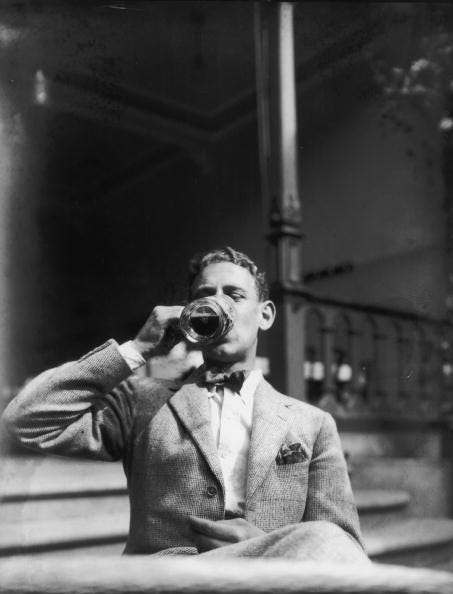
This would be the year that Prohibition would be repealed, an occasion that was robustly celebrated.
1934: Boffo

This word originated from the burgeoning comedy scene, where a line that delivered a big laugh was a "boffo."
1935: Gramps

This could refer to your grandpa, or any older person you felt like insulting.
1936: Bingo

This referred to, yes, the bingo halls that became a hot fad (and then a long-loved game).
1937: Gunky

Another great word here, referring to something that's pretty gross.
1938: Fave

Another entertainment industry term that made its way into common language, "fave" was used exactly how it is now: to refer to a favorite thing.
1939: Bad-Mouthing

Before we trash-talked, we engaged in bad-mouthing our opponents in sports.
1940: Baby Blues

The rise of parenting experts lead to a whole new vocabulary for new parents. The term "baby blues" would refer to any sadness felt by a mother after the birth of her baby.
1941: Dreamboat

Yet another phrase borrowed from Hollywood, this time to refer to a handsome actor. Though generally used for younger celebrities, we still think Cary Grant is a dreamboat.
1942: Hyper

No longer considered a polite term these days, but this shortened version of "hyperactive" was used to describe kids with a lot of energy.
1943: Duh

This one was a surprise! Though we associate "Duh" with the '90s, it was widely used as an off-handed remark in the '40s (OED cites a "Merrie Melodies" cartoon as the source).
1944: Tag-Along

Interestingly, a "tag-along" was a military term that originally referred to a bomb. It was then repurposed into slang, to describe anyone who was unexpectedly joining in on your plans for the day.
1945: Doh!

Another surprise from the '40s! Before Homer Simpson had this catchphrase, this offhanded expression had roots in radio programs. Specifically, the program "It's That Man Again." Doh!
As an Editorial Fellow for Good Housekeeping, Katie covers health, beauty, home, and pop culture. Outside of the office, you can find her killing it on the karaoke machine or listening to true crime podcasts.
Readers Also Read

110 Impossible Riddles for Adults

130 Clever Riddles for Smart Kids

Photos That Show How Disney Parks Have Changed

12 Things Electricians Say You Should Never Do