10 Best Fish Oil Supplements for Heart and Brain Health, According to Dietitians
Not all fish oil supplements are created equal. These RD-approved picks make it easier to find the right one for you.
 Medically reviewed by Rachel Lustgarten, M.S., R.D., C.D.N.

We've been independently researching and testing products for over 120 years. If you buy through our links, we may earn a commission. Learn more about our review process.
Omega-3 fatty acids support heart, brain, and overall health, and fatty fish like salmon, sardines, and mackerel are rich in EPA and DHA, two omega-3s your body needs but can’t make on its own. But if seafood isn’t regularly on your menu, a fish oil supplement can help fill the gap.
Our top picks:
- Best Overall: Nordic Naturals Ultimate Omega
- Best for No Fishy Burps: Nature Made Burp-less Fish Oil
- Best for Stocking Up: Kirkland Signature Fish Oil
- Best Liquid: Carlson The Very Finest Fish Oil
Registered dietitians in the Good Housekeeping Institute Nutrition Lab evaluated more than 40 fish oil supplements, looking at EPA and DHA content, quality, dosage, and testing. We also tapped nutrition experts to help us understand what really matters when choosing one.
Our registered dietitians in the Good Housekeeping Institute Nutrition Lab review and evaluate every single supplement we recommend in accordance with our dietary supplement methodology. We then have a registered dietitian on our Medical Review Board review each article for scientific accuracy. A supplement should do just that: supplement the diet, not replace high-quality, nutritious food and important healthy lifestyle practices. Check with your health care provider before starting any dietary supplement regimen.

Pros
- No fishy aftertaste
- Strong quality transparency
- Third-party tested with COA available for every product

Cons
- Softgels are fairly large

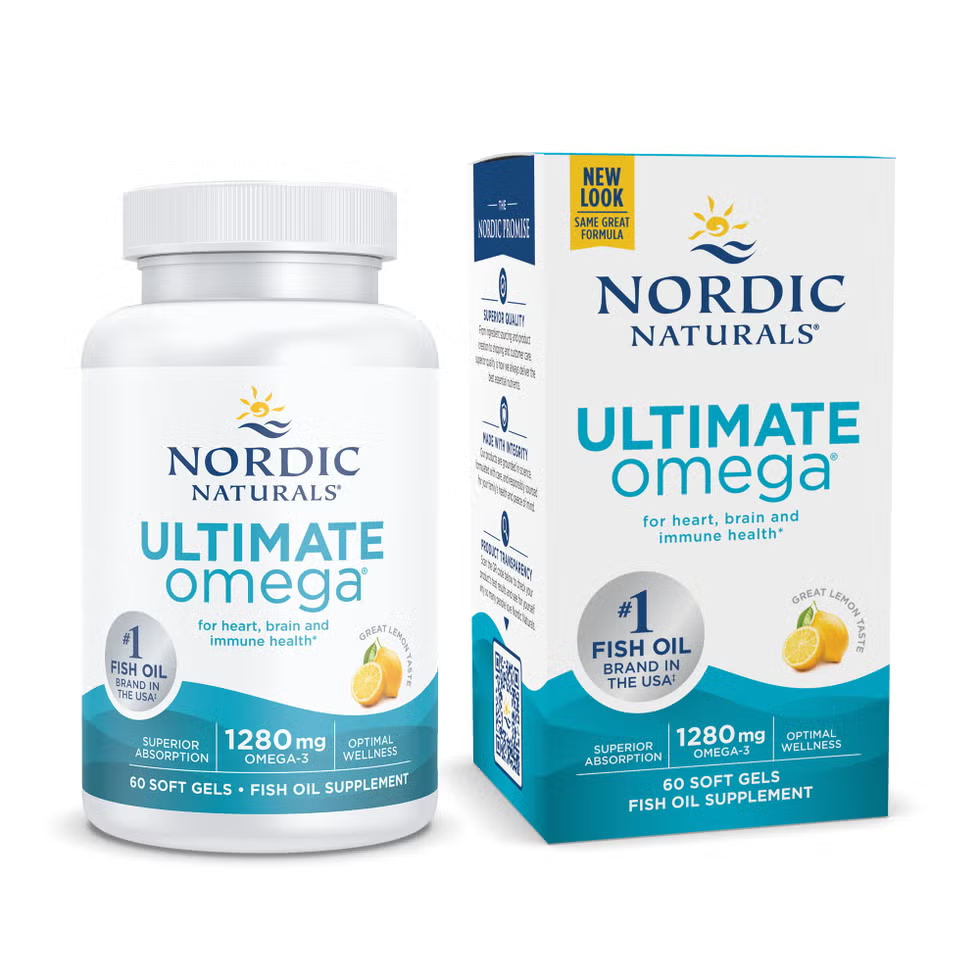
Nordic Naturals earns our top spot for its well-rounded combination of a high-quality formula, substantial omega-3 content, transparent testing, and responsible sourcing. It also offers a more pleasant experience than many fish oil supplements, making it a standout choice for everyday use.
Each two-softgel serving provides 1,280 milligrams of total omega-3s, including 650 milligrams of EPA and 450 milligrams of DHA. The lemon-flavored formula is made from 100% wild-caught fish, is free from artificial colors and flavors, and is best taken with food. Our registered dietitians also appreciate the brand’s commitment to quality and transparency.
Nordic Naturals says its fish oils are third-party tested and makes Certificates of Analysis available for every product, allowing consumers to review testing results for potency, contaminants and oxidation. Many reviewers say the softgels don’t smell fishy or cause burping, although they are fairly large and may be difficult for some people to swallow.
| Dosage | 2 softgels |
| Servings per container | 30 |
| Omega-3s | 1,280 mg total (650 mg EPA, 450 mg DHA) |
| Price per serving | $1.00 |

Pros
- Affordable option
- Third-party tested
- Only one softgel serving per day
Cons
- Lower DHA dose
If you’re looking for a high-dose fish oil without a hefty price tag, this Nature Made option delivers 1,400 milligrams of total omega-3s in a single softgel, including 683 milligrams of EPA and 252 milligrams of DHA. The roughly 1-inch, enteric-coated softgel is designed to help minimize fishy burps and is best taken with a meal and water. It’s also free from added colors, artificial flavors, gluten, milk, and shellfish.
Reviewers largely praise the softgels for being easy to swallow and free of a fishy aftertaste. While this particular formula isn’t USP Verified, Nature Made says its fish oil products undergo third-party quality testing, and several of its other fish oil formulas such as the 1,200-milligram and 1,000-milligram fish oil formulas have earned the USP Verified Mark. At around 21 cents per softgel, this pick offers a particularly affordable way to add omega-3s to your routine.
| Dosage | 1 softgel |
| Servings per container | 90 |
| Omega-3s | 1,400 mg total (683 mg EPA, 252 mg DHA) |
| Price per serving | $0.38 |

Pros
- USP Verified
- No artificial colors or flavors
- 400 servings for easy stocking up
Cons
- Softgel needs to be taken two times daily
For shoppers looking to stock up, Kirkland Signature Fish Oil offers 400 softgels per bottle—enough for about 200 days at the suggested dose of two softgels daily. By far the best value pick on our list, each softgel contains 1,000 milligrams of fish oil, including 250 milligrams of EPA and DHA. Take one softgel twice daily with a full glass of water, preferably with a meal, as per the suggested usage guidelines on the packaging.
In this case, affordability doesn't mean poor quality. In fact, this supplement carries the USP Verified Mark, which indicates that the product contains the ingredients listed on the label in the declared potency and amounts and does not contain harmful levels of specific contaminants. What's more, it's been made in accordance with the U.S. Food and Drug Administration's current Good Manufacturing Practices, with sanitary, well-controlled procedures. Reviewers love the value and the ability to stock up on a lot at once at a reasonable price. Our registered dietitians appreciate that this affordable choice is free from artificial colors and flavors.
| Dosage | 1 softgel (twice daily) |
| Servings per container | 200 |
| Omega-3s | 1,000 mg total (250 mg EPA + DHA) |
| Price per serving | $0.10 |

Pros
- High dose: 1,600 mg omega-3s per teaspoon
- IFOS certified and ConsumerLab approved
- Lemon and orange flavors; easy to mix into foods and drinks
Cons
- Liquid format may be less convenient than softgels
If you’d rather skip another capsule, Carlson’s The Very Finest Fish Oil offers a high-dose liquid option. One teaspoon provides 1,600 milligrams of omega-3s, including 800 milligrams of EPA, 500 milligrams of DHA, and 90 milligrams of DPA. DPA (docosapentaenoic acid) is another omega-3 fatty acid found in fish oil, although it has been studied less extensively than EPA and DHA. Our Nutrition Lab experts liked the high omega-3 content and the flexibility of a liquid formula, which can be taken by the spoonful or mixed into yogurt, smoothies, salads, or drinks. It comes in lemon and orange flavors and in 6.7- and 16.9-fluid-ounce bottles.
The oil is made from wild-caught anchovies, sardines, and mackerel and is independently tested for freshness, potency, purity, and contaminants. It also participates in the International Fish Oil Standards (IFOS) Program, a voluntary third-party certification that evaluates fish oils for potency, purity, and freshness, and has earned ConsumerLab approval. One drawback: because it’s a liquid, it requires refrigeration after opening and should be used within 100 days.
| Dosage | 1 teaspoon (5 ml) |
| Servings per container | 40 |
| Omega-3s | 1600 mg (800 mg EPA, 500 mg DHA, 90 mg DPA) |
| Price per serving | $0.74 |

Pros
- Designed to minimize fishy burps
- Vegan, algae-based source of DHA and EPA
- Third-party tested; Clean Label Project Purity Award
Cons
- Lower EPA compared to DHA
If fish oil’s biggest turnoff is the fishy aftertaste, Ritual takes a different route. Its omega-3 comes from microalgae, providing 500 milligrams of combined EPA and DHA in one vegan capsule, with twice as much DHA as EPA. The capsule is also infused with a natural citrus oil flavor and designed to minimize burp-back.
Our Good Housekeeping Institute Nutrition Lab experts liked the vegan algae source and the product’s extensive quality testing. Each lot is tested for heavy metals, microbes, and other contaminants, and the formula has earned a Clean Label Project Purity Award. It’s also sustainably sourced from microalgae and requires just one capsule daily.
The main consideration is dosage: 500 milligrams of combined EPA and DHA is a moderate amount, so those specifically looking for a higher-potency supplement may prefer another option. Because it’s algae-based, it’s also a good fit for shoppers who want DHA and EPA without a fish-derived ingredient.
| Dosage | 1 capsule |
| Servings per container | 30 |
| Omega-3s | 500 mg (308 mg DHA + 154 EPA) |
| Price per serving | $1.23 |

Pros
- Kid-friendly gummy format
- Fish-free algal oil with 100 mg EPA + 50 mg DHA
- Third-party tested for 200+ contaminants
Cons
- 2g added sugar per serving
SmartyPants Kids Omega-3 Brain provides 189 milligrams of total omega-3s per two-gummy serving, including 100 milligrams of DHA and 50 milligrams of EPA. The omega-3s come from algal oil rather than fish, making it a convenient option for families looking for a fish-free source.
Our nutrition experts liked the use of algal oil, along with the product’s third-party testing for more than 200 contaminants and Clean Label Project certification, which recognizes products that meet standards for ingredient safety and purity. The gummies are also free from artificial flavors and synthetic colors, and the 2 grams of added sugar per serving is relatively modest for a gummy supplement.
The main consideration is that the product provides a relatively modest amount of EPA and DHA. However, there is no established U.S. recommended daily amount for EPA and DHA for children. We’d view it as a supplemental source rather than a replacement for omega-3-rich foods, such as lower-mercury fish.
| Dosage | 2 gummies |
| Servings per container | 30 |
| Omega-3s | 189 mg (100 mg DHA + 50 mg EPA) |
| Price per serving | $1.00 |

Pros
- ConsumerLab approved
- Registered with the Vegan Society
- Omega-3s sourced from microalgae oil
Cons
- Fairly large softgel
Deva Vegan Omega-3 DHA EPA is a solid fish-free option for shoppers who want a higher-dose algae-based supplement at a relatively affordable price. It provides 1,000 milligrams of omega-3s from microalgae oil, with 500 milligrams of combined EPA and DHA. Registered by the Vegan Society, this product is also free from gelatin. A serving is one vegan softgel taken with food daily.
Approved by ConsumerLab.com as part of its voluntary Quality Certification Program, this option passed tests for heavy metals, meaning it was found to be free of concerning levels of contaminants such as lead, arsenic, cadmium, and mercury.
Reviewers like that it is free from carrageenan and doesn't have a bad taste either. The pills are fairly large, but you'll get a 60-day supply in each container.
| Dosage | 1 softgel |
| Servings per container | 60 |
| Omega-3s | 1,000 mg total (300 – 420 mg DHA, 150 – 120 mg EPA) |
| Price per serving | $0.53 |

Pros
- High EPA and DHA dose, with 1,000 mg total per serving
- Third-party testing for 200+ contaminants, including heavy metals
- Friend of the Sea certified for responsible sourcing
Cons
- High price compared to other picks
Metagenics OmegaGenics 5-in-1 is a strong choice for shoppers prioritizing heart health, thanks to its 1,000 milligrams of combined EPA and DHA per one softgel serving, including a relatively high 710 milligrams of EPA. EPA and DHA are well-studied omega-3 fatty acids, with EPA in particular being associated with cardiovascular health, making this a compelling option for those looking to add more omega-3s to their routine.
The concentrated fish oil is made from wild-caught sardines, anchovies, and mackerel and is naturally lemon-flavored, which may help minimize the typical fishy aftertaste. Our Lab experts also liked the Friend of the Sea certification and testing for more than 200 contaminants, including heavy metals and environmental toxins.
The formula does contain gelatin, so it isn't suitable for vegetarians or vegans. The EPA-heavy formula also may not be the best fit for shoppers specifically looking for a higher amount of DHA. The main drawback is the price, as this formula costs more per serving than many of the other fish oil supplements we evaluated.
| Dosage | 1 softgel |
| Servings per container | 60 |
| Omega-3s | 1000 mg (710 EPA, 290 DHA, Other omega-3 fatty acid triglycerides 100 mg) |
| Price per serving | $0.81 |

Pros
- High EPA + DHA dose
- Formulated by dietitians
- Clean Label Project certified
Cons
- Two softgels may be difficult to swallow for some users
Formulated by registered dietitians, Hum makes this unique fish oil complex that also packs in 13.4 milligrams of vitamin E, an important fat-soluble vitamin that acts as an antioxidant in the body. In terms of fish oil, you’ll find 1,400 milligrams of omega-3 fatty acids sourced from anchovies, including 800 milligrams of EPA and 400 milligrams of DHA.
All of HUM’s products are made in facilities that are certified to follow GMPs (Good Manufacturing Practices), required by the U.S. Food and Drug Administration (FDA). This supplement from Hum is also certified by the Clean Label Project, meaning it has been third-party tested for purity. The brand claims all its products are gluten-free and are tested to ensure gluten isn’t present at levels above 20 parts per million. Reviewers appreciate that the supplement has no fishy aftertaste or smell.
The recommended serving is two softgels daily, which may be a downside for people who prefer to take fewer pills or have difficulty swallowing larger capsules.
| Dosage | 2 softgels |
| Servings per container | 30 |
| Omega-3s | 1,400 mg total (800 mg EPA, 400 mg DHA) |
| Price per serving | $1.10 |

Pros
- Naturally contains astaxanthin and vitamin D3
- NSF certified for mercury and other heavy metals
- Made with 100% wild Alaskan salmon oil and provides 935 mg of total omega-3s per serving
Cons
- Provides 400 mg of EPA and DHA combined, which is lower than some concentrated fish oil options
New Chapter’s Wholemega is a thoughtful option for women 50+ looking to support healthy aging, when nutrition priorities may shift toward supporting heart, brain, eye, and joint health. The formula provides omega-3s from 100% wild Alaskan salmon oil, along with naturally occurring vitamin D3 and astaxanthin, two additional nutrients that may complement a healthy-aging-focused diet.
Wholemega provides 520 milligrams of total omega-3s per two-softgel serving, including 180 milligrams of EPA and 220 milligrams of DHA. Our Good Housekeeping Institute Nutrition Lab experts liked that the formula uses wild-caught salmon and has third-party certifications, including NSF certification for mercury and other heavy metals. According to the brand, it’s also made without bleaching, chemical isolation, or high-heat sterilization, which may appeal to shoppers looking for a less refined fish oil. The product uses salmon trim that might otherwise be discarded, earning it an Upcycled Certified designation.
One consideration is that Wholemega provides less EPA and DHA than many concentrated fish oil supplements, so shoppers specifically looking for a higher dose may want to compare labels.
| Dosage | 2 softgels |
| Servings per container | 30 |
| Omega-3's | 520 mg (180 mg EPA, 220 mg DHA) |
| Price per serving | $0.55 |
How we chose the best fish oil supplements

In the Good Housekeeping Institute Nutrition Lab, our registered dietitians rigorously evaluate supplements based on nutritional expertise, ingredients, and third-party testing data.
When selecting the best fish oil supplements, we considered dosage, serving size, price, servings per container, ingredients, form, taste, and whether you can take the dose with or without food. We reviewed more than 40 fish oil supplements and aimed to provide options to suit a variety of personal preferences and price points.

We prioritized recommendations that have been tested for purity, potency, and safety by a credible third-party organization. We reviewed marketing claims, ingredient lists, and product quality, and highlighted companies that test for heavy metals, pesticide and herbicide contamination, among other concerns. We also featured companies that have strict internal quality control standards.
Since the FDA does not approve dietary supplements for safety and effectiveness before going to market, it's incredibly important to thoroughly research each supplement you add to your regimen and speak with your doctor before purchasing.
What to look for when shopping for fish oil supplements

There are an overwhelming number of fish oil supplements on the market today, making it difficult to figure out which one is best for you and your personal needs. Here are a few things to keep in mind while shopping for one:
✔️ Form and size: While most of the options on our list are in softgel form, we included liquid options that are easier to swallow if you'd rather not take a pill. Check the serving size and consider the pill's size as well. Are you OK with one large fish oil pill daily, or would you rather take a few smaller ones throughout the day to meet your needs? Determine what works best for you and your lifestyle.
✔️ Taste and smell: This is one of the most common complaints about fish oil supplements. "Some people find that fish oil pills make them burp or cause nausea," says nutrition expert and author Frances Largeman-Roth, RDN. "I like taking ones that are either coated to remove the fishy odor, or have an insert in the package that gives the softgel a pleasant flavor."
✔️ Price: Fish oil supplements can vary greatly in price, and more expensive options aren't necessarily better. Because each bottle contains a different number of pills and serving size can vary, we included information on cost per dosage so you can accurately compare each option.
✔️ Quality: Check the ingredients to ensure there are no artificial additives in the supplement itself. It's also important to look for third-party testing by credible institutions, such as USP and NSF, to ensure quality standards and that what is on the product label is, in fact, what you'll be consuming.
✔️ Sustainability: "Environmentally responsible fish oil companies will offer transparency into their fishing practices," Dr. Schehr explains. Look for the blue Marine Stewardship Council (MSC) certification, which indicates that the fish or seafood has been sourced from fisheries that meet a set of sustainability requirements. If you'd rather avoid fish-based omega-3 supplements altogether, there are vegan options made from plant sources.
✔️ Dosage: You'll want to discuss proper dosage with your health care provider, but we have some tips below if you need a starting point to consider.
How much fish oil should you take daily?

When it comes to the appropriate fish oil dose, you'll want to consult with your healthcare provider. But there are some general guidelines you can follow. "The American Heart Association recommends up to 3 grams of fish oil daily. Most supplements provide 2,000 milligrams per serving," Largeman-Roth says.
Certain conditions and stages of life may also warrant particular amounts of individual fatty acids. "Most fish oil is recommended as a combination of DHA and EPA; however, there are instances where someone would dose one higher than the other," says Jaime Schehr, ND, RD, CDN, a nationally recognized expert in integrative medicine and nutrition. She adds that since omega-3 fatty acids combat free-radical activity, they may help improve cardiovascular disease, inflammatory conditions, metabolism, mood, cognition, and more.
Is there a downside to fish oil supplements?
Side effects from fish oil supplementation are often mild. They can include a disagreeable taste, headache, and gastrointestinal symptoms such as heartburn, nausea, and diarrhea, according to the National Institutes of Health. While most individuals will likely tolerate the supplement, certain populations should avoid taking fish oil.
"If you are taking blood thinners, such as warfarin, you should not take fish oil due to the increased risk of bleeding," Largeman-Roth explains.
How should I store fish oil, and does it expire?

Yes, fish oil has an expiration date, and it can eventually become rancid when its omega-3 fats oxidize, which happens more quickly with exposure to heat, light, and oxygen. Check the expiration date before taking it, and follow the storage instructions on the label. Liquid fish oil often needs to be refrigerated after opening, while softgels are generally stored in a cool, dry place. If the oil develops a strong, unpleasant, or unusually fishy smell or taste, it may have oxidized and should be discarded.
How can I avoid fishy burps from fish oil?
A fishy aftertaste, or “fish burps,” can occur as fish oil is digested. Taking your supplement with a meal, choosing a coated or flavored softgel, or opting for an algae-based omega-3 may help. Refrigerating softgels may also make them easier to tolerate. If you consistently notice an unpleasant aftertaste, try a different formulation or form of omega-3.
Are fish oil supplements worth it?

Fish oil supplements can be worth considering for people who don’t regularly eat fatty fish or who may benefit from additional EPA and DHA. Fish oil supplements provide two omega-3 fatty acids that play important roles throughout the body. “Research has shown the health benefits of EPA and DHA for many cellular functions in the body,” says Schehr. “Essential fatty acids play a significant role in growth, repair and reproduction, improving lipid levels and cardiac function.”
Largeman-Roth explains that EPA and DHA can support heart and brain health, as well as healthy joints, skin, and vision. “If you have elevated triglycerides, high blood pressure or just don’t like fish or don’t eat it twice a week, you should consider taking a fish oil supplement,” she says. That said, supplementation isn't necessary for everyone. If you regularly eat fatty fish, such as salmon, sardines, or mackerel, you may already be getting enough EPA and DHA from your diet. Schehr adds that omega-3s may also influence cardiovascular health, inflammation, metabolism, mood, and cognition.
Why trust Good Housekeeping?
As director of the Good Housekeeping Institute Nutrition Lab, Registered Dietitian Stefani Sassos handles all nutrition-related content, product testing, and evaluation. She stays up to date on the latest research to provide evidence-based reporting on all things diet and nutrition. Stefani runs and oversees supplement testing and analysis for Good Housekeeping and has previously covered several other supplements, including multivitamins and vitamin D.
Valerie Agyeman is a registered dietitian specializing in women’s health with over 10 years of experience in clinical nutrition, corporate wellness, and nutrition communications. She contributes to food and supplement testing at the Good Housekeeping Institute Nutrition & Fitness Lab and has covered topics including creatine, magnesium, and skin health.
Jaime Schehr, N.D., R.D., C.D.N., is a licensed naturopathic physician and a registered dietitian practicing since 2006. Dr. Schehr is the owner of Schehr Nutrition and a co-founder of xFitLab, a medical fitness consulting company. Dr. Schehr is the assistant director of academic integrative family medicine at the Institute for Family Health of Mt. Sinai. She is a prominent speaker in integrative medicine and nutrition and is often sought to lecture in both the corporate and academic space.
Frances Largeman-Roth, R.D.N., is a New York Times–best-selling author and nationally recognized health expert. Frances was the Food and Nutrition Director at Health magazine for nearly eight years. Before that, she was part of the editorial team at the Discovery Health Channel and also served as managing editor at FoodFit.com. Her recent book, Everyday Snack Tray, is currently available.
Rachel Lustgarten (she/her), M.S., R.D., C.D.N., is a registered dietitian in clinical practice in New York City. Her primary area of focus is medical nutrition therapy and weight control. Rachel’s passion is sharing her knowledge and expertise of food and nutrition’s role in overall health and wellness. She co-hosts the weekly “Primary Care Medicine” show on SiriusXM Doctor Radio, interviewing expert guests and fielding listener calls and questions about hot topics in health and nutrition. She served as a clinical dietitian at the Comprehensive Weight Control Center at Weill Cornell Medicine and served as an Advisor to the Weill Cornell’s Women’s Nutrition Connection monthly newsletter for 10 years. Rachel received a Master’s degree in Clinical Nutrition from New York University, graduating with honors.

3 Best Foot Massagers for Achy Feet

The Best Home Gym Equipment

Cool-Mist vs. Warm-Mist Humidifiers

Sore Muscles? These Massage Guns Can Help