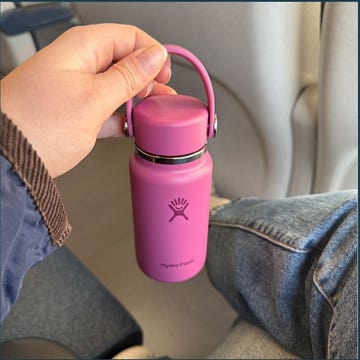
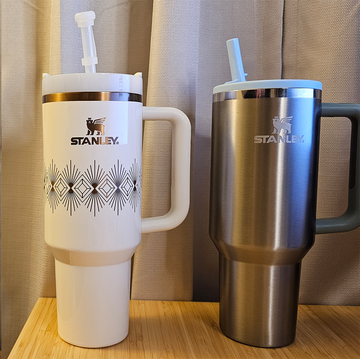
Most of us have an insulated tumbler we’ve used for years, with scratches and chips to prove it. While reusable, insulated drinkware is a great way to stay hydrated and reduce plastic waste, we wondered whether the scuffed coating on an old tumbler could transfer into a beverage and be harmful if ingested.
The Good Housekeeping Institute Kitchen & Cooking Lab has tested hundreds of tumblers, water bottles, and travel mugs for quality and safety. As a contributing analyst with a cabinet full of well-worn tumblers, I asked Noah Pinsonnault, a reviews analyst in the Good Housekeeping Institute Home Care & Cleaning Lab, and Joshua King, medical director of the Maryland Poison Center and a member of the American College of Medical Toxicology, what to know.
Is it safe to use an old insulated tumbler?
Most insulated tumblers and water bottles are made from double-walled stainless steel with a colored, powder-coat exterior finish. Some brands, such as Stanley, use a lead pellet in the tumbler’s base to seal the vacuum insulation, with a layer of stainless steel preventing contact with your beverage.
Loose particles from the finish would pose little threat if ingested, says King. “These are polymers that, at worst, would be as toxic as drinking from a plastic water bottle—i.e., not very—should they get into the tumbler,” he explains, “and I would expect they would be unlikely to do so.”
The lead pellet could be a health risk if the tumbler is seriously damaged. “It would take pretty substantial injury to the water bottle, like if it was crushed, to really release that solder,” says King. “Then you could possibly get toxicity from the lead, but I've never seen that. There's never been any reported cases of it.”

When to stop using your insulated tumbler
Minor cosmetic scratches or dents aren't necessarily an issue, but Pinsonnault recommends watching for these signs that it’s time to replace your old tumbler.
- Corrosion
- Cracks
- Deteriorating seals
- Persistent odors that don’t resolve with thorough cleaning
How long should you keep an insulated tumbler?
There's no universal expiration date for insulated tumblers. “Stainless steel can last many years with proper care, so I'd judge them by their condition rather than their age,” says Pinsonnault. Since the finish can wear over time, you might opt for an uncoated tumbler to keep it looking good as new.
How to dispose of an insulated tumbler
Stainless steel is recyclable in theory, but the tumbler’s mixed materials complicate matters, says Pinsonnault. Before tossing it in your curbside recycling bin, confirm which materials your local recycling program will accept, or, better yet, take it to a metal recycling center in your area. Another option is to check if the manufacturer has a take-back program. Both YETI and Stanley offer a $5 incentive for eligible drinkware.
The bottom line: Scratches won’t hurt you
Your old tumbler’s scratched coating is unsightly but not unsafe. You can drink from it as long as there’s no major damage to the body or the base, where some manufacturers place the vacuum-sealing lead pellet.
Why trust Good Housekeeping?
Mark Marino is a writer, food editor, and product tester with more than seven years of experience in digital food media. He has tested insulated tumblers and water bottles from most major brands. He has also written about food safety since becoming a contributing analyst in the Good Housekeeping Institute Kitchen & Cooking Lab.
Mark Marino (he/him) is a contributing writer and analyst in the Kitchen & Cooking Lab, where tests and writes about kitchen and food products. Previously, he was the executive commerce director at Apartment Therapy Media, where he oversaw the testing of home and kitchen products—including small appliances, cookware, and tools—for both Apartment Therapy and The Kitchn. He also has written about food and other lifestyle content for national media outlets such as Food & Wine, Bon Appétit, Parade Home & Garden, Yahoo!, and Business Insider.