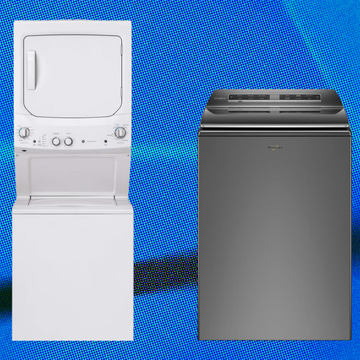
Nothing is more frustrating than opening your washing machine to find your sheets twisted into a tight ball with pillowcases, socks, or shirts trapped inside. Besides being annoying to untangle, tightly bundled sheets can prevent water and detergent from reaching every part of the fabric, leaving bedding less clean and taking longer to dry.
Fortunately, tangled sheets are usually preventable. In the Good Housekeeping Institute Home Care & Cleaning Lab, I test washing machines year-round, evaluating everything from cleaning performance and fabric care to ease of use, so I've seen firsthand how loading techniques can affect wash results. Because sheets are much larger than most laundry items, they naturally twist as they move through the wash cycle, but a few simple loading techniques can dramatically reduce the problem.
How to prevent sheets from tangling
A few simple laundry habits can dramatically reduce sheet tangling. Start with these tips:
- Don’t overload the washer. Sheets need room to move freely so water and detergent can circulate through the fabric. Overloading the washer makes it more likely for large items to twist together into one tight bundle.
- Gather the sheets before loading them. Hold the sheet by its center so all four corners hang freely. Then bring the hanging corners up to the center, creating a loose, quarter-folded bundle before placing it in the washer. This keeps the fabric organized without twisting or stuffing it into the drum.

- In front-load washers, add each sheet individually, so it has room to unfurl as it tumbles.
- In top-load washers, distribute sheets loosely around the agitator or impeller instead of dropping them into one pile.
- Wash sheets separately from towels and clothing. Smaller items can become wrapped inside the sheets, preventing both the sheets and the trapped items from washing and drying thoroughly.
- Use your washer’s sheets cycle or anti-tangle setting. Some washing machines include specialized cycles designed for washing sheets or reducing tangling during the wash cycle. Check your owner’s manual to see whether your machine has either of these options.

- Consider using a sheet detangler. I've found that the Wad-Free Bed Sheet Detangler virtually eliminates tangling in both the washer and dryer. The reusable clips attach to the corners of your flat and fitted sheets to help prevent them from twisting around themselves throughout the wash and dry cycles. It's one of the few laundry gadgets I use every time I wash my bedding.
Before you put your sheets in the dryer
Even if your sheets come out of the washer untangled, take a few seconds to separate them before drying. This helps them dry more evenly and reduces wrinkles.
- Shake each sheet out before placing it in the dryer to loosen twists, redistribute the fabric, and separate any pillowcases that may be wrapped inside.
- Gather the sheets again using the method described above.
- Add wool dryer balls to help keep fabric separated, improve airflow, and promote faster, more even drying.
- Avoid overloading the dryer, so sheets have room to tumble freely.
Why tangled sheets are more than just a nuisance
Sheets are much larger than other laundry items, so they’re naturally prone to wrapping around themselves or other laundry items during a wash cycle. While some twisting is to be expected, tightly balled-up bedding can create a few problems:
- Water and detergent may not reach every part of the fabric evenly. Dirt, body oils, and detergent residue can become trapped inside tightly folded areas.
- Large bundles take longer to dry because warm air can’t circulate evenly through the fabric. Sheets may also emerge from the dryer more wrinkled.
- Smaller laundry items can become trapped inside sheets, making them harder to clean or dry sufficiently.
The bottom line
Sheets are prone to twisting and trapping other laundry items because of their size. Excessive tangling can lead to incomplete washing, slow drying, and excessive wrinkling. Fortunately, you can counteract most tangling by loading your sheets properly, taking a few extra seconds before transferring sheets to the dryer, or using a tangle-reducing tool.
Noah works as a product reviews analyst in the Home Care & Cleaning Lab where he helps design and perform tests on various product categories. He draws on scientific expertise garnered during his time as an environmental researcher, where he managed environmental monitoring equipment, analyzed water samples in a lab and developed protocols for restoration projects. He holds a Bachelor’s Degree in environmental science from the University of Wisconsin-Superior.