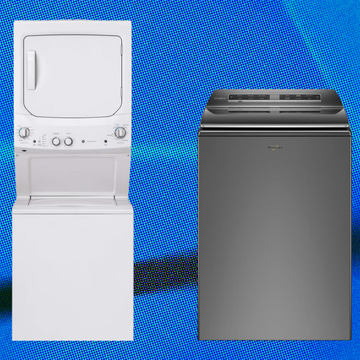
The 7 Best Washing Machines of 2026, According to Experts
Our favorite front- and top-loading washing machines, backed by hands-on Lab testing.

We've been independently researching and testing products for over 120 years. If you buy through our links, we may earn a commission. Learn more about our review process.
Washing machines have come a long way, and today’s best models combine strong cleaning performance with energy efficiency and easy-to-use features. Many also offer extras like auto-dispensing detergent, customizable cycles, and smart controls, making laundry a little easier to manage.
✔️ Best overall: LG Front Load HE Stackable Smart Washer
A spacious, fast-cleaning washer that gets full loads done in just over 30 minutes
✔️ Best value: Whirlpool Smart Front Load Washer with FreshFlow
A feature-packed front-loader with excellent stain removal at a budget-friendly price
✔️ Best agitator top-loader: Speed Queen TR7 Heavy Duty Top Load Washer
An exceptionally gentle washer with a durable design and a seven-year warranty
✔️ Best washer-dryer combo: Samsung Bespoke AI All-in-One Vented Combo
A fast, high-capacity washer-dryer combo with excellent stain removal and speedy drying
✔️ Best compact: Miele Smart Front Load Washer
A compact, feature-packed washer that fits easily into small laundry spaces
As a reviews analyst in the Good Housekeeping Institute Home Care & Cleaning Lab, I have tested washing machines extensively to see which ones are worth buying. I assess how easy each machine is to use, then run a range of wash tests to see how well it tackles stains, how long cycles take, and more. I also evaluate capacity, energy efficiency, and water use. The LG Front Load HE Stackable Smart Washer is a favorite model for its super speedy wash cycles.
 Best Deal


Pros
- Very fast cycle times
- Has a bright drum light
- Control panel is easy to use

Cons
- Less gentle on clothes than some other machines

BEST FOR BUSY HOUSEHOLDS THAT NEED LAUNDRY DONE FAST
With its balanced stain removal, sleek steel finish, and generous capacity, this LG leaves little to be desired. In my most recent washing machine evaluation, it earned the highest score for washing speed. The Quick cycle took just 16 minutes, while even full loads on the Normal setting finished in just over 30 minutes.
WHY IT STANDS OUT FOR SPEED
The fast cycle times and roomy drum make this LG a strong choice for larger households or anyone looking to speed up laundry day. Those shorter cycles don’t come at the expense of cleaning power, either. It delivered strong soil removal results, and while the Normal cycle wasn’t as gentle as those of other machines I tested, it wasn’t particularly rough on fabrics.
WHAT TO KNOW BEFORE YOU BUY
Cycle selection is controlled by a central dial, with temperature, spin speed, and other adjustments accessible on an adjacent panel. The interface is intuitive, and the dial’s built-in screen clearly displays each cycle’s name and description, which I found particularly helpful. I also appreciated the bright drum light, which made it easy to see small items in the back of the machine despite its large size.
| Capacity | 5.0 cubic feet |
| Dimensions | 27" x 34" x 39" |
| Warranty | 1 year on parts and labor; 10-year limited on direct drive motor (including the stator, rotor, and hall sensor); lifetime warranty on the stainless steel drum |
| Estimated yearly energy cost (electric water heater) | $13 |

Pros
- Exceptional stain removal
- Affordable
- Has an antimicrobial treatment to help prevent odors
Cons
- Cycle times are longer than average
- Doesn't have a drum light
BEST FOR BUDGET-CONSCIOUS SHOPPERS WHO WANT PREMIUM FEATURES
Despite its wallet-friendly price, this Whirlpool packs in many features typically found on more expensive front-loaders. It delivered excellent stain removal in our tests, automatically adjusts cycle settings based on soil level, and offers convenient extras like a Dry Drum cycle. Its 4.5-cubic-foot drum also easily accommodates larger loads.
WHY IT STANDS OUT FOR THE PRICE
This washer has several features designed to help prevent the odors that can develop in front-loaders. The door gasket has an antimicrobial treatment, while the Dry Drum cycle helps reduce mildew and bacteria by keeping the interior ventilated and dry. The washer also did well at balancing cleaning power with fabric care: It stood out for soil removal, was reasonably gentle, and left clothes with a moderate amount of water after the cycle.
WHAT TO KNOW BEFORE YOU BUY
This model was on the slower side, with most cycles taking more than an hour to complete. On the plus side, the dispenser was easy to remove and reinstall, and the odor-prevention features make regular maintenance straightforward. The control panel is also easy to navigate, though there’s no drum light, making it harder to see inside the machine.
| Capacity | 4.5 cubic feet |
| Dimensions | 27" x 32.6" x 39" |
| Warranty | 1 year on parts and labor |
| Estimated yearly energy cost (electric water heater) | $17 |


Pros
- Gentle on fabrics
- Excellent cleaning power
- Easy-to-use controls
Cons
- Smaller capacity than others
- No app or smart features
BEST FOR GENTLE FABRIC CARE AND LONG-TERM DURABILITY
While this Speed Queen may look a little retro, this GH Seal-holder outperforms many of today’s latest washers. The TR7 uses a central agitator, and despite what you might expect, it’s one of the gentlest models I’ve ever tested. The brand also backs it with a seven-year warranty.
WHY IT STANDS OUT FOR FABRIC CARE
This washer is easy on fabrics but tough on dirt. In our performance tests, it delivered solid stain removal, significantly lightening our pre-stained test strips. It was also exceptionally quiet while running. The touchpad control panel makes cycle selection simple and lets you adjust the water temperature, soil level, and load size. There’s no dispenser, so detergent goes directly into the drum.
WHAT TO KNOW BEFORE YOU BUY
At 3.2 cubic feet, this washer has a smaller capacity than many other models, so it won’t accommodate extra-large loads. There’s also no app for remotely managing laundry, although the delay-start setting lets you schedule a wash for a more convenient time.
| Cubic feet | 3.2 cubic feet |
| Dimensions | 42 3/4" x 25 5/8" x 28" |
| Warranty | 7 years |
| Estimated yearly energy cost (electric water heater) | $9 |

Pros
- Excelled in our stain removal tests
- Dries much faster than other combos we've tested
- Has a no-touch lint filter
Cons
- Drum opening is small
BEST FOR HOMES WITHOUT SPACE FOR A SEPARATE WASHER AND DRYER
This Samsung earned the Good Housekeeping Seal for its speed, large capacity, and strong overall performance. I previously tested and liked the ventless version, but this new vented model is much faster, washing a full cotton load in 42 minutes and a smaller load in just 28 minutes. It also earned excellent stain-removal scores in our tests and was about as gentle on fabrics as other combo units.
WHY IT STANDS OUT FOR SPEED
An 8-pound cotton load was clean, dry, and ready to fold in under an hour. It also packs in plenty of useful features, including 23 wash programs, two bulk dispensers that can hold enough detergent for up to 47 cycles, and an AI Energy Mode that automatically adjusts settings to save power. The 7-inch touchscreen is easy to navigate, and the app makes it simple to start or monitor cycles remotely. A self-cleaning lint filter is another convenient touch.
WHAT TO KNOW BEFORE YOU BUY
The 5.3-cubic-foot drum can handle larger loads, but the door opening is narrower than I’d prefer, which can make loading and unloading bulky items a little less convenient.
| Capacity | 5.3 cubic feet |
| Dimensions | 27" x 44" x 35" |
| Warranty | 1 year on parts and labor; 20-years on digital inverter motor |
| Estimated yearly energy | Has a no-touch lint filter |

Pros
- Space-saving design
- Has a two-stage detergent-dispensing system to optimize stain removal
- Offers many specialty care cycles
Cons
- Cannot handle overly large loads
BEST FOR APARTMENTS AND OTHER SMALL LAUNDRY SPACES
At less than 24 inches wide, this Miele is the smallest washing machine on our list, making it a great choice for small homes or apartments where a full-size model may not fit. Despite its compact 2.26-cubic-foot drum, it’s still spacious enough to handle a typical medium laundry load.
WHY IT STANDS OUT FOR SMALL SPACES
The compact design doesn’t mean you have to sacrifice cycle options. It offers programs for silks, hand-washing, express loads, and more. In Lab tests of a previous but virtually identical model, the QuickIntenseWash cycle effectively lightened cotton test swatches and removed tough stains in under an hour.
WHAT TO KNOW BEFORE YOU BUY
One of its most notable features is the TwinDos system, which automatically dispenses detergent at two points during the cycle to help optimize stain removal. It’s also Wi-Fi-enabled, so you can monitor and control wash cycles from your smartphone. The trade-off for its compact footprint is the smaller capacity, which may not be ideal for households that regularly wash large loads.
| Capacity | 2.26 cubic feet |
| Dimensions | 23.5" x 33.5" x 25.3" |
| Warranty | Up to two years |
| Estimated yearly energy cost (electric water heater) | $14 |

Pros
- Large drum for fitting bulky items
- Fast cycle times
- Excellent stain removal
Cons
- Not as gentle on fabrics
BEST FOR WASHING BULKY ITEMS LIKE SLEEPING BAGS AND DUVETS
This GE Profile top-loader shines for its large capacity and excellent stain removal. In our tests, it also delivered fast cycle times across the board, completing 8- and 12-pound loads on the Normal cycle in 42 minutes and a 3-pound load on the Fast cycle in just 25 minutes. It also did a solid job removing excess water at the end of each cycle, helping to shorten overall drying time.
WHY IT STANDS OUT FOR BULKY LOADS
The spacious drum makes it easier to wash oversized items like sleeping bags and duvets, while its strong cleaning performance means you don’t have to sacrifice stain removal for capacity. It also scored well for ease of use, thanks to a control panel that’s clearly labeled and simple to navigate. The lid also opens and closes smoothly.
WHAT TO KNOW BEFORE YOU BUY
This model wasn’t as gentle on fabrics as some other washers we tested, so it may not be the best choice if fabric care is your top priority. But for bulky loads, its combination of capacity, cleaning power, and quick cycles is hard to overlook.
| Capacity | 5.4 cubic feet |
| Dimensions | 43" x 27" x 28" |
| Warranty | 1 year on parts and labor |
| Estimated yearly energy cost (electric water heater) | $20 |

Pros
- Five-year warranty
- Excellent stain removal
- Spins out excess water well
Cons
- 3.5 cubic feet capacity is on the lower end
- No smart features or app connectivity
BEST FOR SMALLER HOUSEHOLDS THAT WANT FASTER-DRYING LAUNDRY
If you’re willing to trade some capacity for exceptional performance, this GH Seal-holder is worth a look. While it doesn’t have an app or auto-dispensing detergent, the FF7 earned high marks across the board in our performance tests, including the best spin performance of any washer I’ve tested.
WHY IT STANDS OUT FOR SPIN PERFORMANCE
This front-loader delivered excellent stain removal while still being gentle on fabrics, and its 39-minute Normal cycle and 25-minute Quick Wash were relatively fast. But what really set it apart was how much water it removed during the final spin. Clothes came out noticeably less damp, which can significantly cut down on dryer time. The FF7 is also highly efficient. According to its EnergyGuide label, it costs just $10 in electricity per year when used with an electric water heater.
The touchpad control panel has 10 preset cycles, plus options including stain boost and pre-wash. Temperature, spin speed, and soil level are also adjustable.
WHAT TO KNOW BEFORE YOU BUY
At 3.5 cubic feet, the FF7 has a smaller capacity than many full-size front-loaders. While it easily handled our oversized 12-pound load in testing, its smaller drum makes it better suited to smaller households or anyone who typically washes smaller loads. It also lacks an app and auto-dispensing detergent, but the five-year parts-and-labor warranty is longer than that of any other front-loader on this list.
| Capacity | 3.5 cubic feet |
| Dimensions | 40.5" x 27.8" x 26.9" |
| Warranty | 5 years on parts and labor |
| Estimated yearly energy cost (electric water heater) | $10 |
How we test washing machines

The Good Housekeeping Institute has been testing washing machines since the first model was commercially sold in 1907. We follow industry-standard methods from the Association of Home Appliance Manufacturers (AHAM) to ensure consistent comparisons.

✔️ STAIN REMOVAL TESTING: To evaluate each washer's stain removal ability, we assemble standard wash loads consisting of towels, bed sheets, and pillowcases. We then attach six-panel stain strips to designated load items. To ensure that each model is tested consistently, each item is placed in the drum at a designated location. At the end of the cycle, once the strips have air-dried, we measure each stain to calculate a total soil-removal index for the cycle. That adds up to 60 stain readings for each machine we test.
✔️ SPECIALTY CYCLE TESTING: We also test specialty cycles, such as bulky bedding or speed wash, to see if they perform up to our expectations, and we confirm that any sanitizing cycle reaches a high enough temperature for the required amount of time to adequately kill germs on fabrics.

✔️ GENTLENESS TESTING: We test the gentleness of each machine by washing cotton swatches with five pre-cut holes. Just like the stain strips, each swatch goes into a designated location within the drum. The wash cycle causes the pre-cut holes to fray, and we gauge gentleness by counting the displaced threads. We have counted over 8,000 frayed threads in just the past two years.
✔️ EASE-OF-USE TESTING: In addition to our performance tests, we score how easy the washing machine is to use. This includes rating the control panel's responsiveness, the ease of performing routine maintenance, such as cleaning the dispenser, and more. We also score each model's water and energy efficiency and factor this into our final rankings.
What to look for when shopping for a washing machine

Beyond deciding whether a front-loading or top-loading washing machine is best for your needs, here are some other aspects you may want to consider:
✔️ Capacity: If you frequently wash bulkier items or large loads, consider a washer with a large capacity and without a center agitator. However, if you tend to wash smaller loads, a standard-capacity washing machine should be just fine. As capacity increases, the difficulty of reaching into the back or bottom of the drum increases. Make sure you try reaching inside to make sure you can load and unload your laundry easily.
✔️ Smart features: Many of the latest washing machines are Wi-Fi-enabled. Connecting the machine to an app lets you schedule laundry from your phone, receive notifications when the cycle finishes, order detergent, and more. Some machines utilize artificial intelligence to anticipate your cycle selections or automatically adjust wash settings based on load size or soil level. Just keep in mind that these extra features can be more costly, and they often go unused, especially if the user doesn't take the time to read the manual and learn their functionality.
✔️ Detergent dispensing: Rather than pouring detergent directly into the washing tub or the dispenser every wash, some washers come with bulk dispensers that you fill once for multiple loads. These machines will automatically dispense the correct amount of detergent for each load, based on the cycle and options you've selected, as well as the load size the machine senses. If you use detergent packs, some washing machines have dispensers that ensure the pack dissolves and releases at the correct time during the cycle.
✔️ Cycles: All washing machines will have a normal cycle, but many have specialty cycles for reducing allergens, removing pet hair, or even helping to kill fleas. Other helpful cycles include sanitizing options to kill germs, steam for better stain removal, and a quick wash for lightly soiled items or those that need attention in a hurry. If you prefer having complete control over your laundry loads, look for machines that let you override preset temperature and spin settings for greater customization.
Is a front-load or top-load washing machine better?

In our tests, front-loaders tend to do a little better than top-loaders, but the gap is so small that you probably won't notice a difference in your clothing. Ultimately, the type of washing machine you choose is a matter of personal preference.
✔️ A front-loading washing machine is the most energy-efficient option and uses the least water per load. Clothes get cleaned when they tumble in a small pool of water added by the machine once it senses the load's weight and type. Front-loaders can easily handle large, bulky items, such as comforters and sleeping bags, but do require you to bend over to load and unload the tub. That said, most manufacturers sell pedestal drawers to raise appliances off the floor, reducing strain on your back.
If floor space is tight, a front-loader can usually be stacked with its matching dryer and installed anywhere that electrical connections and venting are available. (Non-venting dryers are becoming more widely available for installation in spaces where outside venting is not an option, and while they aren't as fast, our tests show their performance often rivals that of vented models.)
Keep in mind that water often puddles in the door gasket, dispensers, and even the drum itself at the end of the cycle, which can lead to mold growth and odors. If you choose a front loader, regularly clean the gasket and keep the door open to reduce the risk of odors. Some machines automatically vent after a cycle to address this issue.
✔️ A top-loading washing machine is a good choice if you like a more traditional configuration. Because the water in top loaders drains down and out, they are less likely to develop mold and odors than front loaders, which is why many consumers prefer them. However, it's a good idea to clean the tub and dispensers of all washing machines about once per month. Newer, high-efficiency top-loading models offer excellent cleaning and remain energy-efficient, even though they use more water than front-loaders.
Top loaders either use a center agitator or an impeller. Those without agitators have huge tubs for extra-large loads and gently bounce clothing under a shower of water. Some are so deep that reaching into the bottom to grab the last sock can be challenging for shorter users. Agitator models are generally less expensive, but they're often less gentle on clothing. Because agitators take up space, they often have smaller capacities, too. They clean clothes by moving them through a pool of water, ensuring that fabrics are thoroughly rinsed.

Why trust Good Housekeeping?

Noah Pinsonnault has tested over 20 different washing machines, dryers, and combo units. To write this guide, he ran countless wash cycles and measured over 1,000 stains. To manage all the data, he wrote his own code, drawing on his background as an environmental researcher.

The Best Way to Remove Blood Stains from Clothes

Is Laundry Stripping Worth It?

The Best Clothes Dryers

6 Items to Never Use Fabric Softener On