The kitchen might be the heart, soul, and stomach of the home, but it's also one of the most challenging spaces to design. With cookware, small appliances, pantry staples, and everyday essentials competing for storage, every inch of space matters. While extending cabinets all the way to the ceiling has long been a popular way to maximize storage, designers say they're increasingly moving away from prioritizing upper cabinets.
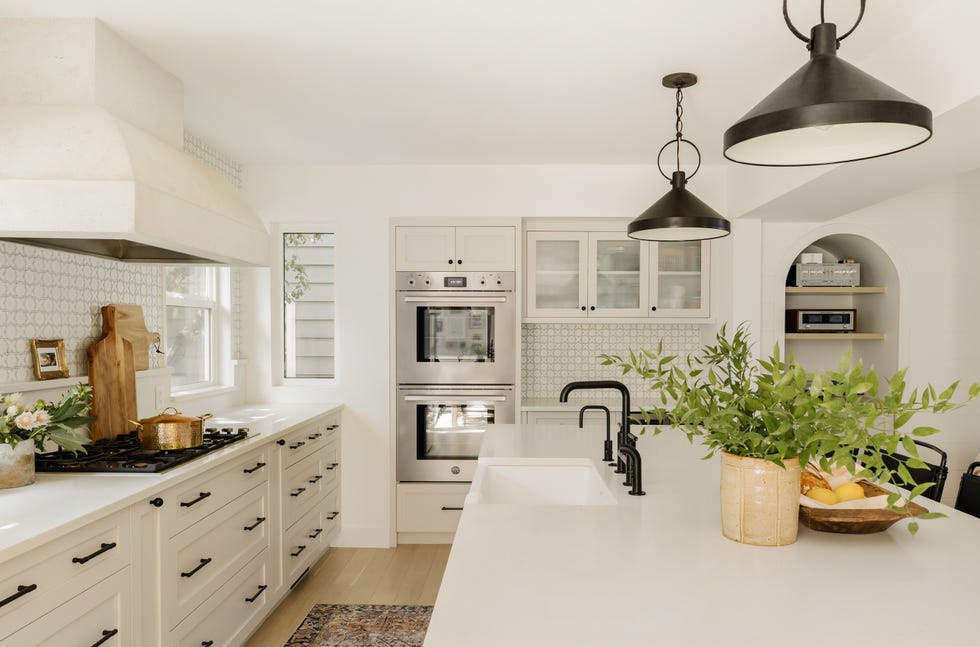
"In recent projects, I’ve found creative ways to avoid them," designer Stephanie Mahaney reveals. "Upper cabinets can feel very clunky and can make the below countertop space feel messy because of the shadow it creates." While upper cabinets can make your kitchen appear top-heavy, removing them will imbue your space with a light, airy attitude. "Going without upper cabinets makes a kitchen feel larger and allows for the placement of more windows and natural light," adds Jeanne Barber of Camden Grace Interiors in West Hartford, Connecticut.
Though upper cabinets have been a status quo storage solution, their absence might be confusing, if not shocking, for some homeowners. However, designers insist this phenomenon represents a larger shift in kitchen design—one that was several years in the making.
"I'm seeing a lot of kitchens being designed to not look so 'kitcheny,'" explains Hillary Cohen of HCO Interiors. "People are focusing on the aesthetics of the space, and the room is almost being viewed as an extension of the living room."
When the shelter-in-place went into effect six years ago, people were invited to get reacquainted with their kitchens. Suddenly, the room wasn't just a place where you would reheat last night's takeout order or fill up your water bottle: It became an integral part of our lives. Here, we experimented with sourdough starters, made mocktails for virtual happy hours and even transformed our kitchen islands into an impromptu home office. As our kitchen became more integral in our lives, so did our need to decorate it with care.
Not only can ditching upper cabinets make the space lighter, brighter and more enjoyable to spend time in, but it's also an excellent opportunity to inject personality into your culinary quarters. "It should reflect who you are, not just how you cook," explains Canadian designer Stephanie Martin. "Adding in items of sentiment and art, or openly displaying a beautiful collection of serveware, feels immensely more elevated and personal than monotonous upper cabinetry." Or, for an idea that mixes form and function, you can install sconces or task lighting to give the room a gorgeous glow.
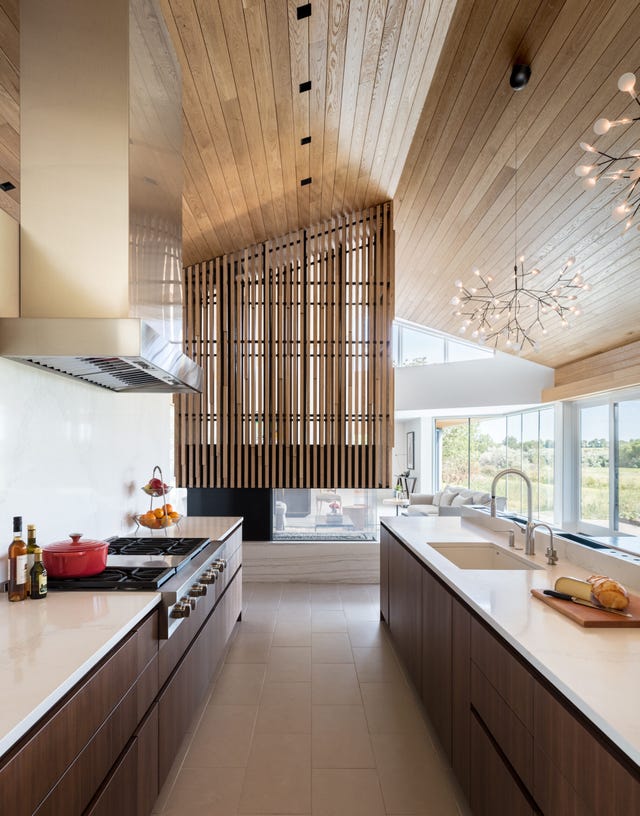
Aesthetics aside, designers reveal plenty of practical perks to ditching those lofted cabinets. Thanks to small-yet-thoughtful upgrades—Miranda Cullen of Inside Stories credits deep drawers and tiered, roll-out shelves—nobody has to get on their tiptoes to grab a plate or coffee mug.
"They required us to stretch, climb countertops or stand on chairs just to access everyday items like dinnerware," Cullen shares. "This functional evolution shifts the 'heavy lifting' to the lower cabinets, freeing up upper cabinets to take on a simpler design—or be omitted entirely."
Should upper cabinets stay or should they go? Designer Grey Joyner says it ultimately depends on your kitchen's size and layout. "For homes where storage is at a premium, eliminating upper cabinets might sacrifice practicality for style," she says.
Meanwhile, Jen Stevens of Dallas-based design firm Fonde Interiors argues removing upper cabinets doesn't mean you have to lose out on storage space. "It's about creating opportunities for thoughtful design," she says. "There's something distinctly European about this approach, where every element is considered and celebrates craftsmanship."

Many designers are trading upper cabinets for full-length pantries, though Barber notes a vintage armoire can also work. If you're willing to dust them regularly, Barber says shallow open shelves are a great place to hold everyday bowls, plates, and glasses. "It makes reaching for them a breeze since there's no door to open," she adds.
However, just because we're seeing fewer upper cabinets doesn't mean they're gone for good. For designer Brianna Scott, it's all about creating a thoughtful balance. "I don't think upper cabinets will ever be non-existent, but the style and placement of them are changing," she says. "People love to collect things, especially kitchen items, and they need a hidden space to store them."
Instead, Scott recommends a mix of open and closed storage will create a space that's "functional yet open and not filled with a ton of millwork." Let's be honest: When every square inch counts, a little bit of creativity can go a long way.

Kelsey Mulvey is a freelance journalist who has over a decade of experience in print and digital media. She covers interior design and lifestyle content for a breadth of publications, including Good Housekeeping, Country Living, House Beautiful, Veranda, and more. Her hobbies include themed spinning classes, Netflix, and nachos.