If your silver has lost its shine, don’t worry: we’ve got expert tips on how to make tarnished silver shine again. With the right products and methods, your heirloom jewellery, vintage serving tray, or favourite silverware set can be restored.
Silver tarnishes because of a chemical reaction between the metal and sulphur compounds in the air. Moisture in the air can accelerate this reaction, so if your silver is stored somewhere humid, you may notice it tarnishes quickly. Oil and sweat from your hands can tarnish silver, as can lotions, perfumes, and even certain food items like eggs, mayonnaise, and onions (so don’t use a silver tray when you’re serving devilled eggs!). Because of this, it’s practically impossible to keep silver from tarnishing altogether.
The good news is that making your silver shine again isn’t complicated. According to experts at the Good Housekeeping Institute, you can use silver polish, washing up liquid or bicarb to remove tarnish. A little bit of time and the right supplies can have your pieces looking bright.
Ahead, experts share step-by-step guidance and tips on how to store silver so it doesn’t tarnish as quickly.
How to clean silver with polish
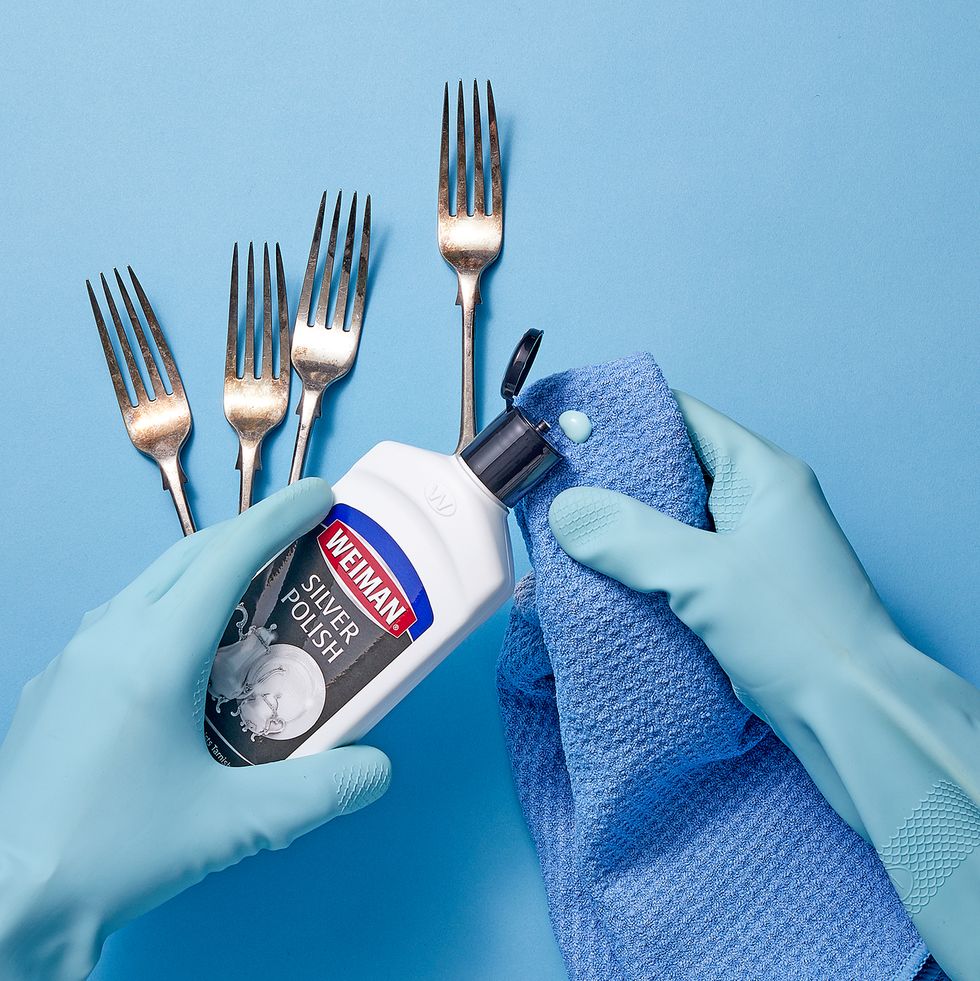
What You'll Need
- Silver cleaner and polish
- Microfibre cleaning cloth
The easiest and most effective way to make silver sparkle is with a targeted silver polish like
Goddard’s Silver Polish. Follow the product directions or this step-by-step guide to polish silver properly:
- Put a small amount of silver polish on a clean cloth, dampened if necessary.
- Rub the polish on your item in an up-and-down motion, not circular to avoid highlighting fine scratches.
- Turn the cloth frequently as you work, so tarnish isn't deposited back on your item.
- Wash and rinse in warm water and buff with a clean, dry cloth to shine.
How to clean silver naturally with soap or bicarb
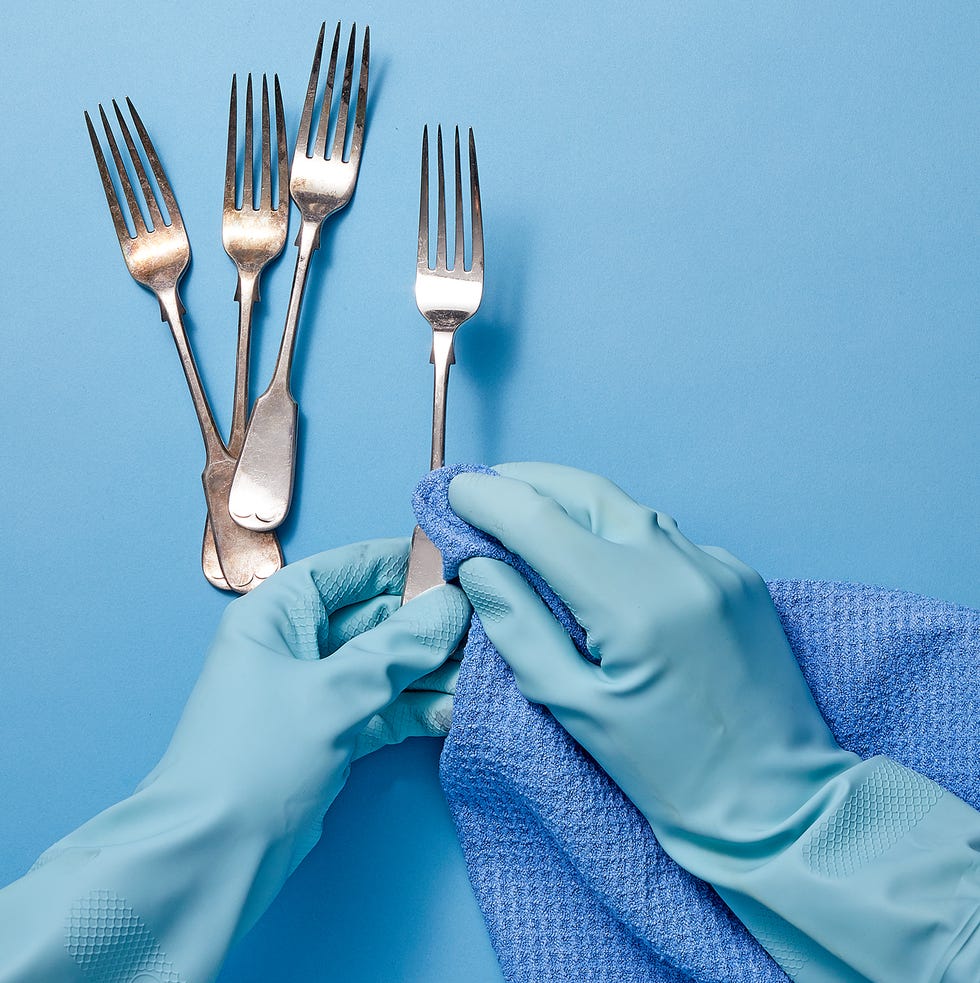
What You'll Need
- Microfibre cleaning cloth
- Washing up liquid or bicarb or plain white toothpaste
We've also found some success with homemade remedies. If you're in a pinch, you can turn to your pantry for washing up liquid, bicarb or toothpaste.
- For silver that is dull, filmy or not yet discoloured, mix a few drops of mild washing up liquid with warm water and dip in a soft cloth. Rub the item, then rinse in cool water and buff with a cloth until dry.
- For silver that is heavily tarnished, mix a paste of three-parts bicarb to one-part water. Wet the silver and apply the cleaner with a soft, lint-free cloth (not kitchen roll). Work the paste into the crevices, turning the cloth as it gets grey. Rinse and buff dry.
- For silver jewellery that is tarnished, apply a tiny dab of plain white toothpaste (not gel or whitening toothpaste, just plain white paste) on a soft cloth and very gently rub it on the silver. Rinse well with warm water and shine with a soft cloth.
How to store silver and prevent tarnish
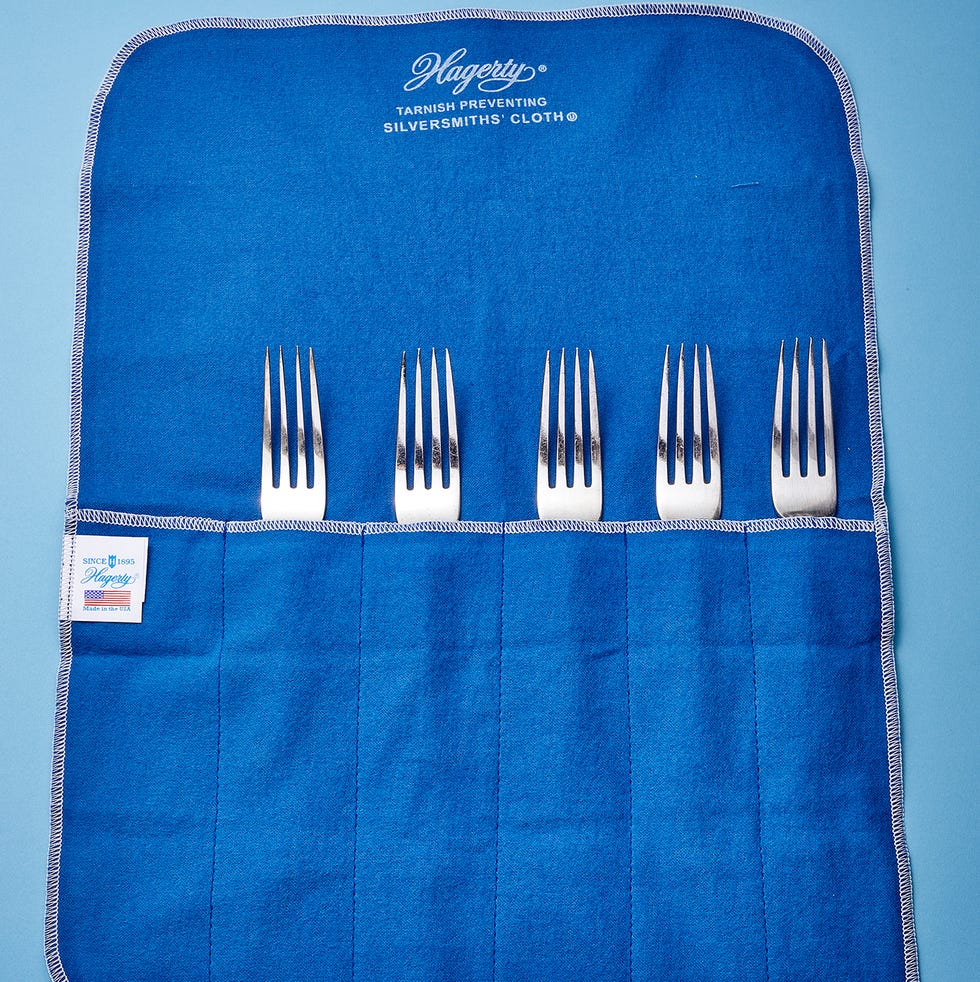
Natural discolouration is unavoidable, but there are some ways to ensure your cutlery, jewellery and trays don't lose their lustre as quickly. Here are some helpful tips and tricks to prevent tarnish:
- Store each piece of silver jewellery in its own anti-tarnish bag in a cool, dry spot.
- Tuck a piece of chalk in an anti-tarnish bag to help absorb moisture from the air. Silica gel sachets also work.
- Put jewellery on after spraying perfume to prevent your fragrance from landing on the silver.
- Don't be afraid to wear your silver: friction slows down tarnishing, which means the more you wear it, the more it'll shine.
How often should you polish silver?
Polishing, while necessary, is abrasive so no matter how delicate your hand, there's no need to go overboard with cleaning — anywhere from two to six times a year works in most cases.
Our favourite jewellery cleaners