Decluttering can feel overwhelming. Like a never-ending task that’s anything but motivating. Which is why most of us tend to put it off, inevitably causing more and more clutter to build up and creating a frustrating cycle of stuff. That’s where decluttering methods come in, offering a bit of structure (and a much-needed push) to get started.
I’ve recently been trying out the two-foot rule, a method designed to make decluttering feel far more manageable. By focusing on smaller, more doable zones rather than tackling a whole room at once, it promises to make the process less daunting while still delivering satisfying results.
Well, that’s the idea at least. So I decided to put it to the test in my own kitchen, to see if it really is as speedy and effective as it sounds. Here’s what I found.
What is the two-foot rule?
The two-foot rule is a simple decluttering method designed to make the task feel less overwhelming by breaking it down into smaller, manageable areas that gradually add up to a more organised space. It also removes the hardest part for many of us, figuring out where to start, which can be a major cause of procrastination.
The concept is straightforward. Choose the room you want to declutter, then focus on a two-foot area that you use or come into contact with the most. From there, assess how it could be improved – does it need cleaning, editing or reorganising?
The key is to keep the area small but high-use. That way, the task stays quick and manageable, but the impact feels immediate, which makes it much easier to keep going.
How I used the two-foot rule on my kitchen clutter
There were two key ‘two-foot zones’ in my kitchen I wanted to tackle: what I’ve dubbed the Corner of Shame and our overflowing spice racks.
First up, the Corner of Shame. This is the section of our kitchen counter that’s become a magnet for random clutter. Keys, letters, sellotape, scissors, loose batteries, rubber bands. Most homes have a junk drawer; we have a junk Sports Direct mug – and it’s slowly taking over our already limited counter space.
In reality, this area is probably even smaller than two feet, but it’s one of the most-used spots in the kitchen, especially when preparing food. I knew that if I cleared it, the impact would be immediate. The two-foot rule didn’t necessarily tell me how to declutter it, but it gave me the push to finally tackle it – no overthinking, no excuses.
And when I did? It took no time at all, 10 minutes, max. Because the space was so small, the decisions felt straightforward, and the results were instantly noticeable.

Next was the spice rack, another high-use area that had well and truly got out of hand. My housemates and I cook a lot, so we’ve built up quite the collection of niche seasonings and half-used ingredients. The racks were overflowing, and I couldn’t remember the last time they’d been properly sorted.
It had reached the point where finding anything was frustrating. I’d go looking for cumin and somehow end up staring at three different jars of dried-up garlic granules.
So, I took everything off the rack, gave the shelves a good clean and started editing. Anything empty or clearly expired went straight in the bin. I also wiped down each jar – partly for hygiene, partly for that just-organised feeling.
This one took a little longer, around 20 minutes, but it was still quick enough to feel manageable. And the difference? Completely worth it.
Verdict
It really works. Giving yourself strict parameters, focusing on just one high-use, two-foot zone limits what you can tackle, which instantly makes the job feel more manageable. But because you’re targeting areas you use all the time, the impact feels disproportionately big.
It’s also incredibly motivating. The fact it can be done so quickly helps build momentum, and those clear boundaries do a great job of cutting through procrastination. After all, it’s hard to dread tidying a space that small.
Perhaps most importantly, it shifts how you think about decluttering altogether. It shows that you don’t need to empty out an entire room to make your home feel more organised. Sometimes, focusing on just one small area is enough to create that satisfying sense of order – and makes it far easier to build into your everyday routine.
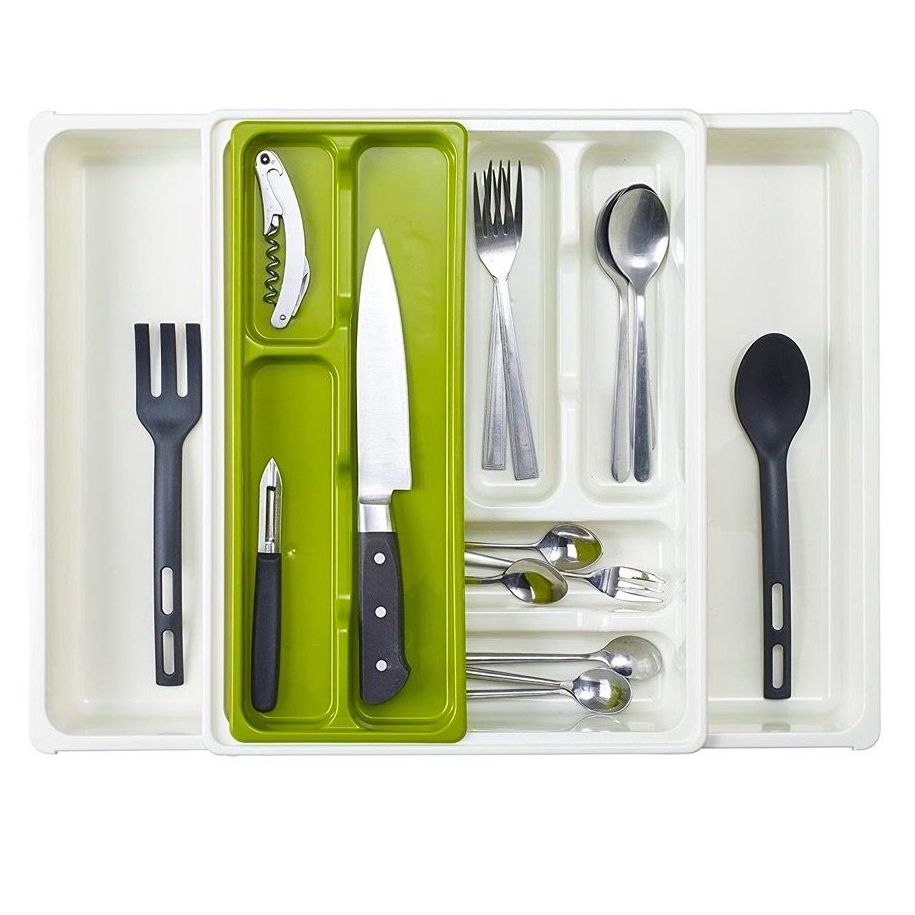
Kitchen drawer organisers