A cluttered wardrobe can be a source of daily frustration. It makes it harder to find the items you're looking for and makes you feel overwhelmed before the day has even really started. If it's time for a wardrobe declutter, start here with these tips from professional organisers.
Decluttering your wardrobe won't just make your morning routine smoother. It can actually make you feel more emotionally regulated. Shaniece Jones, founder of The Social Brunch Club and Closet Therapy, explains, 'The wardrobe is the space that holds our insecurities. If you're trying to change something in your life or want to figure out your shopping habits, take a look at your wardrobe.'
Keep reading for wardrobe decluttering strategies from Jones and professional organiser Lisa Adams of LA Closet Design.
Consider the MVP method
Jones created the MVP approach, which involves decluttering in three steps. M is for mindset, V is for vision and P is for plan.
- M: The first step is to adopt the right mindset before you begin decluttering. 'This step allows you to become aware of the emotional factors and habits contributing to the clutter,' says Jones.
- V: Next, be clear on your vision for your wardrobe. Before decluttering, Jones recommends stepping into your wardrobe, closing your eyes and taking a moment to recognise how you feel in the space. 'Envision the desired state of each space and develop your vision statement — the why — to help motivate and guide you through the decluttering process,' she says. She suggests asking yourself questions like: 'What is my daily routine? What do I want to change in my wardrobe? How do I want to feel when I walk into my wardrobe? What is the actual cost of not decluttering? Is it more tension in your relationship? Is it lost time? Is it increased anxiety?'
Pinterest is a great resource to explore for wardrobe design inspiration. 'Think about how you want to feel when you open your wardrobe doors,' Jones says.
- P: The final step is to plan. 'This is where you implement the intentional steps to declutter,' says Jones. There are ways to add a dose of fun, too. Find your favourite playlist, grab some snacks and your drink of choice to enjoy while decluttering.
To make it manageable, Jones recommends organising your items by categories and subcategories. Start with tops, bottoms, dresses and shoes, for example. Then, take it a step further with subcategories. For example, if you're working on shoes, you can handle boots first, then trainers and sandals to help make the process less overwhelming. 'When reviewing each piece, ask yourself: How does this item support my life right now?' Jones says.

Be honest when purging
Every item in your wardrobe needs attention at this stage. While it might seem nerve-wracking, it will make your space more organised and easier to navigate on a day-to-day basis if you only keep pieces you love and use. 'If you haven’t worn it in the past year, it doesn’t fit or it feels outdated, let it go,' Adams says. 'Sort into two piles—one for selling and one for donation.'
Have the right storage containers on hand
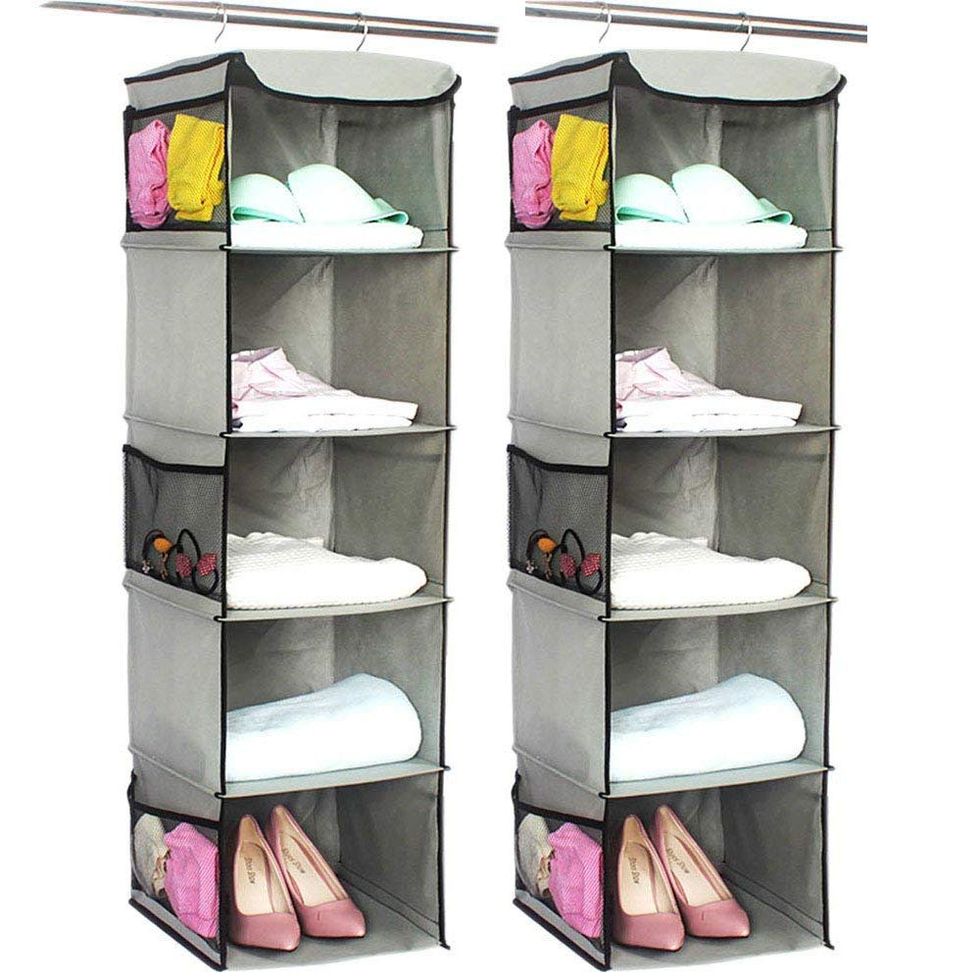
But before you purchase organising products, first understand exactly what works for your space. Jones suggests having a tape measure to measure shelves so you're not buying unnecessary products that don't fit your layout. 'The whole goal is to find solutions to make your wardrobe look organised and streamlined,' Jones says.
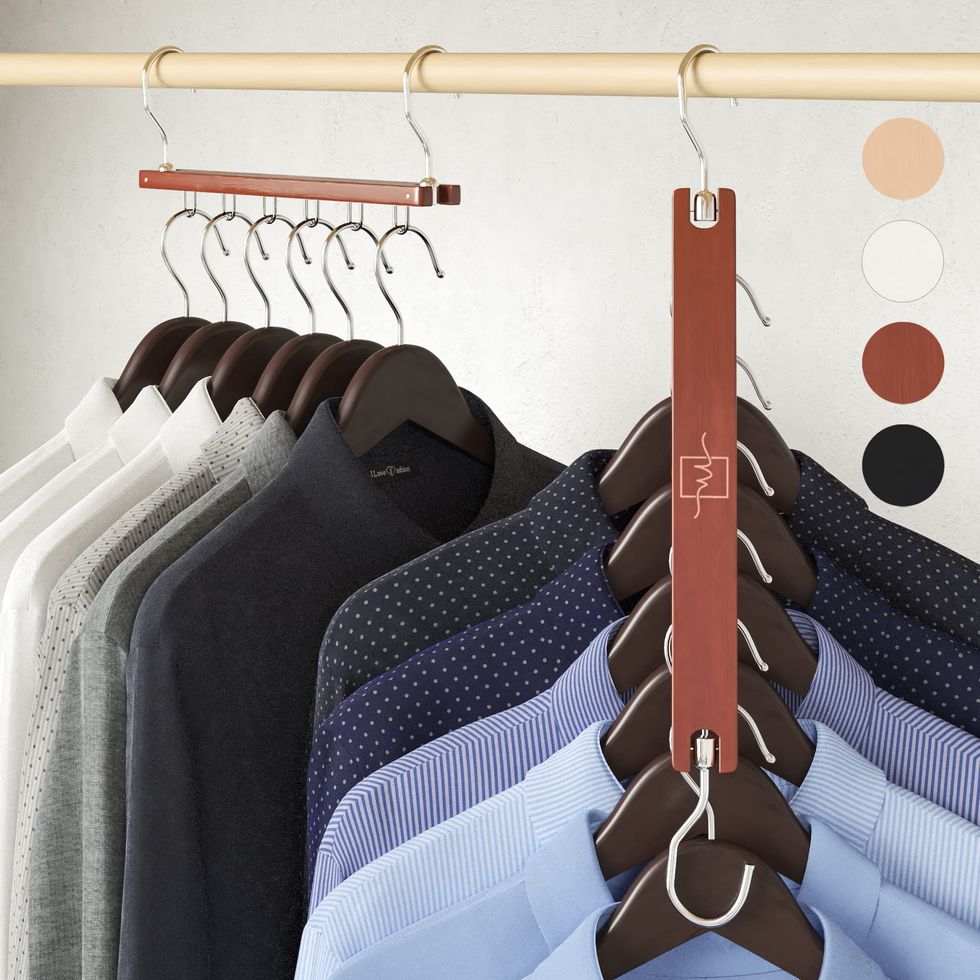
Pay special attention to the hangers in your wardrobe, Adams says: 'Swap mismatched hangers for uniform ones, velvet options keep clothes from slipping. Use specialised hangers for belts, scarves and bags to free up space and maintain order.'
Try the 72-hour rule
Jones swears by the 72-hour rule to make sure you're not holding on to items for too long. 'You have three days to get it out of your house. If you do not consign it or donate it, you have to find a way to get rid of it,' she says.
Don't overlook decorative accents
Function is key for any wardrobe, but Adams says it pays to focus on refreshing and enhancing the space, too. For instance, small accents like scented liners can help keep clothes fresh. 'A seasonal update, like floral or cedar, adds an understated yet lasting detail,' Adams says.
Aim to show off a bit of your interior design style as well: 'Introduce a finishing touch with a mirror, small plant or framed photo,' Adams says. 'A simple accent refines the space and brings a sense of order and style.'