Since starting this job as the household advice writer for Good Housekeeping I have spent many (many) an hour decluttering. Going from room to room, trying out the wackiest of decluttering methods in order to find speedy, efficient, fool proof ways to make the chore of decluttering just that little bit easier. And in this process I’ve noticed, a lot of the time clutter piles up because we keep buying the same things over and over again.
So I've decided to coin my own method, I’m calling it the duplicate detox decluttering method. The idea is to hopefully change what it is you’re looking for when you’re decluttering. Going on the hunt for items you have to get rid of rather than thinking about why you should get rid of them naturally makes decluttering a taxing job- so why not switch it around. Clear clutter by assessing a category rather than the space and you’ll be shocked to find how many duplicates are wasting space in your home.
To put my own theory to the test I tackled decluttering my kitchen, a place prime for duplicates, and the results were shocking.
What is the duplicate detox decluttering method?
The duplicate detox decluttering method works by assessing a category of items (e.g. mugs, pans, jeans, black tops) rather than a room as a whole. An approach that makes the task at hand far less intimidating while still showing results you go. Next, group all the similar items together and identify the duplicates. Identical jeans, frying pans the same size etc. Then decide amongst the duplicates the best, the most used, and your favourite. Anything that doesn't fit into those categories or isn't part of an essential set- time to go!
The key here is to be strict, not holding onto excess clutter ‘just in case’, be honest about how many of one singular item you really need. If you do, I promise the impact will be immediate. Because you're comparing like with like it will reduce the decision fatigue or anxiety of letting things go, while still cutting clutter quickly. It’s not a matter of asking how you feel about an item, or even asking when the last time you used it was, it’s about asking- ‘don’t I already have one of these?’.
How did I use the duplicate detox decluttering method?
I put the method to the test in my kitchen, as I knew it would be prime real estate for duplicates.
Very quickly, I realised my flatmates and I had far more appliances and gadgets than I’d ever noticed. And it was easy to see why I’d never clocked them before. The go-to items stayed within easy reach, while everything else was shoved to the back of the cupboards, quietly taking up space and collecting dust.
The biggest surprise? We had four or five different gadgets all designed to chop or blend in near-identical ways. Yet in reality, we only ever use two of them, and of those we only use them rarely anyways. So the rest went straight into the donation pile.
Next, I tackled pots and pans. We had multiple of the exact same size and shape. Granted, we’re a busy house of five, so we do need a decent amount- but realistically, we only have a four-ring hob. There’s never going to be a situation where six identical pots are all in use at once.

Baking trays were another easy win. Our oven only fits four at a time, so the extra three were unnecessary. I kept the best looking ones and got rid of the most worn, crusty trays. I also discovered we had two colanders- utterly unnecessary- and the same went for cheese graters. This method really highlighted not only how pointless duplicates can be, but also how easily they build up in the first place, especially in the kitchen- ironically an area where space is so vital (and hard to come by).
By the end, I had a sizeable pile ready to be donated, recycled or binned. I could finally close our kitchen cupboards without forcing them shut, and I even freed up some much-needed countertop space- which, as anyone who’s ever lived in a flatshare will know, is such a major win.
My verdict
In short, yes- it works! If you’re short on time but still want noticeable results, this method is really effective. By focusing on duplicates, it takes away a lot of the emotional back-and-forth that usually comes with decluttering, it makes it more practical and reasonable. You’re not deciding whether you like something, you’re simply asking whether you need five of the same thing. And more often than not, the answer is no.
It’s also incredibly quick. Because you’re tackling one category at a time, you can see progress almost instantly, which makes the whole process feel far more manageable.
For me, it proved that some of the biggest clutter culprits aren’t random items, but the things we see as practical and necessary, but which unknowingly collect over time. And once you spot them, they’re surprisingly easy to let go of.
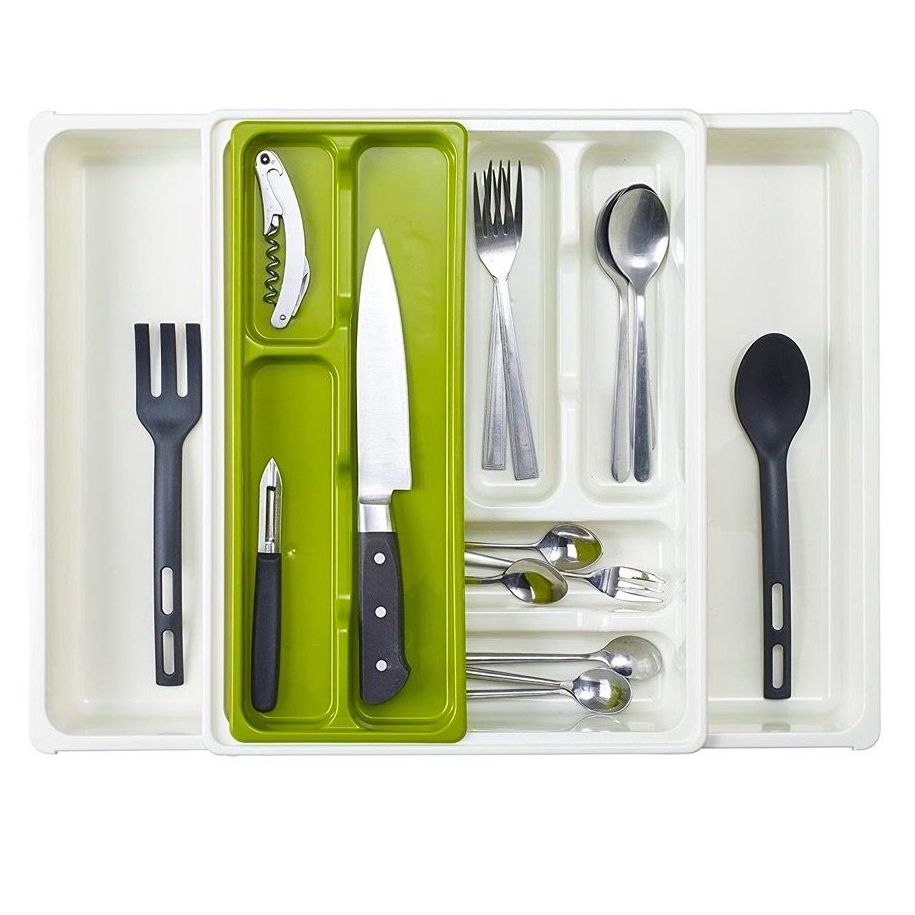
Kitchen drawer organisers