
Decluttering is a lot of effort. You’ll know the feeling: you sit amongst a pile of stuff and need to gradually decide what to do with everything, one object at a time. ‘What if I'll need it?’ is always in the backs of our minds. That feeling is what puts us off decluttering. But, what if I were to tell you there was a way to avoid this drudgery?
To help lighten the load, and make the most of your time, we’ve rounded up 7 things that can be decluttered without a second thought. These are the things that are, no questions asked, 100% clutter; they’re just taking up precious space and can be cleared with no chance of regret later. Want to know what’s easy to declutter? Here’s where you should start.
Expired cough syrup
Before we get into the colder months, it’s worth checking the cough syrups that are stored in the medicine cabinet. We often crack these open and take a couple of swigs when we’re feeling unwell, then the rest is left to sit in a sticky bottle for months or even years at a time.
You can still use cough syrup for a time after opening – check the instructions on the bottle to confirm. It may advise that you can use it for a set number of weeks or months once opened, and there will be a general expiration date, too. You should follow whichever comes first.
Once this time is up, it’s not guaranteed to perform as it should and can even be unsafe to drink due to the bacterial growth. But this can’t go down your drain, so take it to your local pharmacy to properly dispose and replace it with a fresh bottle.

Dead plants
Many of us have a houseplant or two that’s long dead. We might make feeble attempts to revive it, but we know we’re just wasting water. While you might feel sad chucking a dead plant away, the feeling of guilt whenever you look at it is worse. So, take a moment to declutter those plants that are past their best and make some space for new, healthy ones.
Your dead plants can go on the compost heap to feed your future plants if they were healthy, but diseased plants should go in your household waste to avoid contaminating your garden.
Check out the other things that can't go on the compost heap.
Nearly empty sauce bottles
Odds are there’s a couple of ‘almost empty’ sauce bottles stored in your fridge door. They’re the ones that start to splatter when you squeeze them, but aren’t quite empty enough for the bin. So, they line the shelf in the fridge door instead, where space could be better spent on jam jars and salad dressings.
If these sauce bottles have been stored here for some time – so long that the colour, scent or consistency has changed – they should be tossed. Depending on the ingredients, they could just taste bad or, worst-case scenario, they could lead to full-blown food poisoning. But if the sauce is still fresh, it’s better to top up the new bottles with it to make sure it’s used, then recycle the old bottle.

Damaged clothes
Every wardrobe has an item or two that’s damaged and need repairs. We swear we will get around to sewing on that button one day, but the jacket has been button-less for years now, gathering dust.
Find those items you know are damaged and ask yourself why they haven’t been repaired yet. Have you just forgotten about it, are you short on time, or does it not mean as much to you as you thought? If it’s the latter, it’s time to donate or recycle it. If you’re determined to keep it, give yourself a deadline in your diary and meet it. If you can’t, maybe it’s time to let it go.
Old plastic bags
Now that we’ve converted to tote bags, those lingering plastic bags you’ve got stuffed in your kitchen drawers serve no purpose. We feel bad chucking them away, but with their expanding nature, they’re just taking up excessive space.
Plastic bags are never likely to be used while you have a tote bag alternative, so recycle them where possible at supermarkets (check first) or find a nearby recycling point. You could also offer them out to friends and neighbours.
If you have an abundance of tote bags, we've found ways to reuse those, too.

Empty shoe boxes
We hang on to shoe boxes for all sorts of reasons. Maybe you want to use it to store other items, or perhaps it’s useful if you plan to sell another pair of shoes, or maybe you just want to keep your shoes in the box. In any case, it’s easy for a shoe box to become clutter.
If you keep these in your wardrobe, you can’t see or get to your shoes easily, and if you’re not actively selling shoes, it’s just wasting space in the interim. Only keep shoe boxes if they’re actively serving a purpose. There’s several in my home just to entertain my cat, and those served a purpose for about 5 minutes!
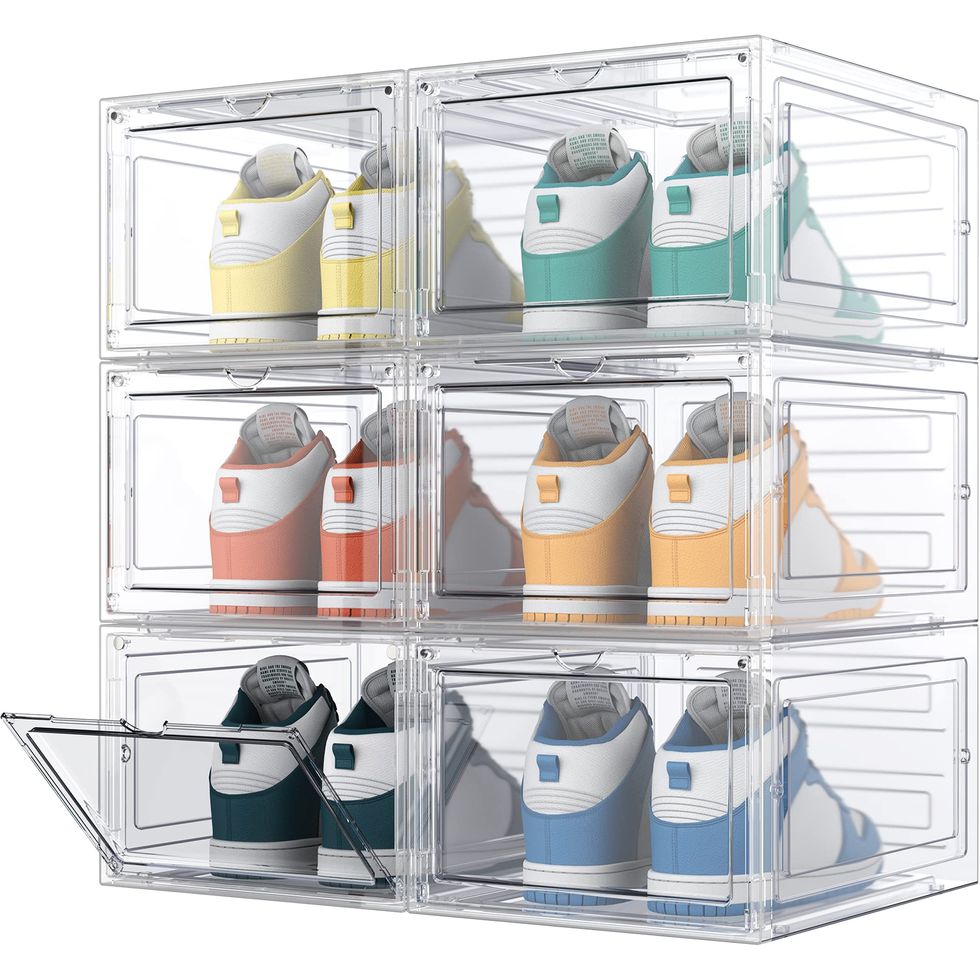
Use clear accessible containers in your wardrobe instead. That way you shoes stay paired and stacked.
Things with freezer burn
While it’s technically safe to eat food with freezer burn, the quality will have taken a hit. As the moisture evaporates in the form of ice crystals, it leaves the food dehydrated, tough and stale, not to mention discoloured!
On top of this, freezer burn is usually a sign that it’s been frozen and forgotten about for many months. So you’ve got two very good reasons to declutter it. If you’ve not eaten it by now, you’re not likely to! Chuck it in the food waste bin, or if you’re determined to use it, defrost and cook in a stew to allow the flavours to meld with others.
Make sure the packaging is airtight and labelled on whatever replaces it in the freezer. Having a rotation system in place means freezer burn is less likely in the future, too.


