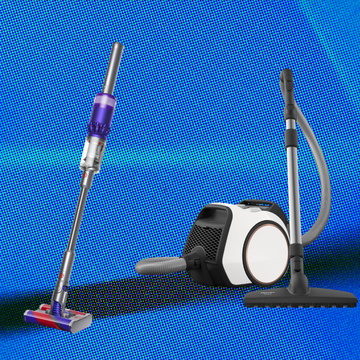
7 Best HEPA Vacuums, Tested by Cleaning Experts
These top-performing HEPA vacuums filter 99.97% of fine particles while delivering powerful cleaning on carpets and hard floors.

We've been independently researching and testing products for over 120 years. If you buy through our links, we may earn a commission. Learn more about our review process.
You can see crumbs and dust, but the tiny particles that trigger allergies are often invisible. The best vacuums with high-efficiency particulate air (HEPA) filters capture and trap allergens like pet dander, pollen, and fine dust, preventing them from escaping back into your home.
In the Good Housekeeping Institute Cleaning Lab, we’ve tested nearly 75 vacuums in the past two years alone, plus dozens more over decades of evaluations. We evaluate how well each model captures fine particles, plus its cleaning performance, ease of use, and overall value. Our best overall is the Shark Stratos Upright Vacuum Cleaner AX3000 because of how effectively it cleaned all types of debris from different types of floors.
Our top picks:
- Best overall: Shark Stratos Upright Vacuum Cleaner AX3000
- Best value: Kenmore 31150 Pet-Friendly Bagged Upright Vacuum
- Best lightweight: Dyson V12 Detect Slim
- Best for pet hair: Kenmore Pet-Friendly Pop-N-Go Bagged Canister
- Best cordless: Samsung Bespoke Jet AI Cordless Stick Vacuum Cleaner


Pros
- Removable canister allows for above-the-floor cleaning
- No-tangle brush rolls picks up long hair strands effectively
- Easy to assemble

Cons
- Only comes with two attachments with the option to purchase more

This model is ideal for anyone in need of a HEPA-filtered upright vacuum with multiple floor types throughout their home. In our Lab tests, the Shark Stratos effectively zapped up large debris (dry oatmeal and rice), gritty soil (baking soda and sugar), and long hair strands without tangling from all floor types, including wood, tile, vinyl, and carpets. The double-brush roll nozzle includes a fluffy roll for bare floors and a deep-cleaning roll in the back for carpets that helped us seamlessly transition from one floor type to the next. It also effectively cleaned long wall edges.
We especially loved the design of the removable canister, which was easy to pop off and clean high shelves, behind and under furniture, stairs, upholstery, and more spots that an upright vacuum may otherwise be difficult to reach. Plus, out of all the vacuum cleaners tested in the Cleaning Lab, this is one of the easiest, most intuitive vacuums to assemble. And while it only comes with two attachments, the heftiness and sturdiness of the plastic pieces was impressive.
READ OUR FULL REVIEW: Shark Stratos Upright Vacuum Cleaner
| Style | Upright |
| Dust c ontainer | Bagless lift-off canister |
| Weight | 16.7 lbs |
| Cord length | 30 ft |
| Attachments | Crevice tool, upholstery tool |

Pros
- Asthma & Allergy Friendly certified
- Five-position adjustable height nozzle for different floor types
- Includes an air-powered hand tool with a rotating brush to remove stubborn pet hair
Cons
- May be too heavy if your home has multiple levels
This Kenmore vacuum passed Asthma and Allergy Foundation's (AAFA) tests for low emissions both while vacuuming and when changing the bag. Even as the bag fills up and clogs with dirt, the filter still holds up. We know and trust the rigid standards of the AAFA and are impressed with their certification criteria.
The Kenmore Elite also packs in several helpful features at a great price. It includes a powerful motor, a telescoping wand, a five-position adjustable height nozzle for easier pushing across all carpet styles, and an air-powered hand tool with a rotating brush to more easily remove stubborn pet hair from upholstery, bedding, and stairs.
If there's any downside, it's that it clocks in at about 20 pounds. This may be a bit heavy for some, especially if your home has a lot of stairs to contend with.
| Style | Upright |
| Dust container | Disposable bag |
| Weight | 20 lbs |
| Cord length | 30 ft |
| Attachments | Pet Handi Mate turbo tool, combo dusting brush/upholstery tool, crevice tool |


Pros
- Weighs only about 5 pounds
- Cordless
- Roller attachment with laser makes seeing dust easier
Cons
- Doesn't include a spare battery
- Prone to tipping when docked
Keeping floors clean can be a chore, and lugging a heavy machine around only adds to the burden. Luckily, there are plenty of vacuums that have cut down on the weight of the vacuum without sacrificing cleaning power. Weighing in at just 5.2 pounds, the Dyson V12 is one of the lightest vacuum cleaners we have ever tested.
We also included this pick in our list of best cordless stick vacuums, thanks to its high performance and unique laser attachment, which illuminates dust and dirt that might be hard to see under regular lighting. As it cleans, the LCD display shows both the size and number of particles it picks up. The vacuum then uses this information to adjust its suction level for optimal cleaning. The screen also displays the current power level, provides maintenance alerts, and remaining runtime.
Its low weight and small base make it easy to move and store, but one drawback of its slim design is that it is prone to tipping when not on its wall-mounted charging dock. We wish this model included a spare battery, but the 50-minute runtime should be enough for most users.
| Style | Stick |
| Dust container | Bagless dust bin |
| Weight | 5.2 lbs |
| Cord length | Cordless |
| Attachments | Two floor nozzles, crevice tool, hair screw tool, combination tool, mini soft dusting brush, stubborn dirt brush |

Pros
- Uses a disposable bag which makes emptying it less messy
- Has variable suction levels
- Canister body is sealed to better contain dust
Cons
- Expensive
While canister vacuums can be unwieldy in tight spaces, they have one clear advantage over upright vacs. Because most of the heavy components are built into the canister rather than weighing down the handle and hose, they allow for lower-effort cleaning. When a model has a full complement of attachments like this one, there’s practically no surface you can’t clean. There's a separate bristled floor brush for cleaning hard floors like wood, vinyl, and tile (not all canisters come with one) and a motorized rotating brush head that works like an upright vacuum when cleaning carpets.
In our tests, we found the swivel casters on Miele canister vacuums made them easy to wheel around, the ergonomic handles were comfortable to hold, and a rotating hose connection kept the vacuum stable and tip-free at virtually any angle. And with a tap of your foot, you can raise and lower the suction to clean delicate surfaces, like throw rugs and window treatments.
Though the price tag is hefty, the telescoping stainless steel wand, AirClean filter bag, motor filter, HEPA exhaust filter, and sealed body make the Complete C3 Kona a worthwhile investment.
RELATED: Best Canister Vacuums
| Style | Canister |
| Dust container | Disposable bag |
| Weight | 23 lbs |
| Cord length | 24 ft |
| Attachments | Dusting brush, crevice tool, upholstery tool, bare floor brush, motorized power head |

Pros
- Compact and easy to store
- Has large wheels for easy maneuverability
- Includes a brush for hardwood floors
Cons
- Body of canister is not sealed
models into a smaller appliance, which is great for those with less space.
It sports a HEPA filter, four adjustable suction levels, and a telescoping wand. In our tests, we found it performed very well on bare floors and on medium- and low-pile carpeting. We've also found that Miele vacuums in general are consistent standouts when it comes to filtration. What we especially like about this model is the dedicated large parquet hardwood floor brush, which deep cleans crevices of wood floors safely and without damage.
Oversize wheels make it a breeze to maneuver and the dust bin is large and easy to remove, clean, and replace. Unlike other Miele models though, the Boost doesn't have a completely sealed canister body.
| Style | Canister |
| Dust container | Bagless dust bin |
| Weight | 18 lbs |
| Cord length | 21 ft |
| Attachments | Upholstery tool, crevice tool, dusting brush, parquet floor tool |

Pros
- AI technology automatically adjusts suction
- Long battery life
- Self-emptying dust cup
Cons
- Expensive
Cordless vacuum cleaners are an excellent choice for anyone bothered by the restricted range offered by traditional corded vacuums. That said, cordless vacs require charging, and their runtimes can often be short. But this model, though pricey, has all the benefits of a cordless vacuum, plus it ran for well over an hour in our Lab tests, avoiding the biggest pitfall of most cordless options.
Aside from its impressive battery life, the Bespoke Jet AI carries a few other innovative features. It senses the floor type, and automatically adjusts its suction and brush roll to clean as efficiently as possible. Although this model makes use of a bagless dust cup, it empties automatically when returned to its charging stand, and when it’s done emptying, the dust cup closes automatically too. This feature prevents the dust plume sometimes created by other bag-free vacuums. With its high performance and innovative features, the Bespoke Jet AI also earned itself a Best Cleaning and Organizing Award.
| Style | Stick |
| Dust container | Bagless dust bin |
| Weight | 6.3 lbs |
| Cord length | Cordless |
| Attachments | Active dual brush, pet hair tool, combination tool, crevice tool |

Pros
- Comes with a motorized attachment for pet hair
- Bagged so less dust escapes during emptying
- Powerful suction
- Long, retractable cord
Cons
- Heavier than other similar models
- Storage compartment can be hard to open
Bagged vacuums are great at sealing away dirt without any of the fuss and mess that can accompany emptying a bagless model. They are especially useful in homes with shedding pets, and this Good Housekeeping Best Cleaning & Organizing Award-winner is about as good as it gets. In our Lab tests, its suction was very powerful, picking up dry oats from both test carpets and hard flooring easily. We liked all of the tools this vacuum comes with too. It has a 10.5-foot telescoping wand, a long hose, and a 26-foot retractable cord. Not to mention, the vacuum's Pet PowerMate tool is key for cleaning hair from upholstered furniture and carpets, and can be stored along with the other tools right in the unit.
Despite its hefty 20-pound weight, the vacuum is surprisingly easy to maneuver, transitioning well from carpet to hard floors, thanks to its large wheels. On the downside, one tester had some trouble opening the compartment that reveals the bare floor brush. You may have to nudge it a bit to get the brush out.
| Style | Canister |
| Dust container | Bagged |
| Weight | 24 lbs |
| Cord length | 26 ft |
| Attachments | Crevice tool, bare floor tool, upholstery brush and pet PowerMate |
How we test HEPA vacuums

In the Good Housekeeping Institute Cleaning Lab, we’ve tested nearly 75 vacuum cleaners in the past two years alone. Every model goes through the same hands-on evaluations based on the ASTM International industry-standard test methods, so we can fairly compare performance, filtration, and ease of use.
A great HEPA vacuum needs to trap fine particles and clean thoroughly. The models we recommend deliver on both. To keep results consistent, we use controlled setups—like spreading a measured mix of debris across floors and running vacuums over carpet with the same motion and frequency—and repeat each test three times, averaging the results.
Here’s what we look at:
✔️ Filtration: We partner with an independent lab to measure how well each vacuum captures fine particles and how much dust escapes during use. We compare those results to brand claims.
✔️ Cleaning performance: We test how well each vacuum removes dirt from carpets and bare floors, including fine dust, large debris, and embedded grit.
✔️ Pet hair pickup: We measure how effectively vacuums remove hair-like rayon fibers from carpet.
✔️ Ease of use: We often turn to consumer testers to help assess suction, maneuverability, noise, controls, and how simple it is to empty and maintain. Additionally, we evaluate the owner’s manual for each vacuum cleaner and assign it a grade for robustness and how easy it was to follow instructions for use.

What to look for when shopping for the best HEPA vacuum
Here are some common terms you'll see used when shopping for HEPA vacuum cleaners and what you need to know before investing in one.

✔️ "Sealed" HEPA vacuums: While a HEPA filter on a vacuum’s exhaust is a must for trapping irritating particles, it’s only effective if most of the air coming out of the vacuum passes through it. If a lot of air seeps out from other cracks and crevices, like around the body or hose connections, you might as well not even have a HEPA vacuum. The Miele Complete C3 Kona vacuum, Dyson stick, and Shark convertible vacuums here are sealed HEPA vacuums, meaning little bypasses the filter and escapes out into the air. Based on our experience, we're confident that our other recommendations also allow minimal air to elude their HEPA filters.
✔️ True HEPA filters: Be wary of vacuums with “HEPA-type” or “HEPA-like” filters. They may look like traditional pleated HEPA filters and likely will trap some small particles, but they could miss the tiny, microscopic ones that can't escape a true HEPA filter. Vacuums with HEPA filters are generally more expensive. Keep in mind that less expensive vacuums can be sealed and have filters that grab 99% of particles down to 0.5 microns, but only a HEPA filter nabs 99.97% of particles as tiny as 0.3 microns (and yes, that can make a difference!).
✔️ Bagged models: Vacuums that use bags are generally preferred for severe allergy sufferers, because the dirt is contained, even as you empty it. A bagged vacuum with a high-efficiency, self-sealing filtering bag is best. But if you want a bagless model, look for one—like the Dyson, Miele Boost, and Shark models above—with a dust cup that empties from the bottom or the Samsung that self-empties into its stand. This allows you to hold the container down in a trash can to empty it and avoid a dust cloud. But depending on the design of the dust cup, you may still need to reach inside to remove any remaining bits of dust and hair.
Are HEPA vacuums worth it?
Yes, we think a HEPA vacuum cleaner is one of the best products for allergies. HEPA vacuums boast a special high-performance filter that traps 99.97% of particles down to 0.3 microns in size—too small to see with the naked eye, but not too small to be felt by allergy sufferers. The most important filter for trapping these microscopic allergens is a HEPA filter located on the exhaust, where the air blows out of the vacuum and back into the room. Dust, pollen, pet dander, smoke, and more are all caught by these high-efficiency filters, and since HEPA filters are available on many upright, canister, and stick vacuums, it’s relatively easy to find a model to fit your needs.
How often should HEPA filters be changed?
Changing the HEPA filter on your vacuum is an important maintenance step, because a clogged, dirty filter can impact a vacuum's suction and its ability to trap fine particles. While it’s always best to follow your vacuum manufacturer’s recommendations, if you have a small home, use multiple vacuums or only vacuum once a week, your vacuum’s HEPA filter may last as long as one or two years before it needs to be changed. With daily use or use in a larger home, the vacuum may need a new filter as often as once every six months. This is especially true in homes with pets.
While some HEPA filters are washable, most should not be exposed to water and must be replaced. For washable filters, follow the manufacturer's directions, and allow it to thoroughly air dry before putting it back in the vacuum. A HEPA filter placed back in the vacuum while still wet won't work correctly, and it can even begin to grow mold without proper ventilation.
Is an air purifier better than a HEPA vacuum cleaner?
HEPA vacuum cleaners and air purifiers are two completely different items. A vacuum with a HEPA filter is handy to have (especially if you have allergies), but it only filters whatever the vacuum picks up and the air that comes out of the vacuum, not all the air in the room.
If you're looking for something to filter all of the air in a larger space to remove dust, smoke, pollen, and other irritants, an air purifier is your best bet.
Why trust Good Housekeeping?
Noah Pinsonnault works as a product reviews analyst in Good Housekeeping Institute's Home Care & Cleaning Lab where he helps design and perform tests on various product categories. In preparing this article, he spent hours poring over previous testing data and reviews, making frequent trips to the Lab to hold and try out the models for himself.
Carolyn Forté has more than 40 years of experience as a consumer products expert and served as Executive Director of Good Housekeeping Institute's Home Care & Cleaning Lab. She has 22 years of deep analytical testing and editorial writing experience in categories like vacuum cleaners, household cleaning products, appliances, and more. She is also a member of ASTM's F11 Vacuum Cleaner Committee, where she serves as Chair of the Consumer Information Subcommittee, and has met with vacuum cleaner company engineers and testing lab executives to develop and set the standard testing methods used by the vacuum cleaner industry.
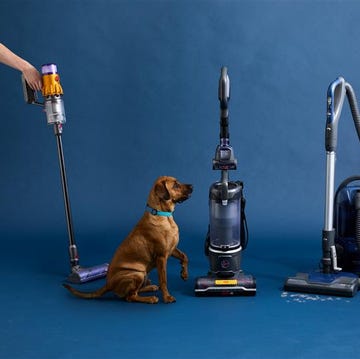
The Best Vacuums for Pet Hair
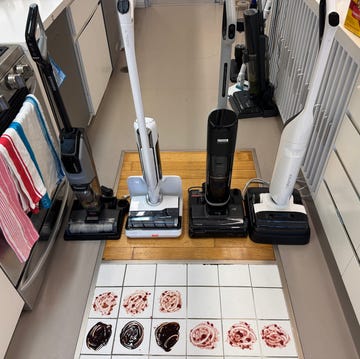
Our Favorite Vacuum-Mop Combos, According to Tests

Robot Vacuums Worth the Investment

The Best Vacuum Cleaners