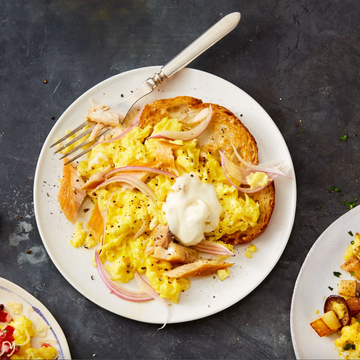
Scrambled eggs are simple—but that doesn’t mean they can’t be better. If yours tend to come out a little dry, there’s an easy way to improve both texture and staying power: add cottage cheese.
It’s not about reinventing scrambled eggs. It’s about getting a softer, creamier result without changing your routine.

Why cottage cheese works
Cottage cheese brings moisture and structure at the same time.
As the eggs cook, the curds soften and melt slightly into the mixture, which keeps the eggs tender instead of tight or dry. The result is a softer scramble with a bit more body—something that feels intentional, not accidental.
It also adds protein, which makes the eggs more satisfying without making them heavier.
The flavor stays mild. You’re not making cheesy eggs—you’re just making better ones.
How to add it
You don’t need to be exact here, but a good place to start is 1 to 2 tablespoons of cottage cheese for every egg.
From there, you’ve got a few options depending on the texture you’re after:
- For light and fluffy, whisk: Stir the cottage cheese directly into the raw eggs before cooking. This gives you a soft, evenly creamy scramble.
- For super smooth, blend: If you’re not into the curds, use a blender (conventional or handheld) to blend the eggs and cottage cheese together for a few seconds before they hit the pan. You’ll get a completely smooth, creamy texture within the curds.
- For a little texture, fold: Cook your eggs nearly all the way, then fold in the cottage cheese, so the curds warm and only begin to melt while the eggs finish cooking.
What to keep in mind when scrambling
Stay with lower heat
This isn’t a high-heat situation—keep the temperature at medium-low so everything softens gently rather than browns. Stir frequently, adjusting how often you stir based on the texture you want (more stirring for smaller, softer pieces; less for larger pieces).
Pull them early
Take the eggs off the heat while they still look slightly glossy and soft. They’ll continue to cook off the heat.
Taste before salting
Cottage cheese brings some salt with it. Start with less salt when beating the eggs together before cooking, then adjust at the end when they are finished cooking.
Where cottage cheese really helps
This is especially useful if you want eggs that actually hold you over. The added protein—about 2 grams per tablespoon—adds up quickly, making breakfast feel more substantial without extra effort.
It’s also a smart move if you tend to overcook your eggs. Cottage cheese gives you a little more wiggle room, helping keep the texture soft even if you go a minute too far.
The takeaway
You don’t need a new technique to make better scrambled eggs—you just need a different starting point.
Adding cottage cheese gives you a softer, creamier scramble with more substance, using the same pan and method you already rely on.
It’s a small change, but one that proves itself quickly.