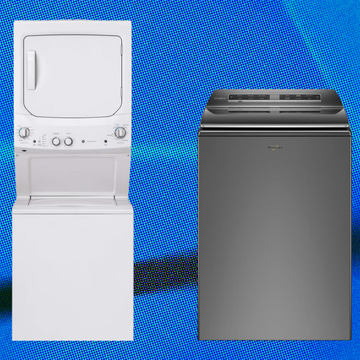
If you're replacing your washer and dryer, you may be considering whether it's worth swapping your traditional appliances for an all-in-one combo. Unlike a standard washer and dryer set, a combo machine machines washes and dries clothes in the same drum, eliminating the need to transfer wet laundry between machines.
The hands-off convenience is appealing, but it comes with tradeoffs. Performance, capacity, cycle times, and even repairs can vary significantly between the two. The best choice depends on your space, your laundry habits, and what you value most.
The key differences
Space
An all-in-one washer-dryer combo combines both washing and drying into a single appliance, so it takes up less floor space than a traditional washer and dryer set. This makes it a smart choice for smaller spaces like apartments, condos, and laundry closets.
That said, it's worth considering whether a stacked washer and dryer could also work in your home. While they require enough vertical clearance, they offer many of the same space-saving benefits as an all-in-one combo and allow you to wash and dry clothes at the same time.
Convenience
Once you load a washer-dryer combo, it automatically transitions from washing to drying, so there's no need to remember to transfer wet clothes between machines. This can be especially appealing if you work long hours or simply prefer a more hands-off approach to laundry. You can start a load before leaving the house or heading to bed and come back to clean, dry clothes.
Performance
While all-in-one combos can get the job done well, separate machines generally provide better overall washing and drying performance for households that frequently wash full loads, bulky bedding, or towels.
"Dryers must have a larger drum than a washing machine to handle the same size load," says Noah Pinsonnault, a reviews analyst in the Good Housekeeping Institute's Home Care & Cleaning Lab. "It allows air to move through the clothes more freely as they tumble." Because an all-in-one machine uses the same drum for both washing and drying, you may need to remove some items before starting the drying cycle if you've filled the machine to its maximum wash capacity.
Speed
Combination units generally take much longer to complete a full wash-and-dry cycle than separate machines. And because washing and drying happen sequentially in the same drum, you can't start another load until the entire cycle is finished.
With separate machines, the washer can begin a second load while the dryer finishes the first, allowing you to work through several loads much more quickly. "This approach is much faster for households that do a lot of laundry," says Pinsonnault.
Repairs and reliability
If an all-in-one washer-dryer combo needs repairs, you'll likely be without both your washer and dryer until the machine is fixed. With separate machines, a problem with one appliance doesn't necessarily put the other out of commission. "When people lose a dryer, they may hang or line dry their clothing, but if the washer is down, all bets are off," says Pinsonault. That extra flexibility can be especially helpful for larger households that do laundry frequently.
So which should you choose?
An all-in-one washer-dryer combo is a great option if you're short on space or value the convenience of loading laundry once and letting the machine handle the rest. But if you have a larger household, wash a lot of bulky items, or do laundry frequently, separate machines are the better choice.
Brigitt is a writer, editor and craft stylist with nearly 15 years of experience. She specializes in lifestyle topics, including home, health, parenting, beauty, style, food, entertaining, travel and weddings. She has written for Glamour, People, Good Housekeeping, Women's Health, Real Simple, Martha Stewart, Apartment Therapy, The Spruce, and more.