
Okay, so cleaning isn’t at the top of everyone’s to-do list in May! The sun’s finally out, the temperatures are hiking up and the garden is calling. Even if you’re not an avid gardener, you’d much rather be out than in – soaking up that pre-summer sun and risking hay fever overhaul.
But here’s the thing: cleaning certain items around (and outside) the home now will improve your upcoming summer. It will banish that unwelcome feeling of guilt when you notice something particularly grimy or stumble upon a hidden mess when you just want to relax.
That’s why we’ve taken a moment to round up the filthy things that can have a negative impact on your sunny day. Cleaning these is faster than you’d think (especially with our tips), so they’re crucial to add to the to-do list this month.
1. Mossy patio
No one wants to sun themselves on a mossy patio. When it gets thick enough that it’s furry and clustered with weeds, it’s shouting for some TLC.
Start by removing all the furniture and sweeping away loose leaves with a broom. Then, dislodge the moss and weeds by hand with a patio weeding tool, such as the Orbitron Weed Remover. Grab a reliable kneeling pad and hook the weeds and moss away in alternate directions. Then, follow that up with a proprietary weed killer – the WeedKil Glyphosate Free Weed Killer was the top-scoring spray bottle in the GHI’s eco-weed-killer test. You can also use a long-handled weeder if you struggle to kneel, like the Mitclear 53in Long-Handle Weed Remover.
A pressure washer combined with a patio cleaner are brilliant for the finishing touches, but make sure both are suitable for the surface first. Pressure washers are ideal on concrete, but they can erode natural stone, such as sandstone and limestone.
GHI Tip: When kneeling, wear a sunhat to protect the back of your neck from sunburn.

2. Muddy suitcase
Before the suitcase gets chucked on the bed, give it a much-needed clean to remove mud from the wheels, sticky residue from the handle and suntan lotion spills from the interior (who would want to pack in that?).
First, empty everything out and then shake any residue over the bin. For what remains, a vacuum cleaner with the upholstery attachment on the low-power setting will get the job done. If you can remove the pockets, straps and the liner itself, put them in the washing machine (use a mesh laundry bag for extra protection – and use a delicate cycle). You may be able to wash your packing cubes and luggage strap at the same time (if they’re machine-washable)!
An upholstery cleaner can be used to remove any greasy stains from the inside, such as Dr Beckmann Upholstery Stain Remover, or just use a damp microfibre cloth to refresh it. Use soapy water for the wheels, handle and case (if it’s hard shell) – a toothbrush is handy for reaching into the crevices.
Organise the contents before you toss them back in. It’s fine to use your suitcase as storage space when it’s not in use, but there shouldn’t be a bundle of clutter in there!
3. Grubby greenhouse
The greenhouse is a haven for seedlings and delicate plants, but it’s not exactly The Eden Project when there’s dust and limescale clouding up the glass.
Start by temporarily removing everything; choose an overcast day rather than full sun so the glass won’t dry prematurely. Remove loose soil from surfaces with a dustpan and brush, then scrub the wooden shelves with a plant-safe disinfectant, like Agralan Citrox Ready To Use Natural Citrus Disinfectant. For the glass and frame, warm water and detergent are best with a nylon brush (to prevent scratches).
Lastly, if you have a paved floor, a pressure washer can spruce it up, but check the surface is suitable first. Let everything dry before you replace your plants. A window vacuum can speed up the process for the glass and give streak-free results.

4. Cloudy glasses and vases
Speaking of cloudy glass; cleaning limescale-covered glassware and vases is good practice at this time of year. After all, it’s the time when we often display flowers and convert from mugs to ice-cold drinks.
Shifting those cloudy marks is very simple. You can either run them through the dishwasher while the detergent dispenser is filled with citric acid, or you can try soaking the glass in warm water combined with distilled white vinegar (half and half) for several hours. You’ll need to repeat the process in very cloudy cases.
5. Singed barbecue
No one wants to get out the barbecue only to find evidence of last year’s cookout on the grates.
Small barbecues are best washed by hand, but first you’ll want to turn it on and heat it to full temperature to make sure the food is charred – that way it’s easier to dislodge. Being careful not to touch it, you can scrape off the worst with a BBQ brush. Once it’s cool enough to handle (but still warm), wash in soapy water and apply vegetable oil once dry to prevent rust.
For larger grills, which are less easy to wash by hand, you can alternatively whack the temperature up to full for at least 15 minutes to kill any bacteria, then use a BBQ brush to scrape away what remains.
GHI Tip: You can also use a soda crystal solution to clean your barbecue’s grates and racks.

6. Greyed socks
As the trainers come out at this time of year, so do the white trainer socks, but they’re not so appealing if they’ve greyed from countless washes. This is easily remedied.
Gather your grey socks and soak them in an oxygen-based bleach powder solution, such as Vanish. Use one designed for whites if you can; this intensifies the effect thanks to the optical brighteners. Follow the dosage and soaking recommendations (go for the max with both for the best effect), making sure it’s fully dissolved beforehand.
Then once time’s up, move your socks over to the washing machine and wash with biological detergent combined with the oxygen-based bleach for a second dose. Wash at as high a temperature as the socks allow. Once time’s up, hang to dry in the sunlight for additional whitening from the UV rays. Depending on how grey your socks are, the process may need repeating, but this will certainly make white clothes bright again.

7. Dusty blinds
As the sun streams in through the windows, sometimes there’s no other option but to close the blinds. That’s when we realise just how bad the dust situation is here, only intensified where we’ve touched the slats and left trails and finger marks behind. It may be awkward and time consuming to dust your blinds, but you can speed up the process with the right tools and technique.
There are specialist blind-cleaning tools you can buy, but we find those to be hit-and-miss. An easier and cheaper option is to put a clean odd sock over your hand and run that over the surface of each slat. Alternatively, if you want an even faster method, you can close the blinds and carefully run your vacuum over the surface, using the lowest power setting with the upholstery attachment.
Try to work from top to bottom as you clean your blinds, so you don’t redistribute dust on your freshly cleaned slats. For any stains, you can lightly apply soapy water (but don’t drench), then rinse with a damp cloth, pat dry and leave the window open to help it fully dry.
The GHI’s Best Cleaning Products 2026

Score: 95/100
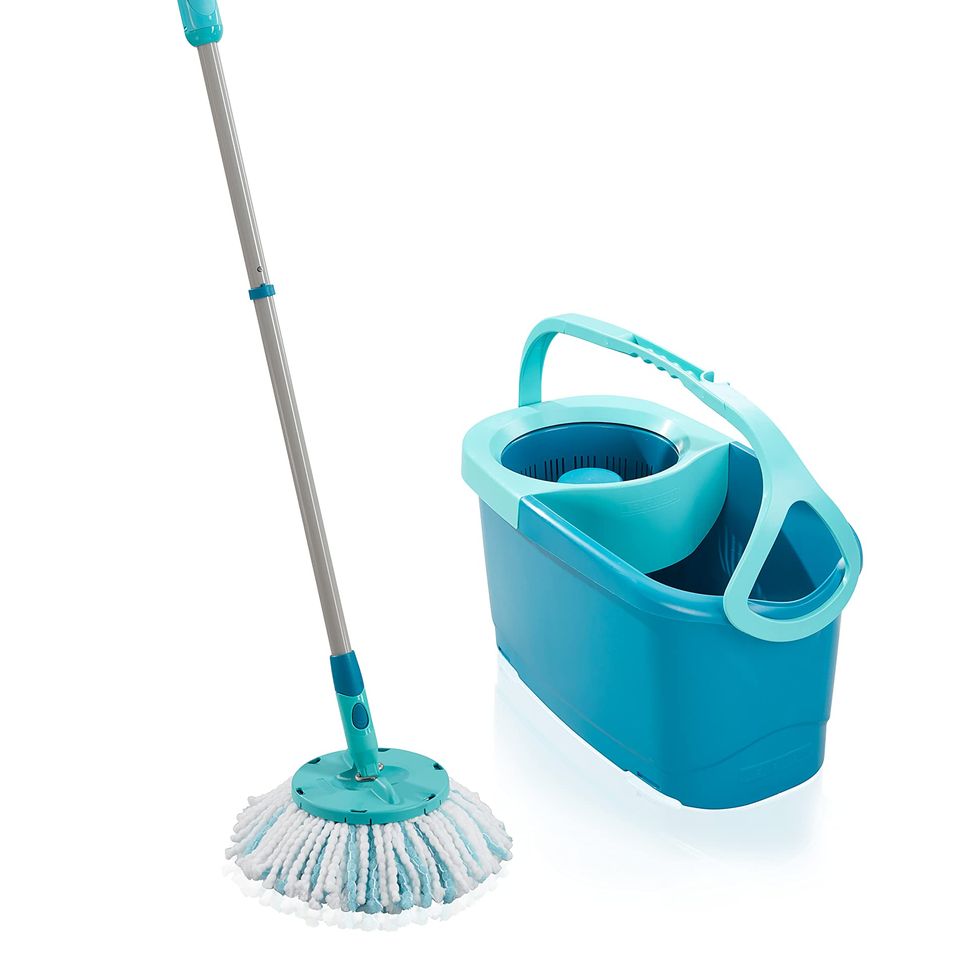
No one likes having to deal with a dripping mop, but Leifheit’s spin technology means you can say goodbye to puddles. You simply push the mop into the sturdy basket, press the handle and it will make light work of anything from spillages to nasty stains. The microfibre swivel head can get into every nook and cranny and the bucket also has wheels for speedy cleaning from room-to-room.

Score: 89/100
Claiming to be tough and long-lasting, our team found these double-sided sponges effective at removing grease and expert at cleaning items such as glasses and cutlery that typically trap food or grease in their grooves. The sponges are also easy to clean in the washing machine or dishwasher (in the top drawer), keeping them bacteria-free.

Score: 87/100
This all-in-one washing machine sprucer is designed to eliminate odours, remove detergent and grime from the drum, and leave the machine’s surface sparkling. Our panel found it delivered on its promise.

Score: 91/100
Our best oven cleaner scored full marks for its performance in the lab. Burnt-on food melted away from the racks with ease after soaking, needing just a quick rinse to get rid of all the residue. It was a similar story on the base of the oven, which was left shiny and spotless with minimal scrubbing required – something other oven cleaners often struggle with.


