
There’s nothing worse than getting bitten in the night. Mosquitoes are one thing, but if there’s a small mass of itchy, raised bites night-after-night, that’s when alarm bells start ringing. What tiny insect is making a meal of you while you sleep? Is it a flea, or worse, a bed bug?
Bed bugs and fleas are a similar size and cause similar damage to your skin. You need to work out which pest you’re dealing with before you can take action. But how can you tell this from the bites alone?
I spoke to 3 experts to find out what we should be looking for and what’s needs to be done about it.
Bed bug bite vs flea bite
‘When differentiating between bed bug and flea bites, the first thing I look at is the pattern and distribution of the bumps. Usually they present as small red, hive-like bumps,’ says Dr Alessandra Haskin, dermatologist at Weiser Skin MD. ‘Bed bug bites tend to be scattered anywhere on the body but very commonly occur in clusters or in a linear arrangement we call "breakfast, lunch and dinner". This represents the bed bug biting, crawling a few millimetres, then biting again and repeating.
‘Bed bug bites typically spare the face and head, although not always. In my experience, the skin is sometimes more reactive to bed bug bites, sometimes resulting in larger hives and welts.’
So, when it comes to bed bugs, the bites may appear in patterns of three in small linear or zigzag formations (that’s if one bed bug has taken multiple bites). The reaction you experience from them also varies from person-to-person, with some coming up in welts and others showing no reaction at all.

Dr Haskin continues: ‘Flea bites tend to occur with much smaller red bumps and tend to cluster around the wrists and legs/ankles. They usually occur on exposed skin and are less likely to be seen under clothing compared to bed bug bites. The itchiness and appearance of flea bites usually occurs very suddenly, however, bed bug bites sometimes start with just a couple spots and then multiply as time goes on, sometimes for several weeks before patients seek help. It's important to note that neither can be reliably diagnosed based on appearance alone and the accompanying patient history and exposures (such as pets/animals for fleas, or travel for bed bugs) is very important.’
So, you have a few signs of what pest the bites belong to. Although we should stress that the bite alone is not a clear indicator – you need to confirm the pest with additional checks around the home.
How to tell if you have bed bugs or fleas
‘When it comes to bed bugs, you should check the seams of the mattress, the bed frame, the headboard and around the areas of the bed,’ advises James Rhoades, founder of ThermoPest. ‘Look for live insects, eggs and small dark faecal spots. In the case of well-established infestations, evidence can be found at a distance from the bed in furniture, skirting boards and cracks and crevices.’
Bed bugs are about 5mm long, so they are visible to the human eye. But they only tend to come out at night, so you will need to look for them in dark, hidden spaces around the bed. The faecal spots look like reddish-brown ink stains – which is quite an obvious sign. Bed bugs also shed their skin fives times before reaching adulthood, so you might spot these husks in your search, too. But what about fleas?

According to Dr Kathryn Dench, chief scientific advisor at Paw Origins: ‘If fleas are responsible, pets may also be scratching, chewing at their skin or grooming excessively. Owners may notice the fleas themselves or small black specks known as "flea dirt" in the coat, particularly around the lower back, tail base, abdomen or groin. Flea dirt consists largely of digested blood and will often turn reddish-brown when placed on damp white tissue.
‘In homes with a substantial flea infestation, people may notice fleas jumping around carpets, upholstered furniture or pet bedding.’
So, fleas won’t be limited to your bed – they’re more likely to be all over the home compared to bed bugs. Although, It’s worth noting that bed bugs can spread to other areas of your home, but will only be in close proximity to where you sleep, such as the sofa. But going back to fleas, they have likely been transferred over to your bed via your pets, which is why you might still wake up with bites. They’re a tiny bit smaller than bed bugs (up to 4mm) but are still visible to the eye. A clear giveaway of a flea is how high it jumps when threatened (up to 20cm in the air).
What should you do if you have bed bugs or fleas?
As well as the visual inspections mentioned earlier, James says: ‘Buying bed bug monitors that can be placed around the bed and on the bed frame is a good way to catch and identify whether they are in the property. Failing that, get a professional pest controller to do an inspection.’
You should wash all bedding and clothes that have been exposed to bed bugs at a minimum of 60 degrees to kill any eggs, then tumble-dry on a hot setting for 30 minutes. Alternatively, you could freeze items for four days for a similar effect. Vacuuming the space regularly is also best, with what’s collected being contained and disposed of immediately outside the house. If you’re worried about bed bugs in the future, a bed bug mattress protector can put your mind at rest.

As for fleas: ‘All pets in the household should be checked and placed on an effective, veterinarian-recommended flea control program where appropriate,’ says Dr Dench. ‘Pet bedding should be washed, floors and furniture vacuumed thoroughly, and environmental treatment may be needed because the majority of the flea population exists in immature stages in the home rather than on the animal.’
How you treat your home for fleas is similar to bed bugs. A 60-degree wash of bedding and pet beds is needed to kill any fleas, and what's vacuumed should be disposed of outside immediately afterwards. Pets should be regularly treated with a vet-approved flea shampoo and comb. There’s always the option to call in a professional if the infestation is extensive.
The best vacuum cleaners to buy

Pros
- Light in the brush head to highlight dirt
- Has a connected app

Cons
- Lacked some suction along the front of the head when up against skirting boards
- Struggled to pick up some finer debris during car cleaning

Score: 96/100
This Dyson cordless vacuum lived up to our high expectations on test. It features the brand’s new dual conical cleaner head, which excelled when it came to sucking up long hair and pet dander. Its compacting dust bin means you’ll spend less time emptying and more time actually vacuuming, too. Head to our guide to the rest of the best cordless vacuums for more models loved by our experts.

Pros
- Combines three types of vacuum cleaner in one
- Anti-odour cartridges create a fresh scent while vacuuming
- Strong edge cleaning performance
Cons
- Can be tricky to refit the canister at first
Score: 96/100
This clever three-in-one vacuum cleaner combines an upright vacuum, stick vacuum and handheld vacuum in a single device. It performed brilliantly as an upright in particular, sucking up 100% of dust and 98% of crumbs from short pile carpet, while the dual brush system removed hair in one sweep. The stick vac is great for whipping around hard floors and the handheld is handy for stairs – just note that none of the modes are cordless.

Pros
- A near perfect performance when it came to pick-up
- Effective pet tool
- Variable suction for more control over vacuuming
Cons
- Expensive
Score: 97/100
Producing sparkling results, no matter the flooring, this great all-rounder is an investment worth making, according to our experts. It glided easily around our lab, pet hair didn’t tangle in its brushes, and its dust canister was a doddle to empty. It’s an investment, but it’s excellent performance and durability won’t let you down.


Pros
- Good battery life as a handheld
- Lifted dust at the edges of the room
- Lots of accessories including pet, upholstery, and crevice tool
Cons
- Quite bulky as a handheld
- Takes six hours to recharge
Score: 92/100
This vacuum is designed to pick up dirt as it moves backwards as well as forwards, helping to clean up dust, hair, and debris in minimal passes. Its suction is excellent on hard floors, it works brilliantly as a handheld, and its docking station empties the dust bin automatically – win, win.
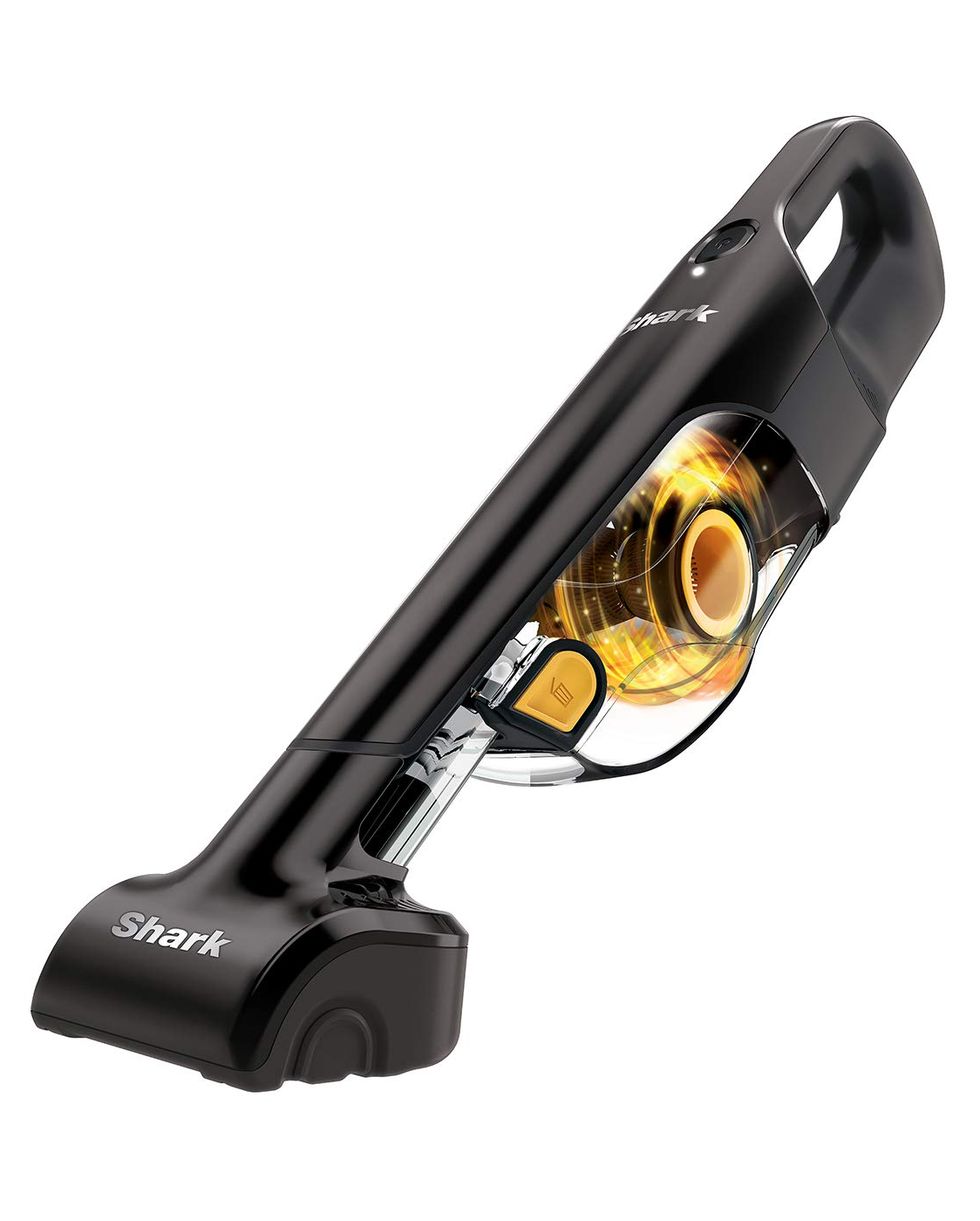
Pros
- Picked up 99% of dust
- Lifted all food crumbs laid
- 10-minute battery life was just enough for us to clean a small car
Cons
- Quite heavy for a handheld
Score: 94/100
With a pet-hair friendly design, this Shark barely dropped a mark for its cleaning performance, thanks to its outstanding pick-up on all surfaces, no matter the debris. Its battery life is short (10 minutes), but we were still able to clean a small car. Just note, it takes four hours for a full recharge.


