When I first noticed my hair shedding in light fistfuls in the shower, I barely registered it. I felt broken anyway. I’d had a hellish year. My former fiancé had died and my younger brother had been assaulted so badly he was left in a coma. My life was falling apart, so it made sense that my body was, too. Still, it was shocking to look in the mirror and see my pencil-thin ponytail.
I don’t consider myself particularly vain. I rarely wear makeup, I have no skincare routine and, at 44, I’ve resisted the tweakments adopted by most of my friends (Botox, fillers, collagen). Yet, when it came to my hair – my long, thick, dark locks that I rarely cut and never needed to dye – it seemed to embody my Jewish heritage and how carefree I felt. Now that it’s vanishing, I feel I’m losing part of myself.
According to the National Institute for Health and Care Excellence (NICE), as many as 8m women in the UK experience hair loss, or alopecia to give it its clinical name. Consultant dermatologist Dr Nicola Clayton says she’s seeing an upswing of cases. There are many reasons women might experience hair thinning – from sudden weight loss to stress, the menopause or genetics – and the first step was to find out why it’s happening to me.
Dr Clayton says hair loss is “often multifactorial”, but when a simple cause is identified and corrected, it “should resolve within six months”. This, it seems, is a good place to start – and also gives me hope. Once the considerable stress I’ve been under has eased, my hair may be restored to its former glory. But if there are other factors at play, then investigating different methods of hair regrowth can only help.
Unlike aestheticians or even qualified trichologists, Dr Clayton is a medical doctor. But an appointment at a clinic like hers can cost around £395 – out of reach for many people. As I’m finding out, losing your hair as a woman is a uniquely painful and isolating experience, leaving you highly vulnerable to the thriving but unregulated aesthetics industry, which offers a host of solutions and snake oils.
I’m far from immune. As my hair continues to thin, I find myself feeling ashamed to be shedding something that feels so vital – a visible sign of youth and fertility; a way I style myself to the world that I suddenly can’t control. Will I lose my power if I lose my hair? Would I lose myself?
Then, in the depths of my hair-loss crisis, I see my mother for the first time in a decade. I’m shocked to see that, at 65, she’s almost bald.
Wearing a bright headscarf around her bare scalp, she looks like a cancer patient. Instead of being stress-related, could my hair loss be genetic? We have a complicated, estranged relationship and I don’t feel I can ask her. Instead, I begin having sleepless nights in which losing my hair replaces losing my teeth in my anxiety dreams — except this seems more likely.
A dramatic haircut might make my loss less visible, I decide — but short hair just doesn’t suit me. So, I try everything else. First come volumising shampoos, which make my hair frizzier and me more self-conscious. Nanogen Shampoo Luxe and Conditioner — two of Good Housekeeping’s favourite products of 2025 — containing a blend of keratin proteins, hyaluronic acid and glycerine, do seem to thicken my hair while keeping it smooth. But it feels like a short-term solution.
I try religiously taking Hair Gain’s capsules and gummies, which start at £29.99 for a month’s supply and contain biotin, zinc and phytonutrients for hair regrowth, and vitamin C to boost collagen. I do feel healthier… but I don’t notice any substantial difference to my hair.
Certain vitamins and mineral deficiencies do need correcting for hair regrowth, says Dr Clayton, but unless I’m very low in biotin (which a Google search tells me is fairly uncommon), “There’s no evidence for biotin supplementation.”
Next, I borrow a CurrentBody LED hair regrowth system — a white plastic spaceman helmet that costs £649.99 and blasts your scalp with UV, said to promote blood flow. This has been tested by the GHI, and studies show that LED therapies can be effective for some people. But I don’t like wearing it — I feel nervous I’m frying my brain. And I worry that the sticky pads inside it will damage my already fragile hair.
I’m keen to try Calecim Advanced Hair System (£295 for a six-week supply). The brand’s website claims impressive results — The treatment contains ethically sourced stem cells from the umbilical cord lining of red deer, which are then cultured in a lab. Over six weeks, I jab my skull with Calecim’s Derma Stamp, a professional-grade microneedling tool. It doesn’t hurt, but the mixture is pungent and it’s messy, not to mention time-consuming. As the weeks pass, I’m thrilled to notice a halo of baby hairs appearing, but I wonder how long I can keep it up. Dr Clayton finds Calecim interesting, but for her the jury’s still out.
I stay awake googling other solutions, which is how I come across Hair Solved – specialist hair-loss salons for women owned by Sally Forward, who’s been creating hair-loss systems for 25 years. I book in for an appointment. I’m embarrassed to show her my hair. Because it’s been moulting, I’ve avoided brushing it and it’s a mess. Sally says this is common; some women arrive with matted dreadlocks, she reassures me.
Her London salon has privacy screens, frosted windows and private areas. Guests and even partners aren’t allowed in because, Sally explains, “Sometimes we’re the first people they’ve opened up to, due to the shame and embarrassment they feel.” Her office is filled with cards from people thanking her for changing their lives.
The salon has developed a range of bespoke “hair integration systems”, including one in which hair is threaded through a mesh with extensions added. These are designed to stay on, and six-weekly maintenance appointments are booked in. I’m having extensions of long, thick, dark hair so perfectly matched I can’t believe they’re not mine.
They’re attached as beaded rows at the root, unlike single-bond extensions that are bonded to single strands of natural hair. Any system puts weight on the hair, but this method distributes it, making it kinder to existing locks. Some clients’ hair will grow back while wearing it. Sally says it’s addictive – “like Botox for hair”.
As I leave the salon, I believe her. I love my fake, long hair and wonder how vain I am, but I’m still keen to get to the root of the problem. “If you want to go for gold and try treatments with the most impact, that’s where medical therapeutics come in,” says Dr Clayton.
The only licensed over-the-counter treatment for hair loss is minoxidil – a medication originally developed for high blood pressure which was found to promote hair growth by increasing the blood supply to the hair follicles. It’s not effective for everyone, but some studies suggest an impressive 80% response rate. Perhaps this is next for me. But for now, I’m happy swishing around, amazed at my new hair and how it makes me feel – happy and powerful.
The GHI’s hair growth heroes
These formulas and tools have all been analysed in the lab and tested by panellists experiencing hair loss and thinning.

Score: 91/100
Our panellists reported less breakage and fallout, plus stronger, shinier hair.

Score: 89/100
A personalised prescription of active ingredients. Testers noticed thicker-looking hair after three months.
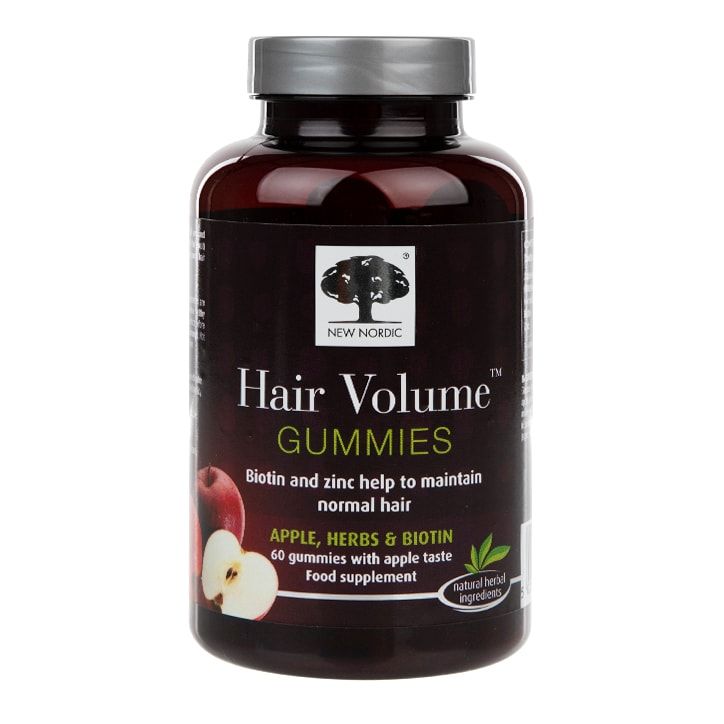
Score: 84/100
Over half our panellists saw a boost in volume and growth after two months.

Score: 70/100
After wearing this for 10min a day for 16 weeks, testers reported longer, stronger hair.