We earn a commission for products purchased through some links in this article.
7 best body scrubs and chemical exfoliators for dry skin, tested by 250 women
Buff away dryness with the exfoliants that scrubbed up best in our GHI tests
 Tested by Orla BadgerFormer Senior Beauty and Grooming Tester

Now that summer has drawn to a close any dreams of a real tan are likely fading, and for the best fake tans, you need a fresh, even canvas.
To help you find the best body scrubs and the best boy exfoliators for smoother, more polished skin, the Good Housekeeping Institute experts tried and tested a range of leading physical and chemical exfoliators.
These are the standout formulations that scrubbed up best, but scroll down for their full reviews and our guide to their benefits.
Best body scrubs to buy
- 1
- 2
- 3
- 4
- 5
How we test body scrubs

Our beauty experts recruited 250 panellists to help them test a wide range of the leading chemical and physical body exfoliators. The testers had a range skin types – from sensitive to dry skin and those prone to ingrown hairs.
After testing them for a minimum of two weeks, we asked the panel to give us detailed feedback, which included any improvements to their skin’s softness, smoothness and hydration, what they thought of the texture, how easy the packaging was to use and whether they had a pleasant fragrance.
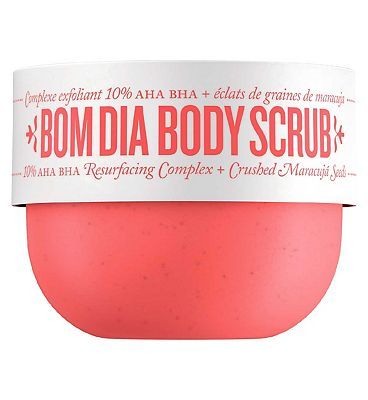
Sol de Janeiro Bom Dia Body Scrub 220g

Score: 86/100
Known for its signature tropical fragrance, this brand has a history of creating cult skincare products (you may have tried its bestselling Brazilian Bum Bum Cream.) Our panel loved this scrub’s ‘luxurious’ scent and it came top in our tests for moisturising dry skin.
The clever combination of tiny physical beads and three exfoliating acids (glycolic, lactic and salicylic) gently lifted dead skin cells and unclogged pores to leave skin feeling smoother and looking polished. It’s self-care in a scrub.
Key specifications
| Size | 220g |
|---|---|
| Format | Exfoliating beads and chemical exfoliators |
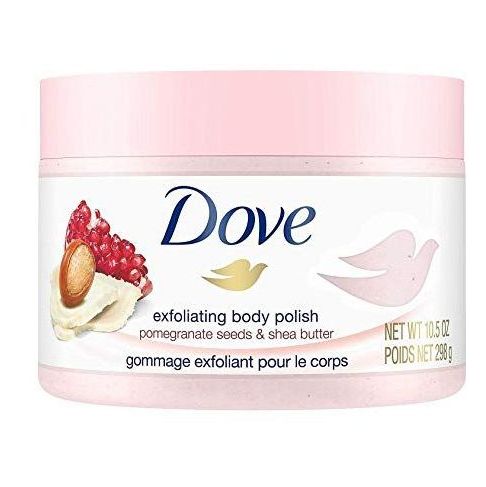
Dove Exfoliating Body Scrub 225ml
Dove Exfoliating Body Scrub 225ml
Score: 83/100
Our testers had glowing praise for this trusty physical scrub, from its fluffy ‘mousse-like’ texture and ‘divine’ fruity scent to the generous yet gentle exfoliating beads, which gave their skin a silky softness.
It doesn’t feature any exfoliating acids, but everybody said their skin felt smoother after using it, and its affordable price tag impressed us for the quality.
Key specifications
| Size | 298g |
|---|---|
| Format | Physical exfoliator, mineral-based hydrated silica, combined with shea butter |
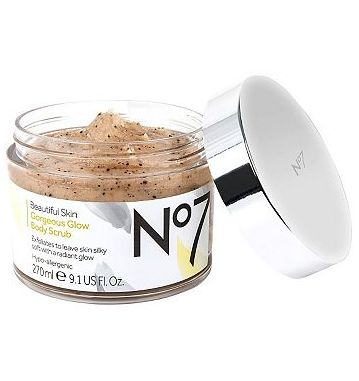
No7 Beautiful Skin Gorgeous Glow Body Scrub 270ml
Score: 82/100
For an immediate glow before a night out, consider this physical No.7 exfoliator – it gave almost all our panel an instant radiance and softness.
Testers liked that the granules didn’t dissolve immediately, allowing for a deep scrub that thoroughly removed dead skin cells before easily rinsing away. It moisturised rough patches brilliantly and the big tub makes it excellent value.
Key specifications
| Size | 270ml |
|---|---|
| Format | Physical exfoliator, walnut shell, combined with almond, argan and rosehip oil |
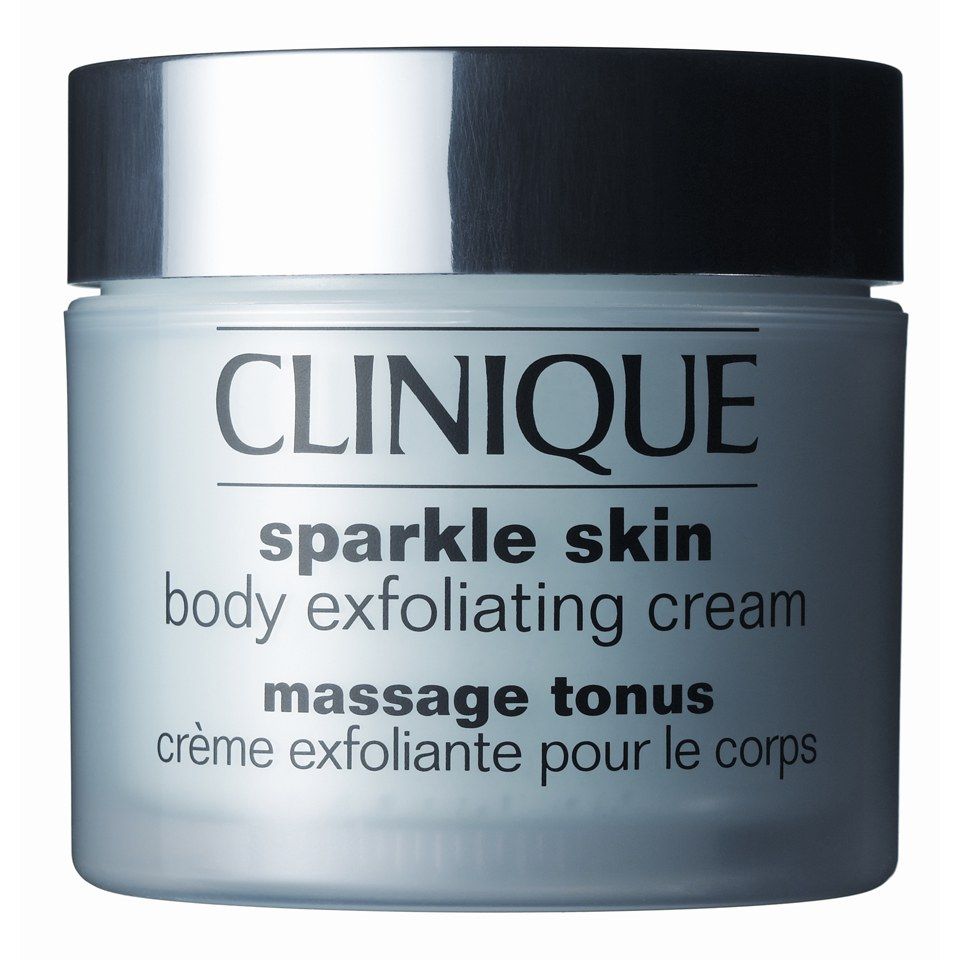
Clinique Sparkle Skin Body Exfoliating Cream 250ml
Clinique Sparkle Skin Body Exfoliating Cream 250ml
Score: 82/100
Combining physical exfoliants with deeply penetrating salicylic acid, our testers with more sensitive skin found the finer texture of this cream effective and not at all irritating.
It helped their moisturiser soak in more quickly, and persistent dry patches felt smoother, softer and more nourished for days after application. It left skin supple and firm, but some found the ‘clean’ scent too subtle.
Key specifications
| Size | 250ml |
|---|---|
| Format | Physical exfoliator, silica, combined with chemical exfoliator, salicylic acid. |
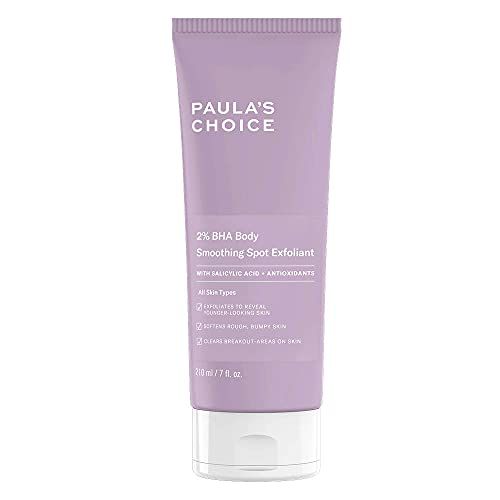
Paula's Choice 2% BHA Body Spot Exfoliant 210 ml
Paula's Choice 2% BHA Body Spot Exfoliant 210 ml
Score: 80/100
Keratosis pilaris happens when a build-up of the protein keratin blocks hair follicles, resulting in tiny bumps and dry patches, typically on the upper arms, thighs and cheeks. This fragrance-free exfoliant with salicylic acid proved a top choice for tackling the common condition, as it left dry skin looking and feeling much smoother after only a few uses.
Some testers said it also reduced the appearance of blemishes and scarring. It combines a chemical formula with a creamy texture, so you may miss that satisfying physical scrub sensation, but it does come in a squeezy tube for easier application mid-shower.
Key specifications
| Size | 210ml |
|---|---|
| Format | Chemical exfoliator, glycolic acid |
Drunk Elephant TLC Glycolic Body Lotion 240ml
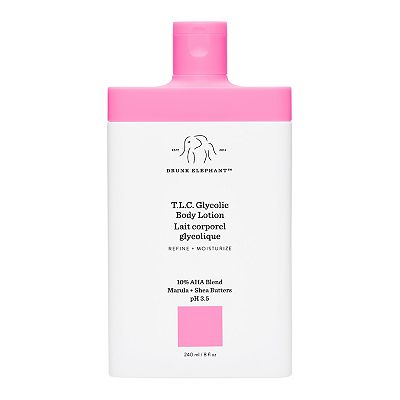
Drunk Elephant TLC Glycolic Body Lotion 240ml
Score: 78/100
Bid farewell to dry, flaky skin and welcome luminosity with this 10% AHA concentrate (containing glycolic acid, plus tartaric, lactic and citric, hence ‘TLC’). The addition of shea butter ensures moisture is locked into the skin, while the exfoliants get busy resurfacing, making it the best body exfoliator for dry skin.
Our panel reported significantly smoother skin after use, thanks in no small part to its ‘brilliant moisturising effect’. Some would have preferred a stronger scent and others missed the feel of a physical scrub, but this was declared a great chemical exfoliator with a light, easy-to-absorb texture that’s ideal for resurfacing skin as the seasons change.
Key specifications
| Size | 240ml |
|---|---|
| Format | Chemical exfoliator |
Fresh Brown Sugar Body Polish Exfoliator 490G
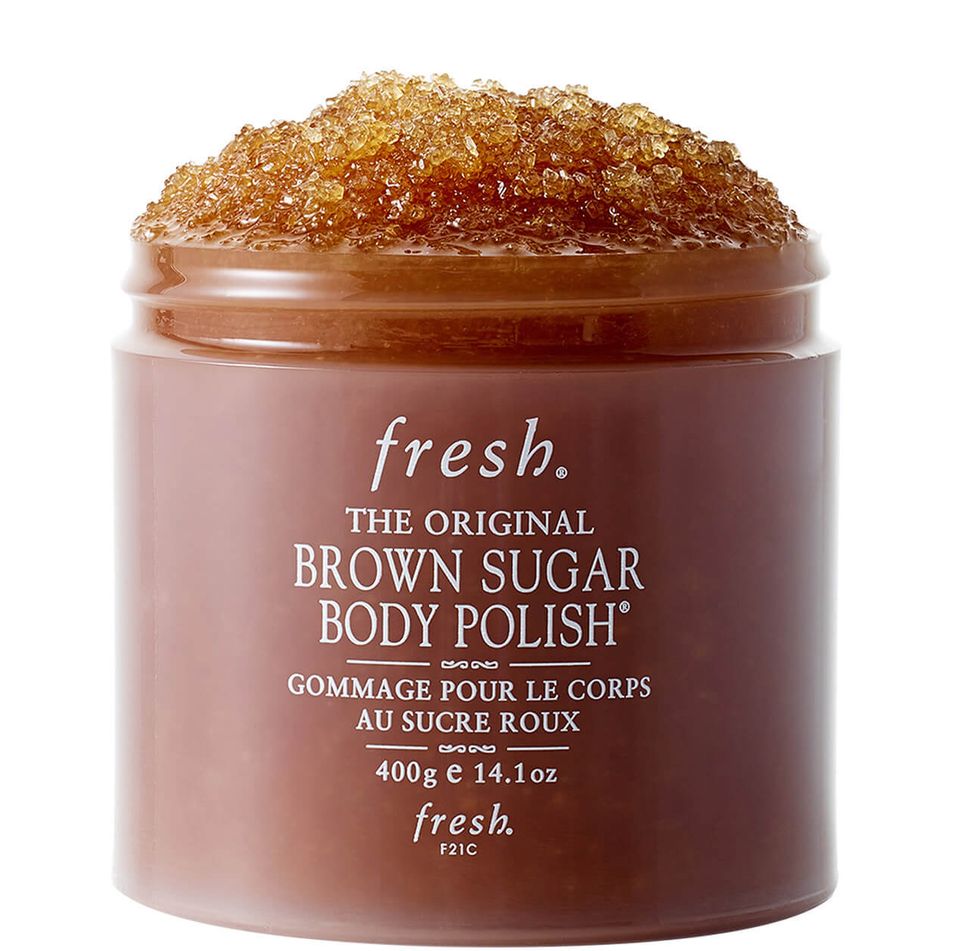
Fresh Brown Sugar Body Polish Exfoliator 490G
Score: 78/100
Not only does this chunky sugar scrub leave skin looking and feeling nourished, but it also smells good enough to eat. Testers loved its ‘delicious’ natural ginger and lemongrass scent, and almost everyone said their skin felt much smoother after using it.
The spa-like formulation is rich in essential oils, meaning it can double as a nourishing body oil and speed up your skincare routine. Our only niggle was how messy and slippery it was to apply in the shower, especially when following the brand’s instruction to mix it thoroughly first.
Key specifications
| Size | 490g |
|---|---|
| Format | Physical exfoliator, brown sugar |

Are body scrubs actually good for your skin?
Every skin cycle (around 28 to 30 days long), we shed dead cells. These gather on the skin’s surface and clog pores, causing blemishes, roughness and dryness that leave it looking dull and ashy.
Not only does resurfacing the top layer of skin remove these dead cells and lift dirt, but it also allows for better absorption of nourishing moisturisers and body oils deeper into the epidermis.
However, like most things, exfoliating is only healthy in moderation – most skincare experts agree that once or twice a week is the sweet spot for smoother skin without any irritation.
What’s the difference between physical and chemical exfoliators?
We asked Dr Grace Hula, an aesthetic doctor, to explain the difference between chemical and physical exfoliation and the benefits of both.
‘Physical exfoliation involves the use of abrasives, such as scrubs or brushes, to physically remove dead skin cells from the surface of the skin,’ she explains. ‘Chemical exfoliation uses chemical compounds, such as alpha-hydroxy acids (AHAs) and beta-hydroxy acids (BHAs), to dissolve the intercellular glue that holds dead skin cells together.’
Dr Hula recommends physical scrubs for immediately removing dead skin cells and instantly improving your skin’s texture and tone – helpful if you’re going on holiday the next day – but advises against harsh exfoliators.
‘Physically exfoliating can stimulate circulation and increase your skin’s natural radiance,’ she says. ‘However, it’s important to use gentle physical exfoliants, such as soft bristle brushes and finely ground scrubs, as harsh abrasives (such as those plastic netted shower polishers or hard bristle brushes) can cause micro-tears in the epidermis, especially if your skin is sensitive.’
For a gentler, yet still effective, alternative, Dr Hula suggests chemical exfoliation, which reaches deeper into your skin to improve its overall health.
‘Look for AHAs (alpha hydroxy acids), such as glycolic acid and lactic acid, which exfoliate the top layers of your skin and help to reduce the appearance of fine lines, wrinkles and hyperpigmentation,’ she advises. ‘BHAs (beta hydroxy acids), such as salicylic acid, are oil-soluble and can penetrate further into pores to unclog them and prevent breakouts.’
If you’re eager to start fake tanning to top up your summer glow, you’ll need to resurface the top layers of skin for an even tan, whatever your skin type.
Chemical exfoliants tend to be milder and less disruptive to sensitive skin than physical ones, as explained by Dr Hula above, but many of our recommended products actually contain a clever combination of the two. Some have had their rough, chunky textures softened by oils or honey; some feel more like smooth moisturiser to apply; and others sit somewhere in between – think small beads swimming through silky creams.
Given that chemical exfoliants dissolve dead skin cells, rather than sloughing them away, they are often less likely to irritate sensitive skin than scrubs. That said, there are plenty of physical exfoliators that feature finer, softer abrasives to relieve dryness gently. If in doubt, or if you have an inflammatory skin condition, always consult a dermatologist or doctor.
What does a body scrub actually do?
A body scrub does exactly what it says on the tin; they give your skin a good scrub. They're made with either physical exfoliators, such as sugar, or chemical ones, such as glycolic acid. Both work to lift rough, dead skin cells, and leave behind smooth, soft skin.
How often should you use a body scrub?
You probably don’t want to use a body scrub every single day, as exfoliating too frequently can irritate the skin. A couple of times a week is more than enough, or whenever you feel like your skin needs a bit of extra TLC.
Verdict: Which body scrub is best?

If physical scrubs leave you feeling more satisfied, then our winner, the Sol De Janeiro Bom Dia Body Scrub is a great option. Plus, we love the iconic, summer fragrance.
If you’re after a bargain, we recommend the Dove Exfoliating Body Scrub.
And you have sensitive skin and want a gentler product, try the Clinique Sparkle Skin Body Exfoliating Cream, which combines physical exfoliants with salicylic acid.
Florence is our Senior Beauty Writer, specialising in expert-tested beauty and grooming reviews — from toothbrushes to the latest skincare launches. She’s committed to sharing recommendations for products that truly work and make people feel confident and healthy. Prior to this she was at Tropic Skincare, where she worked closely with biochemists in the lab, delving into the functions of each fresh, natural ingredient and conveying its efficacy to her audience in easy-to-digest terms.
With over five years’ experience in beauty and health journalism, Florence has written for ELLE, Women’s Fitness, Sister Magazine, National Geographic Traveller and many more, with a strong sustainability angle thread through much of her work.
When she isn’t packing for a trip away, working out, eating out or reading up on retinol serums, you’ll probably find her experimenting with her film camera and building her portfolio of portraits. Florence’s photography can be found at florencereeves-white.com, her Instagram is @florencereeveswhite and her twitter is @floreadsnwrites
Orla was our Former Senior Beauty and Grooming Tester.