It’s noon on a Tuesday, and, like clockwork, you feel a familiar rumble in your stomach. You’re hungry, but aren’t sure what you want to eat. Maybe you scroll through an endless array of menus on a delivery app or stare blankly into your refrigerator hoping a healthy meal will magically assemble itself. By the time you finally make a choice, you’ve likely drained precious time and mental energy. This daily struggle has a name: decision fatigue. And it can derail even the best budget goals and healthy diet intentions.
Turns out making a deliberate habit of repeating your lunch offers a simple, practical solution. Sticking to the same meal during the workweek might sound boring, but embracing a predictable eating routine can give you relief from midday stress (the data says so!).
Learn more about why a repeated lunch can serve as a powerful tool for your well-being and how you can make it work for your busy lifestyle and avoid boredom.
Why a repeated lunch might make sense
Making food choices requires effort. Eliminating the need to choose makes it easier to make healthy choices. A study published in the journal Health Psychology explored this phenomenon by tracking 112 participants enrolled in a 12-week behavioral weight loss program. The researchers found that individuals who showed greater dietary repetition and maintained more stable daily calorie intakes ultimately achieved greater weight loss. Participants who frequently ate the same foods lost an average of 5.9% of their body weight, compared with 4.3% among those who ate a wider variety of foods. More consistent calorie intake was also associated with greater weight loss; for every 100-calorie increase in daily fluctuation, weight loss decreased by about 0.6%.
The study results suggest that routine eating patterns may facilitate success by making healthy choices feel automatic.
"Eating the same balanced lunch each day can simplify decision-making, keep portion sizes consistent, and make it much easier to meet your nutrition needs, especially if your meal includes a good mix of protein, fiber, and healthy fats," says Rachael Ajmera, M.S., R.D., dietitian and founder of Nutrimental.
When you repeat a meal, you remove the guesswork.
"From a clinical perspective, repeating a consistent, well-balanced lunch can be a powerful tool for streamlining daily routines and supporting nutrition goals,” echoes Johannah Katz, M.A., R.D., an Orlando-based registered dietitian. “When that meal includes adequate protein, fiber, and healthy fats, it helps promote satiety, stabilize blood sugar, and make overall calorie intake more predictable—all key factors in sustainable weight loss."
What a balanced repeated lunch looks like
A successful repeated lunch must be nutritious enough to sustain your energy through the afternoon. If you plan to eat the same meal frequently, it needs to provide a robust nutritional foundation. A balanced lunch typically consists of three main components: lean protein, high-quality fiber, and healthy fats.
Protein is essential for keeping you full and repairing tissues. High-protein foods include grilled chicken, turkey, tofu, lentils, beans, or Greek yogurt. Fiber, found abundantly in complex carbohydrates and vegetables, slows digestion and prevents sudden spikes in blood sugar. You can get ample fiber from quinoa, brown rice, sweet potatoes, leafy greens, and cruciferous vegetables like broccoli. Healthy fats play a crucial role in brain health and help your body absorb vitamins. Avocados, olive oil, nuts, and seeds make great additions to your midday meal.
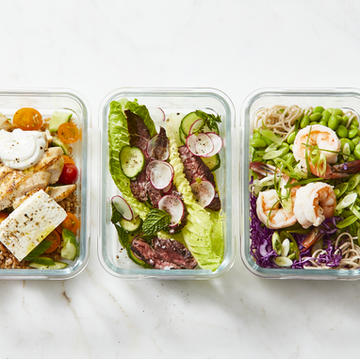
An example of a balanced repeated lunch is a hearty grain bowl. You might start with a base of farro or quinoa, add a generous handful of spinach, top it with roasted chicken or chickpeas for protein, and finish with a drizzle of olive oil and a sprinkle of pumpkin seeds. This combination covers all your nutritional bases while remaining easy to prepare in large batches.
How to build and rotate your repeat lunch (that still offers variety)
One of the biggest concerns about eating the same lunch every day is the fear of culinary boredom. Fortunately, a repeated lunch does not require you to eat the exact same flavors week after week, month after month. You can maintain the efficiency of a routine while still enjoying variety by using a flexible framework.
"Repetition doesn't have to be boring,” says Ajmera. “Try rotating ingredients within the same framework to keep things interesting. For example, you can swap proteins (like chicken, tofu, salmon, or beans), grains (such as quinoa, brown rice, or farro), and vegetables (like leafy greens or roasted veggies) while maintaining the same overall structure of your meal.”
Think of your lunch as a template. If your template is a wrap, you can use a whole-wheat tortilla and change the fillings weekly. One week, you might prep turkey, provolone, and mustard. The next week, you might switch to hummus, cucumber, and feta cheese. The preparation process remains identical, saving you mental energy, but your taste buds get a fresh experience. You can also rely on different sauces and spices. A basic dish of rice, beans, and chicken transforms completely when you switch from a mild salsa to a rich peanut dressing.
Practical repeat lunch prep, storage, and safety tips
To truly benefit from the time-saving aspect of a repeated lunch, you need an efficient meal prep strategy. Setting aside an hour on Sunday afternoon can save you countless hours during the busy workweek.
Start by investing in high-quality, airtight food storage containers. Glass containers often work best because they do not absorb odors or stains and are perfectly safe for the microwave. When you cook your proteins and grains in bulk, divide them into individual portions right away. This step ensures your lunch is ready to grab and go on busy mornings.
Food safety is a critical component of meal prep. Generally, cooked meats, grains, and roasted vegetables stay fresh in the refrigerator for up to four days. If you prep a five-day workweek lunch, consider freezing the portions for Thursday and Friday. Move them to the refrigerator the night before you plan to eat them so they can thaw safely. Keep dressings and sauces in separate, small containers to prevent your greens and grains from becoming soggy.
Budget, waste, and time benefits to a repeat lunch
The financial and logistical benefits of eating a repeated lunch are substantial. Purchasing lunch at a restaurant or through a delivery app can easily cost $15 or more a day. Over a month, that adds up to hundreds of dollars. Buying ingredients in bulk for a repeated lunch drastically reduces your daily food expenses.
Food waste also plummets when you adopt this habit. When you buy groceries without a clear plan, delicate items like fresh spinach or herbs often wilt in the crisper drawer before you can use them. With a repeated lunch, you buy exactly what you need for a specific number of meals. Every ingredient serves a purpose, meaning less food ends up in the trash.
Furthermore, the mental relief and time savings cannot be overstated. You reclaim your lunch break. Instead of waiting in line at a deli or driving to a drive-thru, you can use your time to eat mindfully, take a quick walk, or simply relax.
"Repeating healthy meals may also make meal planning and grocery shopping less overwhelming, which can help people stay more consistent with their nutrition goals long term," says Maggie Bell, M.S., R.D., R.N., owner of Maggie Bell: Nutrition and Wellness.
Common repeat lunch myths and how to address them
Despite the benefits, some people worry about the downsides of a structured lunch routine. The most prominent concerns involve nutritional gaps and flavor fatigue.
"The main downside of eating the same lunch every day is that it can get repetitive and may limit the range of nutrients you’re getting over time, which can lead to burnout and less diversity in your diet," says Ajmera.
To address this, remember that lunch is only one meal. You have breakfast, dinner, and snacks to introduce a wide spectrum of vitamins and minerals into your diet. If your lunch is a predictable staple, you can focus on making your dinners diverse and adventurous.
"Ultimately, repetitive eating isn’t inherently good or bad, but rather, a tool,” says Katz. “When paired with nutrient-dense choices, it can simplify healthy eating and support weight loss, but long-term health still depends on overall dietary quality and diversity."
You can also switch your repeated lunch on a weekly basis. Eat the same salad from Monday to Friday, but switch to a completely different soup-and-sandwich combination the following week. This approach balances the convenience of repetition with the necessity of dietary diversity.
When repetition isn’t right: alternatives and hybrids to the repeat lunch approach
While the repeat lunch effect works wonders for many, it might not suit everyone. If you genuinely despise eating leftovers or find that strict routines trigger unhealthy relationships with food, a rigid daily repetition might cause more stress than it relieves.
If you fall into this category, you can still harness the power of simplified decision-making through hybrid approaches. Consider the "base meal" strategy. You prep a large batch of a versatile base, like mixed greens or roasted sweet potatoes, but change the toppings daily based on your cravings. Alternatively, you might implement "theme days." You could designate Mondays for wraps, Tuesdays for salads, and Wednesdays for soups. This narrows down your choices significantly without locking you into a single meal for the entire week.
You can also keep your weekends completely flexible. Use Monday through Friday as a time for efficient, routinized eating to support your busy work schedule, and leave Saturday and Sunday open for spontaneous cooking, trying new restaurants, and enjoying a wider variety of foods.
Embracing the repeat lunch effect is not about rigid restriction or depriving yourself of joy. It is about intentionally designing your environment to make healthy living easier. By removing the midday decision fatigue, you give yourself the gift of time, save your hard-earned money, and set yourself up for consistent, evidence-based health gains. Start small, pick a favorite balanced meal this week, and experience the relief that comes with a simpler lunchtime routine.