
You've swapped your afternoon coffee for green tea, stocked the fridge with functional drinks and knocked back a pre-workout before your evening gym session. All pretty virtuous choices, right? Perhaps – but if you’re struggling to sleep, you may want to delve a little deeper.
Some supposedly healthy drinks contain more caffeine than you might expect, while others hide it behind ingredients that you'd probably never think to look for. And because caffeine can linger in your system for hours, that 4pm pick-me-up could still be making its presence felt at bedtime.
"Several drinks we consider healthy can potentially affect our sleep, and some are much less obvious than others," says consultant dietitian and founder of Fertility Dietitian UK, Ro Huntriss. "Matcha is a good example. It has a strong health image, so people may not think about its caffeine content or the time of day they're drinking it."
Planning to be in bed by 10pm? Ro recommends aiming to have your last caffeinated drink by around 2pm – or 4pm at the very latest. That's because caffeine has an average half-life of around five hours, meaning roughly half the caffeine you consume could still be in your body five hours later.

1. Matcha and green tea
Green tea is often seen as the healthier alternative to coffee, but don't mistake it for being caffeine-free.
A typical cup of green tea contains around 40mg of caffeine, compared with around 100mg in a cup of coffee, while a typical matcha contains around 70mg, although the exact amount varies depending on how it's prepared.
What to read next
"Matcha's healthy image can make its caffeine content easy to overlook," says Ro. "If someone is struggling with sleep, I'd suggest having it in the morning or early afternoon rather than treating it as an all-day drink."
2. Pre-workout drinks
An evening gym session might help tire you out, but your pre-workout could be doing the exact opposite.
Many contain substantial amounts of caffeine, and one study of popular pre-workout supplements found they contained an average of around 250mg – potentially the equivalent of two or more cups of coffee.
"For someone training after work, switching to a caffeine-free pre-workout would be a sensible first step," says Ro. "Exercise itself is generally beneficial for sleep, but combining vigorous evening exercise with a large dose of caffeine certainly isn't ideal if you're already struggling to sleep."
3. Functional and 'focus' drinks
Drinks promising better focus, productivity or natural energy have exploded in popularity, but they're another category worth checking carefully.
"Caffeine isn't always listed simply as caffeine," says Ro. "Ingredients such as guarana, yerba mate, kola nut, green tea extract and coffee extracts can all provide it. Guarana is particularly easy to overlook because people may not realise it is naturally a source of caffeine."
And don't assume "natural" caffeine gets a free pass.
"From a sleep perspective, caffeine is still caffeine whether it comes from coffee, tea, guarana or yerba mate," she explains. "The most important factors for sleep are the amount of caffeine consumed and the timing."
So when should you stop drinking caffeine?
If you're struggling to sleep, timing matters just as much as quantity.
"Caffeine has an average half-life of around five hours, which means that roughly half of the caffeine you consume could still be in your body five hours later," says Ro. "So if you consume 100mg at 3pm, around 50mg could still be present at 8pm."
As a rule of thumb, she recommends leaving around eight hours between caffeine and bedtime, with six hours being a reasonable minimum for most people.
"If you know you're particularly sensitive to caffeine or are already struggling with sleep, a more cautious approach would be to keep caffeine to the morning and avoid it after midday," she says. People who already have difficulty falling or staying asleep should be especially mindful, while those who are pregnant or breastfeeding are advised to limit caffeine to 200mg a day, equivalent to two standard filter coffees.
Don't rely on a nightcap
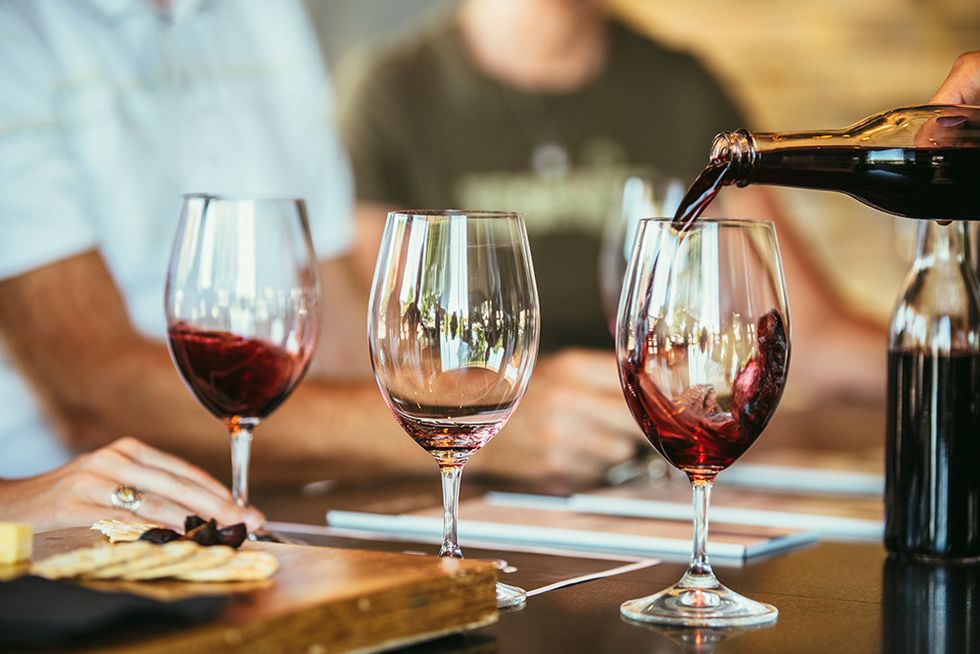
A glass of red wine might make you feel sleepy, but that doesn't mean it'll help you sleep well.
"Alcohol can make us feel sleepy and may help us fall asleep more quickly, but it can reduce sleep quality," says Ro. "It can delay and reduce REM sleep and, as the night progresses, sleep may become more fragmented, meaning we're more likely to wake and feel less rested the next day."
The bottom line
The good news? You don't necessarily need to swear off your favourite drinks.
"For those that experience difficulty sleeping, it is advisable, initially, to try to change the timing of the caffeine and move it earlier in the day," says Ro. "If that doesn't help, consider reducing the total amount consumed."
So before you blame your mattress, stress levels or the weather, it might be worth taking a closer look at what's in your cup. Your "healthy" afternoon habit could be keeping you awake long after you've finished drinking it. Cheers!
Stacey looks after all food and drink reviews — from coffee pods and veg boxes, to natural wine and tequila. Stacey is also founder of Crummbs, where she’s written nearly 2,000 restaurant and hotel reviews since 2013. Prior to this, Stacey wrote hundreds of in-depth buying guides for the Independent, i newspaper and BBC Good Food, as well as reviewing restaurants and interviewing celebrities in her column at Balance Magazine. Stacey has also appeared in BAFTA-nominated BBC documentary Blood, Sweat & Takeaways, where she investigated South East Asia's food production industry, appearing on both Newsnight and BBC World Service to share her findings. Regularly checking out the latest restaurants, bars and product launches, Stacey also loves experimenting with recipes at home, and is a WSET-certified wine and spirits expert, with over 10 years of experience in the business. You can follow Stacey on Instagram @crummbs_uk


